| Citation: | Shengyuan Luo, Fengbin Miao, Xiaohong Chen, Baoming Zhang, Peijun Li, Guotao Zhang, Fangjie Ni. Differences in Geochemical Compositions between Canister Desorption-Derived and Hydraulic Fracturing-Produced Shale Gas: Implications for Understanding Partial Carbon Isotopic Reversal in Shale Gas Field. Journal of Earth Science, 2026, 37(5): 2195-2217. doi: 10.1007/s12583-024-0025-0

|
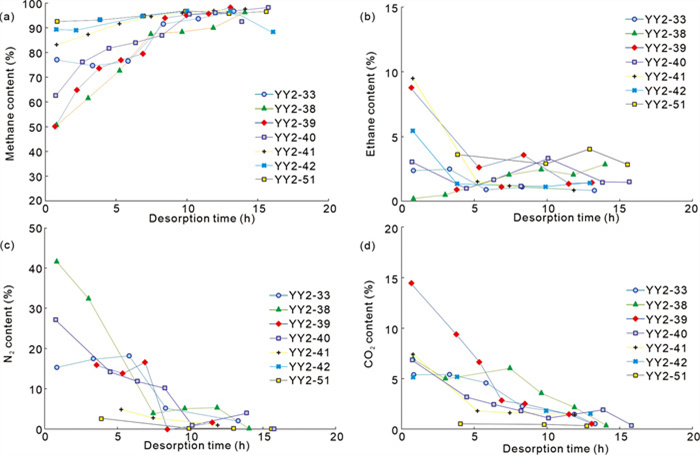
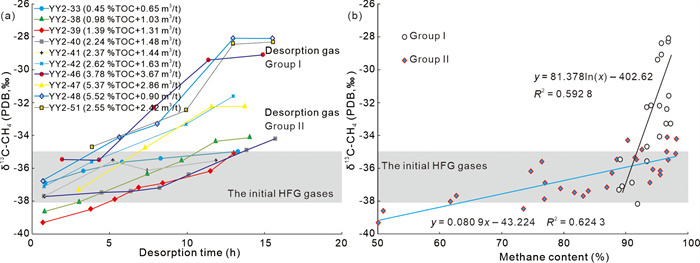
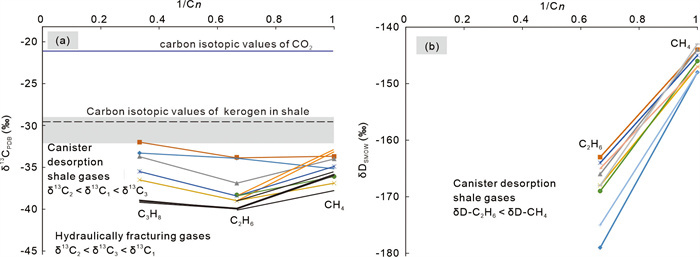
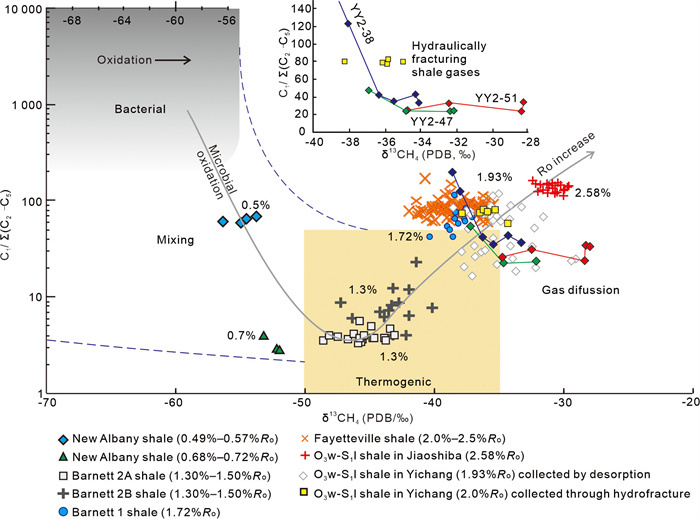
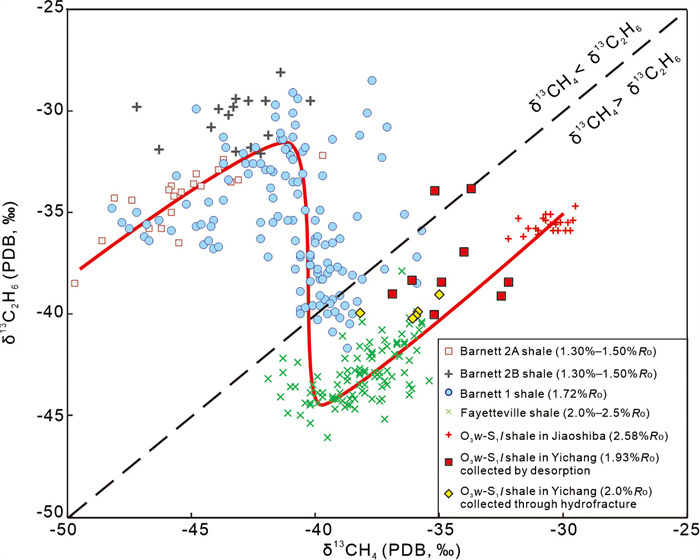
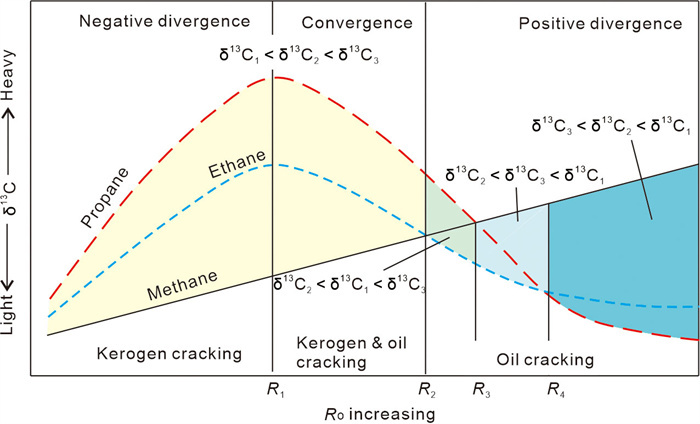
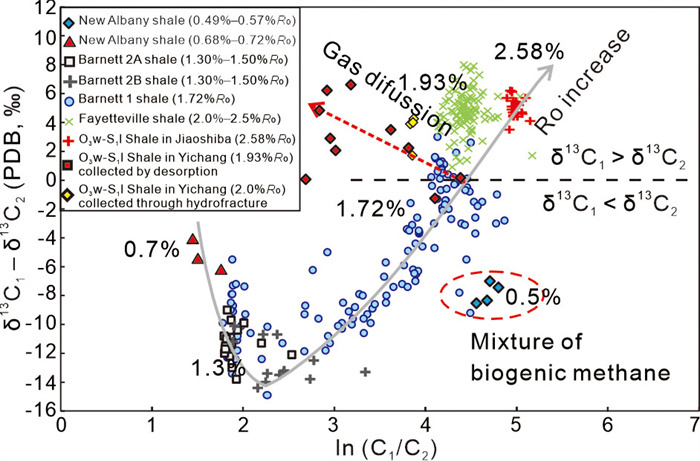
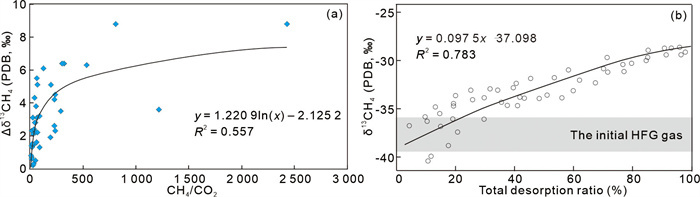
Gas content and geochemical composition of shale gas are routinely employed for resource potential assessment and production optimization strategies. Shale gas is conventionally collected from horizontal wells after hydraulic fracturing. In the early exploration stage, gas can also be collected by canister desorption of freshly drilled shale cores in the field. However, for the same shale layer, little attention has been paid to the geochemical compositional differences between hydraulic fracturing-produced shale gas (HFS gas) and canister desorption-derived shale gas (CDS gas), and the influence on gas production evaluation. In this study, the CDS gas and HFS gas from the Wufeng-Longmaxi shale of the Yiye 2 well, Middle Yangtze region (South China) were analyzed to evaluate the genetic origin and the influence of desorption on gas compositional and isotopic compositional shifts. The HFS gas is an over-mature dry gas, dominated by methane (94.06% to 96.44%) with a small amount of ethane and nitrogen, averaging 1.17% and 2.38%, respectively. The isotopic composition indicates thermogenic, oil-prone cracked gases. The CDS gas has relatively low hydrocarbon content and high N2 content. Carbon isotopic patterns of HFS gas are characterized by partial isotopic reversal, i.e., δ13C1 > δ13C3 > δ13C2. In contrast, the CDS gas displays larger isotopic variation and different isotopic reversal patterns, i.e., δ13C3 > δ13C1 > δ13C2. The differences in shale gas components and isotopic compositions between HFS gas and CDS gas are probably caused by successive gas diffusion. Gas diffusion of the CDS gas caused decreased concentrations of light carbon molecules in shale reservoirs and increased concentrations of heavy molecules. Isotopic fractionation during degassing results from molecular mobility differences, which are influenced by molecular adsorption/diffusion. The amplitude of δ13C variation during desorption is related to shale pore structure. Isotopic fractionation is weak in mesopores, macropores and fractures with good interconnectivity after hydraulic fracturing, resulting in a slightly restricted diffusion for the HFS gas. The 13C-depleted CH4 in the CDS gas resulted from preferential diffusion of light molecules in matrix-related nanopores resulting in more efficient "molecular sieves" and enhanced isotopic fractionation. Secondary alteration, including gas diffusion, can be identified using the cross plots of ln(C1/C2) value

| Bertard, C., Bruyet, B., Gunther, J., 1970. Determination of Desorbable Gas Concentration of Coal (Direct Method). International Journal of Rock Mechanics and Mining Sciences & Geomechanics Abstracts, 7(1): 43–65. https://doi.org/10.1016/0148-9062(70)90027-6 |
| Buchardt, B., Lewan, M., 1990. Reflectance of Vitrinite-Like Macerals as a Thermal Maturity Index for Cambrian-Ordovician Alum Shale, Southern Scandinavia. AAPG Bulletin, 74(4): 394–406. https://doi.org/10.1306/0c9b230d-1710-11d7-8645000102c1865d |
| Burruss, R. C., Laughrey, C. D., 2010. Carbon and Hydrogen Isotopic Reversals in Deep Basin Gas: Evidence for Limits to the Stability of Hydrocarbons. Organic Geochemistry, 41(12): 1285–1296. https://doi.org/10.1016/j.orggeochem.2010.09.008 |
| Chanton, J. P., 2005. The Effect of Gas Transport on the Isotope Signature of Methane in Wetlands. Organic Geochemistry, 36(5): 753–768. https://doi.org/10.1016/j.orggeochem.2004.10.007 |
| Chareonsuppanimit, P., Mohammad, S. A., Robinson, R. L. Jr, et al., 2012. High-Pressure Adsorption of Gases on Shales: Measurements and Modeling. International Journal of Coal Geology, 95: 34–46. https://doi.org/10.1016/j.coal.2012.02.005 |
| Chen, L., Zhang, L., Kang, Q. J., et al., 2015. Nanoscale Simulation of Shale Transport Properties Using the Lattice Boltzmann Method: Permeability and Diffusivity. Scientific Reports, 5: 8089. https://doi.org/10.1038/srep08089 |
| Chen, X. H., Luo, S. Y., Tan, J. Q., et al., 2021. Assessing the Gas Potential of the Lower Paleozoic Shale System in the Yichang Area, Middle Yangtze Region. Energy & Fuels, 35(7): 5889–5907. https://doi.org/10.1021/acs.energyfuels.1c00063 |
| Chen, Y. L., Zhang, B., Qin, Y., et al., 2020. Differences in CH4 and C2H6 Carbon Isotopic Compositions from Open and Closed Pores in Coal: Implications for Understanding the Two-Stage δ13C Shift during Canister Desorption. International Journal of Coal Geology, 230: 103586. https://doi.org/10.1016/j.coal.2020.103586 |
| Chen, Z. P., Chen, L., Wang, G. C., et al., 2020. Applying Isotopic Geochemical Proxy for Gas Content Prediction of Longmaxi Shale in the Sichuan Basin, China. Marine and Petroleum Geology, 116: 104329. https://doi.org/10.1016/j.marpetgeo.2020.104329 |
| Cheng, B., Xu, J. B., Deng, Q., et al., 2020. Methane Cracking within Shale Rocks: A New Explanation for Carbon Isotope Reversal of Shale Gas. Marine and Petroleum Geology, 121: 104591. https://doi.org/10.1016/j.marpetgeo.2020.104591 |
| Clayton, J. L., 1998. Geochemistry of Coalbed Gas—A Review. International Journal of Coal Geology, 35(1/2/3/4): 159–173. https://doi.org/10.1016/s0166-5162(97)00017-7 |
| Colosimo, F., Thomas, R., Lloyd, J. R., et al., 2016. Biogenic Methane in Shale Gas and Coal Bed Methane: A Review of Current Knowledge and Gaps. International Journal of Coal Geology, 165: 106–120. https://doi.org/10.1016/j.coal.2016.08.011 |
| Cui, X. J., Bustin, R. M., 2006. Controls of Coal Fabric on Coalbed Gas Production and Compositional Shift in Both Field Production and Canister Desorption Test. SPE Journal, 11(1): 111–119. https://doi.org/10.2118/89035-pa |
| Cui, X. J., Bustin, R. M., Dipple, G., 2004. Selective Transport of CO2, CH4, and N2 in Coals: Insights from Modeling of Experimental Gas Adsorption Data. Fuel, 83(3): 293–303. https://doi.org/10.1016/j.fuel.2003.09.001 |
| Cui, X., Bustin, A. M. M., Bustin, R. M., 2009. Measurements of Gas Permeability and Diffusivity of Tight Reservoir Rocks: Different Approaches and Their Applications. Geofluids, 9(3): 208–223. https://doi.org/10.1111/j.1468-8123.2009.00244.x |
| Curtis, J. B., 2002. Fractured Shale-Gas Systems. AAPG Bulletin, 86 (11): 1921–1938. https://doi.org/10.1306/61eeddbe-173e-11d7-8645000102c1865d |
| Dai, J. X., Gong, D. Y., Ni, Y. Y., et al., 2014. Stable Carbon Isotopes of Coal-Derived Gases Sourced from the Mesozoic Coal Measures in China. Organic Geochemistry, 74: 123–142. https://doi.org/10.1016/j.orggeochem.2014.04.002 |
| Dai, J. X., Xia, X. Y., Qin, S. F., et al., 2004. Origins of Partially Reversed Alkane δ13C Values for Biogenic Gases in China. Organic Geochemistry, 35(4): 405–411. https://doi.org/10.1016/j.orggeochem.2004.01.006 |
| Dai, J. X., Zou, C. N., Dong, D. Z., et al., 2016. Geochemical Characteristics of Marine and Terrestrial Shale Gas in China. Marine and Petroleum Geology, 76: 444–463. https://doi.org/10.1016/j.marpetgeo.2016.04.027 |
| Diamond, W. P., Schatzel, S. J., 1998. Measuring the Gas Content of Coal: A Review. International Journal of Coal Geology, 35(1/2/3/4): 311–331. https://doi.org/10.1016/s0166-5162(97)00040-2 |
| Fathi, E., Akkutlu, I. Y., 2009. Matrix Heterogeneity Effects on Gas Transport and Adsorption in Coalbed and Shale Gas Reservoirs. Transport in Porous Media, 80(2): 281–304. https://doi.org/10.1007/s11242-009-9359-4 |
| Feng, Z. Q., Dong, D. Z., Tian, J. Q., et al., 2018. Geochemical Characteristics of Longmaxi Formation Shale Gas in the Weiyuan Area, Sichuan Basin, China. Journal of Petroleum Science and Engineering, 167: 538–548. https://doi.org/10.1016/j.petrol.2018.04.030 |
| Fuex, A. N., 1980. Experimental Evidence Against an Appreciable Isotopic Fractionation of Methane during Migration. Physics and Chemistry of the Earth, 12: 725–732. https://doi.org/10.1016/0079-1946(79)90153-8 |
| Gao, W. L., Zhang, Q., Fang, Q., et al., 2024. Discussion on Significant Geological Events during Carboniferous–Permian Transition and Main Controlling Factors of Shale Gas Enrichment in Eastern Margin of Ordos Basin. Earth Science, 49(12): 4501–4517. https://doi.org/10.3799/dqkx.2024.079 (in Chinese with English Abstract) |
| Gensterblum, Y., Merkel, A., Busch, A., et al., 2014. Gas Saturation and CO2 Enhancement Potential of Coalbed Methane Reservoirs as a Function of Depth. AAPG Bulletin, 98(2): 395–420. https://doi.org/10.1306/07021312128 |
| Golding, S. D., Boreham, C. J., Esterle, J. S., 2013. Stable Isotope Geochemistry of Coal Bed and Shale Gas and Related Production Waters: A Review. International Journal of Coal Geology, 120: 24–40. https://doi.org/10.1016/j.coal.2013.09.001 |
| Goodarzi, F., Norford, B. S., 1989. Variation of Graptolite Reflectance with Depth of Burial. International Journal of Coal Geology, 11(2): 127–141. https://doi.org/10.1016/0166-5162(89)90002-5 |
| Guo, Z. F., Sheng, X. C., Hu, X. F., et al., 2013. Petroleum Geologic Characteristics and Exploration Direction Selection on Marine Series in Middle Yangtze Region. Journal of Oil and Gas Technology, 35(6): 1–9 (in Chinese with English Abstract) |
| Gupta, N., Fathi, E., Belyadi, F., 2018. Effects of Nano-Pore Wall Confinements on Rarefied Gas Dynamics in Organic Rich Shale Reservoirs. Fuel, 220: 120–129. https://doi.org/10.1016/j.fuel.2018.01.120 |
| Han, W. X., Ma, W. J., Tao, S. Z., et al., 2018. Carbon Isotope Reversal and Its Relationship with Natural Gas Origins in the Jingbian Gas Field, Ordos Basin, China. International Journal of Coal Geology, 196: 260–273. https://doi.org/10.1016/j.coal.2018.06.024 |
| Hao, F., Zou, H. Y., 2013. Cause of Shale Gas Geochemical Anomalies and Mechanisms for Gas Enrichment and Depletion in High-Maturity Shales. Marine and Petroleum Geology, 44: 1–12. https://doi.org/10.1016/j.marpetgeo.2013.03.005 |
| Hao, F., Zou, H. Y., Lu, Y. C., 2013. Mechanisms of Shale Gas Storage: Implications for Shale Gas Exploration in China. AAPG Bulletin, 97(8): 1325–1346. https://doi.org/10.1306/02141312091 |
| Harpalani, S., Chen, G. L., 1997. Influence of Gas Production Induced Volumetric Strain on Permeability of Coal. Geotechnical & Geological Engineering, 15(4): 303–325. https://doi.org/10.1007/bf00880711 |
| Head, I. M., Jones, D. M., Larter, S. R., 2003. Biological Activity in the Deep Subsurface and the Origin of Heavy Oil. Nature, 426(6964): 344–352. https://doi.org/10.1038/nature02134 |
| Henning, M., Strąpoć, D., Lis, G. P., et al., 2007. Versatile Inlet System for On-Line Compound-Specific δD and δ13C Gas Chromatography-Oxidation/Reduction-Isotope Ratio Mass Spectrometry Analysis of Gaseous Mixtures. Rapid Communications in Mass Spectrometry, 21(14): 2269–2272. https://doi.org/10.1002/rcm.3083 |
| Hill, R. J., Zhang, E. T., Katz, B. J., et al., 2007. Modeling of Gas Generation from the Barnett Shale, Fort Worth Basin, Texas. AAPG Bulletin, 91(4): 501–521. https://doi.org/10.1306/12060606063 |
| Hu, H. X., Li, X. C., Fang, Z. M., et al., 2010. Small-Molecule Gas Sorption and Diffusion in Coal: Molecular Simulation. Energy, 35(7): 2939–2944. https://doi.org/10.1016/j.energy.2010.03.028 |
| Hu, H. Y., Hao, F., Guo, X. S., et al., 2019. Effect of Lithofacies on the Pore System of Over-Mature Longmaxi Shale in the Jiaoshiba Area, Sichuan Basin, China. Marine and Petroleum Geology, 109: 886–898. https://doi.org/10.1016/j.marpetgeo.2019.06.050 |
| Jacob, H., 1989. Classification, Structure, Genesis and Practical Importance of Natural Solid Oil Bitumen ("Migrabitumen"). International Journal of Coal Geology, 11(1): 65–79. https://doi.org/10.1016/0166-5162(89)90113-4 |
| Jasinge, D., Ranjith, P. G., Choi, X., et al., 2012. Investigation of the Influence of Coal Swelling on Permeability Characteristics Using Natural Brown Coal and Reconstituted Brown Coal Specimens. Energy, 39(1): 303–309. https://doi.org/10.1016/j.energy.2012.01.010 |
| Javadpour, F., Singh, H., Rabbani, A., et al., 2021. Gas Flow Models of Shale: A Review. Energy & Fuels, 35(4): 2999–3010. https://doi.org/10.1021/acs.energyfuels.0c04381 |
| Katz, B. J., Narimanov, A., Huseinzadeh, R., 2002. Significance of Microbial Processes in Gases of the South Caspian Basin. Marine and Petroleum Geology, 19(6): 783–796. https://doi.org/10.1016/s0264-8172(02)00086-7 |
| Landis, C. R., Castaño, J. R., 1995. Maturation and Bulk Chemical Properties of a Suite of Solid Hydrocarbons. Organic Geochemistry, 22(1): 137–149. https://doi.org/10.1016/0146-6380(95)90013-6 |
| Li, W. B., Li, J. Q., Lu, S. F., et al., 2022. Evaluation of Gas-in-Place Content and Gas-Adsorbed Ratio Using Carbon Isotope Fractionation Model: A Case Study from Longmaxi Shales in Sichuan Basin, China. International Journal of Coal Geology, 249: 103881. https://doi.org/10.1016/j.coal.2021.103881 |
| Li, W. B., Lu, S. F., Li, J. Q., et al., 2020. Carbon Isotope Fractionation during Shale Gas Transport: Mechanism, Characterization and Significance. Science China Earth Sciences, 63(5): 674–689. https://doi.org/10.1007/s11430-019-9553-5 |
| Li, W. B., Lu, S. F., Li, J. Q., et al., 2021. Geochemical Modeling of Carbon Isotope Fractionation during Methane Transport in Tight Sedimentary Rocks. Chemical Geology, 566: 120033. https://doi.org/10.1016/j.chemgeo.2020.120033 |
| Li, Z. T., Liu, D. M., Cai, Y. D., et al., 2016. Investigation of Methane Diffusion in Low-Rank Coals by a Multiporous Diffusion Model. Journal of Natural Gas Science and Engineering, 33: 97–107. https://doi.org/10.1016/j.jngse.2016.05.012 |
| Liu, C. J., Liu, P., McGovern, G. P., et al., 2019. Molecular and Intramolecular Isotope Geochemistry of Natural Gases from the Woodford Shale, Arkoma Basin, Oklahoma. Geochimica et Cosmochimica Acta, 255: 188–204. https://doi.org/10.1016/j.gca.2019.04.020 |
| Liu, Y. W., Du, Y., Li, Z. Q., et al., 2020. A Rapid and Accurate Direct Measurement Method of Underground Coal Seam Gas Content Based on Dynamic Diffusion Theory. International Journal of Mining Science and Technology, 30(6): 799–810. https://doi.org/10.1016/j.ijmst.2020.07.004 |
| Liu, Y., Zhang, J. C., Tang, X., 2016. Predicting the Proportion of Free and Adsorbed Gas by Isotopic Geochemical Data: A Case Study from Lower Permian Shale in the Southern North China Basin (SNCB). International Journal of Coal Geology, 156: 25–35. https://doi.org/10.1016/j.coal.2016.01.011 |
| Magoon, L. B., Dow, W. G., 1994. Correlation of Natural Gases with Their Sources. The Petroleum System—From Source to Trap. American Association of Petroleum Geologists, Tulsa. https://doi.org/10.1306/m60585c16 |
| Mason, E. A., Marrero, T. R., 1970. The Diffusion of Atoms and Molecules. In: Bates, D. R., Esterrnan, I., eds., Advances in Atomic and Molecular Physics. Academic Press, San Diego |
| Mastalerz, M., Drobniak, A., Schimmelmann, A., 2017. Characteristics of Microbial Coalbed Gas during Production; Example from Pennsylvanian Coals in Indiana, USA. Geosciences, 7(2): 26. https://doi.org/10.3390/geosciences7020026 |
| Milkov, A. V., Faiz, M., Etiope, G., 2020. Geochemistry of Shale Gases from around the World: Composition, Origins, Isotope Reversals and Rollovers, and Implications for the Exploration of Shale Plays. Organic Geochemistry, 143: 103997. https://doi.org/10.1016/j.orggeochem.2020.103997 |
| Moore, T. A., 2012. Coalbed Methane: A Review. International Journal of Coal Geology, 101: 36–81. https://doi.org/10.1016/j.coal.2012.05.011 |
|
Nelson, C. R., 1999. Effects of Coalbed Reservoir Property Analysis Methods on Gas-in-Place Estimates. SPE Eastern Regional Meeting, October 21–22, 1999. Charleston, West Virginia. Society of Petroleum Engineers, SPE 57443-MS, Richardson. |
| Niemann, M., Whiticar, M., 2017. Stable Isotope Systematics of Coalbed Gas during Desorption and Production. Geosciences, 7(2): 43. https://doi.org/10.3390/geosciences7020043 |
| Prinzhofer, A. A., Huc, A. Y., 1995. Genetic and Post-Genetic Molecular and Isotopic Fractionations in Natural Gases. Chemical Geology, 126(3/4): 281–290. https://doi.org/10.1016/0009-2541(95)00123-9 |
| Qiu, Z., Dou, L. R., Wu, J. F., et al., 2024. Lithofacies Palaeogeographic Evolution of the Middle Permian Sequence Stratigraphy and Its Implications for Shale Gas Exploration in the Northern Sichuan and Western Hubei Provinces. Earth Science, 49(2): 712–748. https://doi.org/10.3799/dqkx.2023.216 (in Chinese with English Abstract) |
| Radovic, L. R., Menon, V. C., Leon Y Leon, C. A., et al., 1997. On the Porous Structure of Coals: Evidence for an Interconnected but Constricted Micropore System and Implications for Coalbed Methane Recovery. Adsorption, 3(3): 221–232. https://doi.org/10.1007/bf01650133 |
| Rodriguez, N. D., Philp, R. P., 2010. Geochemical Characterization of Gases from the Mississippian Barnett Shale, Fort Worth Basin, Texas. AAPG Bulletin, 94(11): 1641–1656. https://doi.org/10.1306/04061009119 |
| Romero-Sarmiento, M. F., Rouzaud, J. N., Bernard, S., et al., 2014. Evolution of Barnett Shale Organic Carbon Structure and Nanostructure with Increasing Maturation. Organic Geochemistry, 71: 7–16. https://doi.org/10.1016/j.orggeochem.2014.03.008 |
| Rooney, M. A., Claypool, G. E., Chung, H. M., 1995. Modeling Thermogenic Gas Generation Using Carbon Isotope Ratios of Natural Gas Hydrocarbons. Chemical Geology, 126(3/4): 219–232. https://doi.org/10.1016/0009-2541(95)00119-0 |
| Schimmelmann, A., Boudou, J. P., Lewan, M. D., et al., 2001. Experimental Controls on D/H and 13C/12C Ratios of Kerogen, Bitumen and Oil during Hydrous Pyrolysis. Organic Geochemistry, 32(8): 1009–1018. https://doi.org/10.1016/s0146-6380(01)00059-6 |
| Schloemer, S., Krooss, B. M., 2004. Molecular Transport of Methane, Ethane and Nitrogen and the Influence of Diffusion on the Chemical and Isotopic Composition of Natural Gas Accumulations. Geofluids, 4(1): 81–108. https://doi.org/10.1111/j.1468-8123.2004.00076.x |
| Smith, D. M., Williams, F. L., 1984. Diffusion Models for Gas Production from Coals. Fuel, 63(2): 251–255. https://doi.org/10.1016/0016-2361(84)90046-2 |
| Song, D. J., Wu, C. J., Tuo, J. C., et al., 2021. Evolution of Carbon Isotopic Compositions for Gas Generated in Semi-Closed Pyrolysis System: Reflections on the Formation of Isotopic Abnormal Gases. Journal of Petroleum Science and Engineering, 201: 108516. https://doi.org/10.1016/j.petrol.2021.108516 |
| Strąpoć, D., Mastalerz, M., Dawson, K., et al., 2011. Biogeochemistry of Microbial Coal-Bed Methane. Annual Review of Earth and Planetary Sciences, 39: 617–656. https://doi.org/10.1146/annurev-earth-040610-133343 |
| Strąpoć, D., Mastalerz, M., Eble, C., et al., 2007. Characterization of the Origin of Coalbed Gases in Southeastern Illinois Basin by Compound-Specific Carbon and Hydrogen Stable Isotope Ratios. Organic Geochemistry, 38(2): 267–287. https://doi.org/10.1016/j.orggeochem.2006.09.005 |
| Strąpoć, D., Mastalerz, M., Schimmelmann, A., et al., 2010. Geochemical Constraints on the Origin and Volume of Gas in the New Albany Shale (Devonian–Mississippian), Eastern Illinois Basin. AAPG Bulletin, 94(11): 1713–1740. https://doi.org/10.1306/06301009197 |
| Strąpoć, D., Schimmelmann, A., Mastalerz, M., 2006. Carbon Isotopic Fractionation of CH4 and CO2 during Canister Desorption of Coal. Organic Geochemistry, 37(2): 152–164. https://doi.org/10.1016/j.orggeochem.2005.10.002 |
| Sui, H. G., Yao, J., 2016. Effect of Surface Chemistry for CH4/CO2 Adsorption in Kerogen: A Molecular Simulation Study. Journal of Natural Gas Science and Engineering, 31: 738–746. https://doi.org/10.1016/j.jngse.2016.03.097 |
| Szlązak, N., Obracaj, D., Korzec, M., 2021. Estimation of Gas Loss in Methodology for Determining Methane Content of Coal Seams. Energies, 14(4): 982. https://doi.org/10.3390/en14040982 |
| Tang, Y., Perry, J. K., Jenden, P. D., et al., 2000. Mathematical Modeling of Stable Carbon Isotope Ratios in Natural Gases. Geochimica et Cosmochimica Acta, 64(15): 2673–2687. https://doi.org/10.1016/s0016-7037(00)00377-x |
| Tilley, B., McLellan, S., Hiebert, S., et al., 2011. Gas Isotope Reversals in Fractured Gas Reservoirs of the Western Canadian Foothills: Mature Shale Gases in Disguise. AAPG Bulletin, 95(8): 1399–1422. https://doi.org/10.1306/01031110103 |
| Tilley, B., Muehlenbachs, K., 2013. Isotope Reversals and Universal Stages and Trends of Gas Maturation in Sealed, Self-Contained Petroleum Systems. Chemical Geology, 339: 194–204. https://doi.org/10.1016/j.chemgeo.2012.08.002 |
| Tu, S., Wang, Z., Wang, J. S., 2012. Interpretation for High Resolution Stable Carbon and Oxygen Isotope Records across Ordovician-Silurian Boundary from Wangjiawan, South China. Earth Science, 37(S2): 165–174 (in Chinese with English Abstract) |
| Wang, G., Ma, Y. W., Zhao, Y. Z., et al., 2021. Carbon Isotope Fractionation during Shale Gas Transport through Organic and Inorganic Nanopores from Molecular Simulations. Energy & Fuels, 35(15): 11992–12004. https://doi.org/10.1021/acs.energyfuels.1c01448 |
| Wang, L. G., Cheng, Y. P., Li, W., et al., 2013. Component Fractionation of Temporal Evolution in Adsorption-Desorption for Binary Gas Mixtures on Coals from Haishiwan Coal Mine. International Journal of Mining Science and Technology, 23(2): 201–205. https://doi.org/10.1016/j.ijmst.2013.04.019 |
| Wang, X. F., Liu, W. H., Shi, B. G., et al., 2015. Hydrogen Isotope Characteristics of Thermogenic Methane in Chinese Sedimentary Basins. Organic Geochemistry, 83/84: 178–189. https://doi.org/10.1016/j.orggeochem.2015.03.010 |
| Wang, X., Jiang, Z. X., Zhang, K., et al., 2020. Analysis of Gas Composition and Nitrogen Sources of Shale Gas Reservoir under Strong Tectonic Events: Evidence from the Complex Tectonic Area in the Yangtze Plate. Energies, 13(1): 281. https://doi.org/10.3390/en13010281 |
| Wei, Z. F., Zou, Y. R., Cai, Y. L., et al., 2012. Abiogenic Gas: Should the Carbon Isotope Order Be Reversed? Journal of Petroleum Science and Engineering, 84/85: 29–32. https://doi.org/10.1016/j.petrol.2012.01.019 |
| Whiticar, M. J., 1996. Stable Isotope Geochemistry of Coals, Humic Kerogens and Related Natural Gases. International Journal of Coal Geology, 32(1/2/3/4): 191–215. https://doi.org/10.1016/s0166-5162(96)00042-0 |
| Whiticar, M. J., 1999. Carbon and Hydrogen Isotope Systematics of Bacterial Formation and Oxidation of Methane. Chemical Geology, 161(1/2/3): 291–314. https://doi.org/10.1016/s0009-2541(99)00092-3 |
| Wu, K. L., Li, X. F., Guo, C. H., et al., 2016. A Unified Model for Gas Transfer in Nanopores of Shale-Gas Reservoirs: Coupling Pore Diffusion and Surface Diffusion. SPE Journal, 21(5): 1583–1611. https://doi.org/10.2118/2014-1921039-pa |
| Wu, Y. D., Zhang, Z. N., Sun, L. N., et al., 2019. Stable Isotope Reversal and Evolution of Gas during the Hydrous Pyrolysis of Continental Kerogen in Source Rocks under Supercritical Conditions. International Journal of Coal Geology, 205: 105–114. https://doi.org/10.1016/j.coal.2019.03.004 |
| Xia, X. Y., Tang, Y. C., 2012. Isotope Fractionation of Methane during Natural Gas Flow with Coupled Diffusion and Adsorption/Desorption. Geochimica et Cosmochimica Acta, 77: 489–503. https://doi.org/10.1016/j.gca.2011.10.014 |
| Xiao, K. H., Chen, H., Wo, Y. J., et al., 2005. Impact of Tectonic Evolution on Paleozoic and Mesozoic Petroleum Systems in Jianghan Plain. Oil and Gas Geology, 26(5): 688–693 (in Chinese with English Abstract) |
| Xu, L. F., Cheng, Y. S., Zhang, J. C., et al., 2022. Origin and Isotopic Fractionation of Shale Gas from the Shanxi Formation in the Southeastern Margin of Ordos Basin. Journal of Petroleum Science and Engineering, 208: 109189. https://doi.org/10.1016/j.petrol.2021.109189 |
| Yang, R., He, S., Hu, Q. H., et al., 2017. Geochemical Characteristics and Origin of Natural Gas from Wufeng-Longmaxi Shales of the Fuling Gas Field, Sichuan Basin (China). International Journal of Coal Geology, 171: 1–11. https://doi.org/10.1016/j.coal.2016.12.003 |
| Yang, R., He, Z. L., Dong, T., et al., 2025. What are the Key Factors Controlling the Occurrence and Enrichment of Deep Marine Shale Gas in the Middle–Upper Yangtze Region?. Earth Science, 50(12): 5012–5019 (in Chinese with English Abstract) |
| Zhang, J. F., Xu, H., Zhou, Z., et al., 2019. Geological Characteristics of Shale Gas Reservoir in Yichang Area, Western Hubei. Acta Petrolei Sinica, 40(8): 887–899 (in Chinese with English Abstract) |
| Zhang, T. W., Krooss, B. M., 2001. Experimental Investigation on the Carbon Isotope Fractionation of Methane during Gas Migration by Diffusion through Sedimentary Rocks at Elevated Temperature and Pressure. Geochimica et Cosmochimica Acta, 65(16): 2723–2742. https://doi.org/10.1016/s0016-7037(01)00601-9 |
| Zhang, W. J., Shen, B. J., Chen, Y. L., et al., 2020. Molecular Dynamics Simulations about Isotope Fractionation of Methane in Shale Nanopores. Fuel, 278: 118378. https://doi.org/10.1016/j.fuel.2020.118378 |
| Zhao, J. H., Jin, Z. J., Jin, Z. K., et al., 2017. Depositional Environment of Shale in Wufeng and Longmaxi Formations, Sichuan Basin. Petroleum Research, 2(3): 209–221. https://doi.org/10.1016/j.ptlrs.2017.04.003 |
| Zou, C. N., Dong, D. Z., Wang, Y. M., et al., 2016. Shale Gas in China: Characteristics, Challenges and Prospects (Ⅱ). Petroleum Exploration and Development, 43(2): 182–196. https://doi.org/10.1016/s1876-3804(16)30022-2 |
| Zou, C. N., Dong, D. Z., Zhang, Q., et al., 2025. Formation, Potential, and Challenges of Marine⁃Continental Transitional Shale Gas in China. Earth Science, 50(11): 4261–4283 (in Chinese with English Abstract) |
| Zumberge, J., Ferworn, K., Brown, S., 2012. Isotopic Reversal ('Rollover') in Shale Gases Produced from the Mississippian Barnett and Fayetteville Formations. Marine and Petroleum Geology, 31(1): 43–52. https://doi.org/10.1016/j.marpetgeo.2011.06.009 |
Figures(15) / Tables(3)
Copyright © 2013-2020 Journal of Earth Science 鄂ICP备15021562号-2
Tel: +86-27-67885075 Fax: +86-27-67885075 E-mail: xbb@cug.edu.cn
Address: Editorial Office of Journal, China University of Geosciences, Yujiashan, Wuhan, Hubei 430074, P. R. China
Supported by:
Beijing Renhe Information Technology Co. Ltd
E-mail:
info@rhhz.net


 DownLoad: