| Citation: | Yongqin Liu, Baiqing Xu, Mukan Ji, Zhongwei Huang, Siyu Chen, Jiming Li, Guannan Mao. Statistical Models Reveal the Effects of Atmospheric Black Carbon on Glacial Bacterial Abundance on the Tibetan Plateau. Journal of Earth Science, 2025, 36(6): 2720-2729. doi: 10.1007/s12583-024-0095-z

|
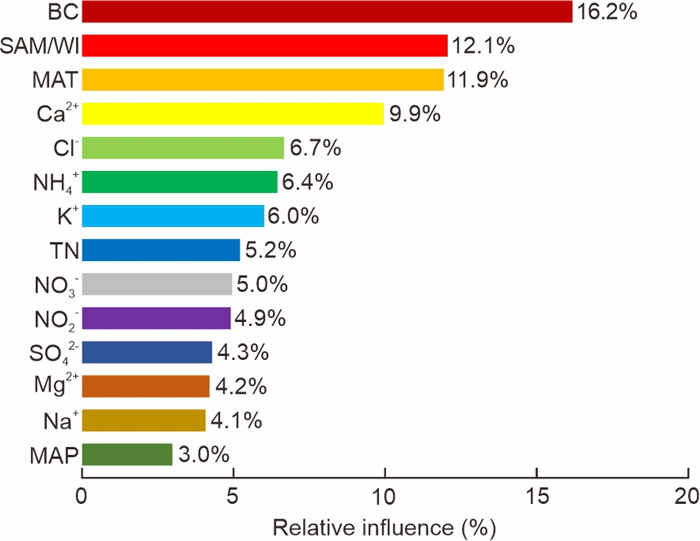
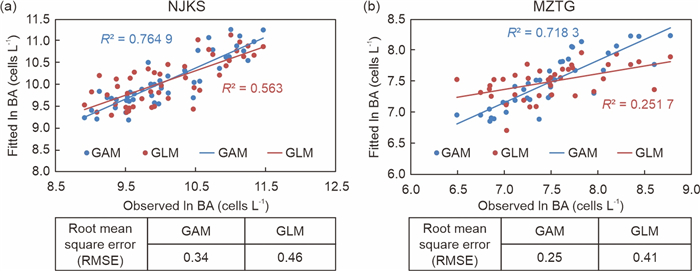
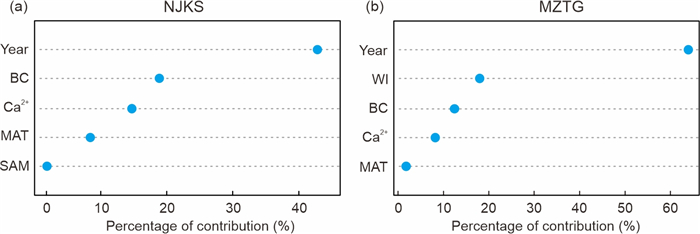
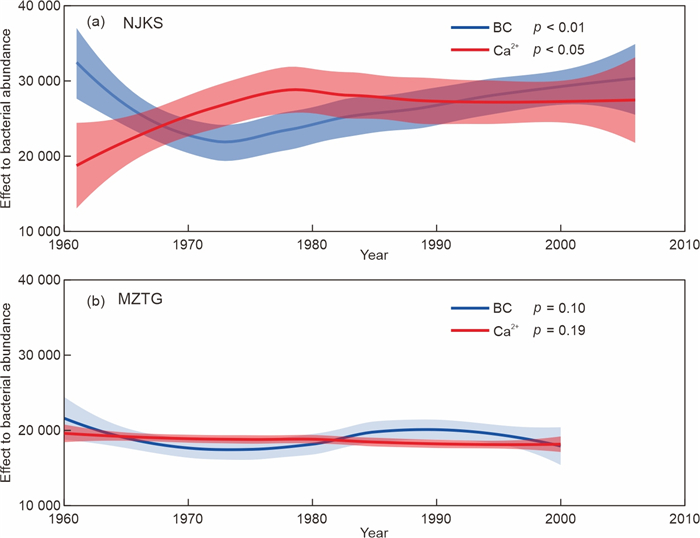
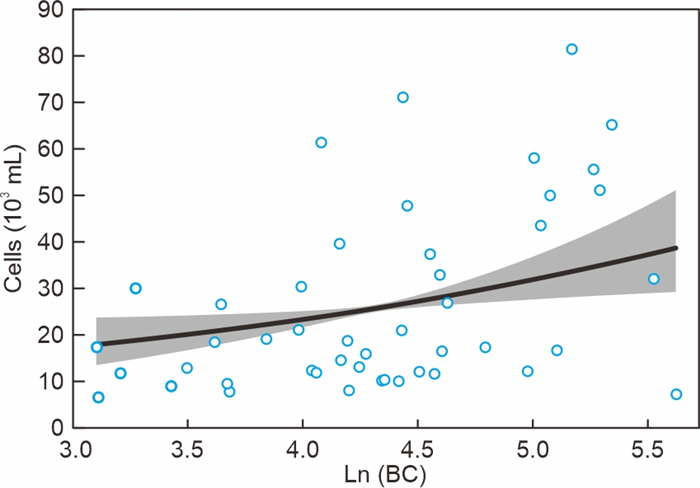
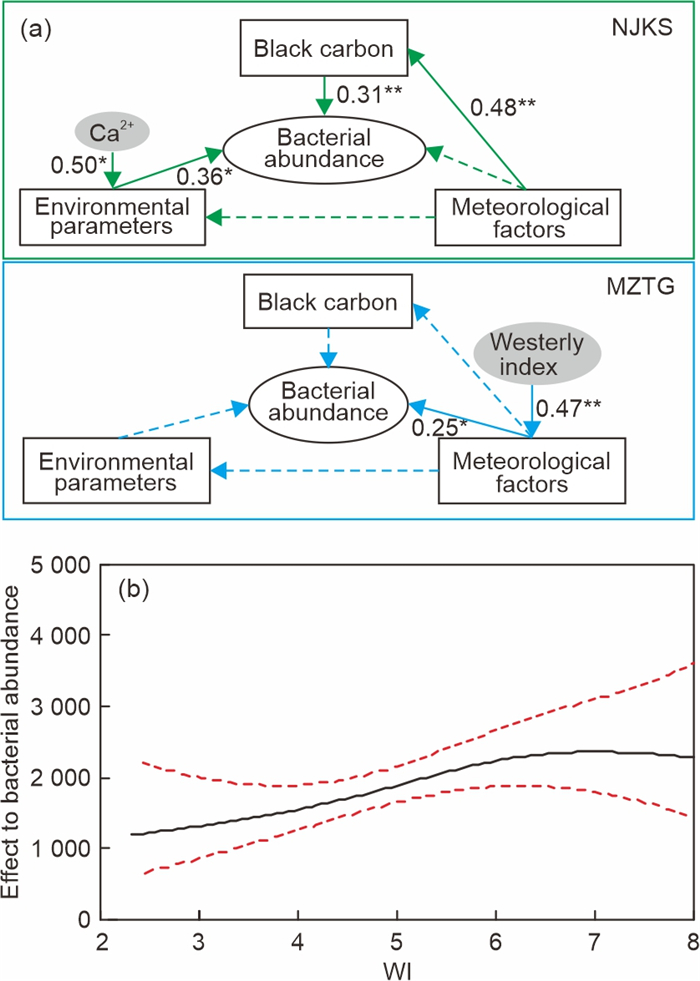
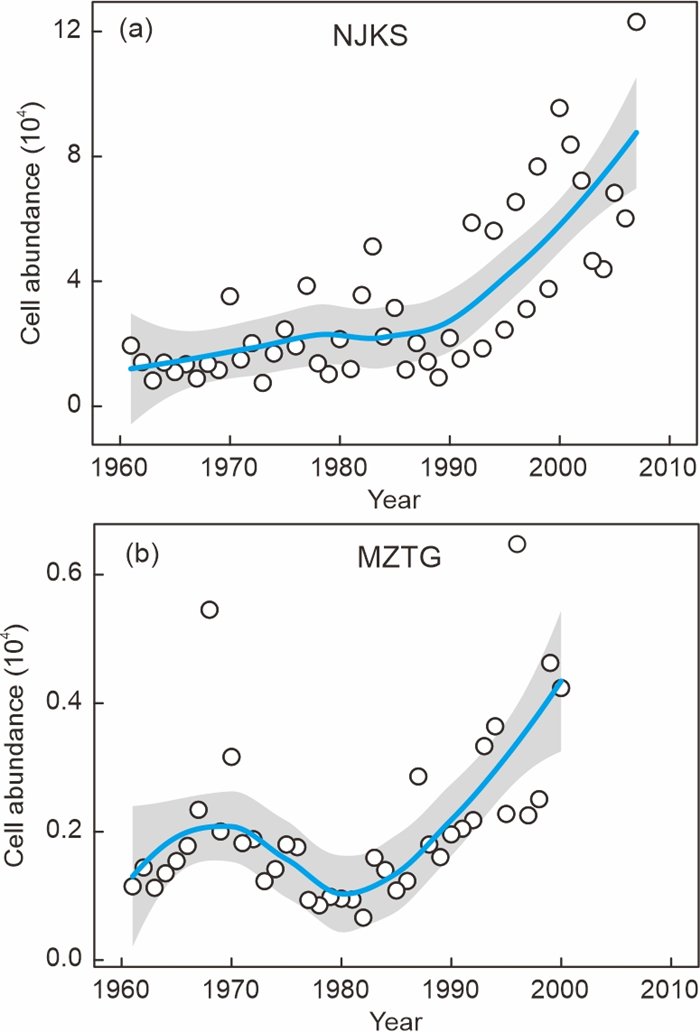
Ice cores play an important role in the reconstruction of historical atmospheric information. The glacier of the Tibetan Plateau is influenced by the Indian monsoon and westerly winds, which divide the Tibetan Plateau into monsoon- and westly influenced regions. These atmospheric circulations bring distinct microbial communities to glaciers, with the microbial dispersal process being also influenced by atmospheric factors. However, the potential influence of between bacterial abundance and atmospheric factors is not well known. To reveal potential mechanisms controlling bacterial abundance between two regions, we obtained bacterial abundance and atmospheric records for the past 46 years from two ice cores located within these regions. Statistical regression models were constructed to fit the relationship between bacterial abundance and atmospheric factors. Generalized additive model (GAM) was superior in modeling bacterial abundance compared with linear models and showed that the key factors affecting bacterial abundance were different in the monsoon- and westerly-dominated regions. Specifically, atmospheric dust and black carbon were the key factors for the monsoon-dominated region, and westerly index was the key factor for the westerly-dominated region. The model outputs confirm that atmospheric black carbon plays an important role in affecting bacterial abundance for the glacier located within the monsoon-dominated region, particularly in recent decades. The model also predicted that bacterial abundance will increase by 27% with a doubled black carbon deposition. We quantify and model for the first time that relationship between bacterial abundance and atmospheric black carbon in Tibetan glaciers change over time based on GAM models.

| Abyzov, S. S., Mitskevich, I. N., Poglazova, M. N., 1998. Microflora of the Deep Glacier Horizons of Central Antarctica. Microbiology, 67(4): 451–458 |
| Bottos, E. M., Woo, A. C., Zawar-Reza, P., et al., 2014. Airborne Bacterial Populations above Desert Soils of the McMurdo Dry Valleys, Antarctica. Microbial Ecology, 67(1): 120–128. https://doi.org/10.1007/s00248-013-0296-y |
| Cao, S. N., Zhang, F., He, J. F., et al., 2020. Water Masses Influence Bacterioplankton Community Structure in Summer Kongsfjorden. Extremophiles, 24(1): 107–120. https://doi.org/10.1007/s00792-019-01139-y |
| Chen, Y., Li, X. K., Si, J., et al., 2016. Changes of the Bacterial Abundance and Communities in Shallow Ice Cores from Dunde and Muztagata Glaciers, Western China. Frontiers in Microbiology, 7: 1716. https://doi.org/10.3389/fmicb.2016.01716 |
| Chen, B. Z., Liu, H. B., Xiao, W. P., et al., 2020. A Machine-Learning Approach to Modeling Picophytoplankton Abundances in the South China Sea. Progress in Oceanography, 189: 102456. https://doi.org/10.1016/j.pocean.2020.102456 |
| Chi, H. F., Yin, X. F., Zhang, X. F., et al., 2025. Influence of Interspecies Interactions on Bacterial Community Assembly in the Active and Permafrost Layers on the Qinghai-Tibet Plateau. Journal of Earth Science, 36(2): 395–407. https://doi.org/10.1007/s12583-024-0046-8 |
| Christner, B. C., Cai, R. M., Morris, C. E., et al., 2008. Geographic, Seasonal, and Precipitation Chemistry Influence on the Abundance and Activity of Biological Ice Nucleators in Rain and Snow. Proceedings of the National Academy of Sciences of the United States of America, 105(48): 18854–18859. https://doi.org/10.1073/pnas.0809816105 |
| Christner, B. C., Mikucki, J. A., Foreman, C. M., et al., 2005. Glacial Ice Cores: A Model System for Developing Extraterrestrial Decontamination Protocols. Icarus, 174(2): 572–584. https://doi.org/10.1016/j.icarus.2004.10.027 |
| Christner, B. C., Mosley-Thompson, E., Thompson, L. G., et al., 2000. Recovery and Identification of Viable Bacteria Immured in Glacial Ice. Icarus, 144(2): 479–485. https://doi.org/10.1006/icar.1999.6288 |
| De'ath, G., 2007. Boosted Trees for Ecological Modeling and Prediction. Ecology, 88(1): 243–251. https://doi.org/10.1890/0012-9658(2007)88[243:btfema]2.0.co;2 |
| Dey, D., Döös, K., 2021. Tracing the Origin of the South Asian Summer Monsoon Precipitation and Its Variability Using a Novel Lagrangian Framework. Journal of Climate, 34(21): 8655–8668. https://doi.org/10.1175/jcli-d-20-0967.1 |
| Fu, P. Q., Kawamura, K., Seki, O., et al., 2016. Historical Trends of Biogenic SOA Tracers in an Ice Core from Kamchatka Peninsula. Environmental Science & Technology Letters, 3(10): 351–358. https://doi.org/10.1021/acs.estlett.6b00275 |
| Gong, P., Wang, X. P., Xue, Y. G., et al., 2015. Influence of Atmospheric Circulation on the Long-Range Transport of Organochlorine Pesticides to the Western Tibetan Plateau. Atmospheric Research, 166: 157–164. https://doi.org/10.1016/j.atmosres.2015.07.006 |
| Goswami, B. N., Krishnamurthy, V., Annmalai, H., 1999. A Broad-Scale Circulation Index for the Interannual Variability of the Indian Summer Monsoon. Quarterly Journal of the Royal Meteorological Society, 125(554): 611–633. https://doi.org/10.1002/qj.49712555412 |
| Guisan, A., Edwards, T. C., Hastie, T., 2002. Generalized Linear and Generalized Additive Models in Studies of Species Distributions: Setting the Scene. Ecological Modelling, 157(2/3): 89–100. https://doi.org/10.1016/s0304-3800(02)00204-1 |
| Hu, C. Q., Xu, J., Li, X. F., et al., 2021. Environmental Regulations on Bacterial Abundance in the South China Sea Inferred from Regression Models. Science of the Total Environment, 774: 146315. https://doi.org/10.1016/j.scitotenv.2021.146315 |
| Imai, C., Hashizume, M., 2015. A Systematic Review of Methodology: Time Series Regression Analysis for Environmental Factors and Infectious Diseases. Tropical Medicine and Health, 43(1): 1–9. https://doi.org/10.2149/tmh.2014-21 |
| Immerzeel, W. W., van Beek, L. P. H., Bierkens, M. F. P., 2010. Climate Change Will Affect the Asian Water Towers. Science, 328(5984): 1382–1385. https://doi.org/10.1126/science.1183188 |
| Jones, P. D., Mann, M. E., 2004. Climate over Past Millennia. Reviews of Geophysics, 42(2): 2003RG000143. https://doi.org/10.1029/2003rg000143 |
| Junker, C., Liousse, C., 2008. A Global Emission Inventory of Carbonaceous Aerosol from Historic Records of Fossil Fuel and Biofuel Consumption for the Period 1860–1997. Atmospheric Chemistry and Physics, 8(5): 1195–1207. https://doi.org/10.5194/acp-8-1195-2008 |
| Legrand, M., Mayewski, P., 1997. Glaciochemistry of Polar Ice Cores: A Review. Reviews of Geophysics, 35(3): 219–243. https://doi.org/10.1029/96rg03527 |
| Li, W. L., Wang, K. L., Fu, S. M., et al., 2008. The Interrelationship between Regional Westerly Index and the Water Vapor Budget in Northwest China. Journal of Glaciology and Geocryology, 30(1): 28–34. https://doi.org/10.3724/sp.j.1047.2008.00014 |
| Li, X. Y., Chen, H. X., Yao, M. S., 2020. Microbial Emission Levels and Diversities from Different Land Use Types. Environment International, 143: 105988. https://doi.org/10.1016/j.envint.2020.105988 |
| Liu, Y. Q., Yao, T. D., Xu, B. Q., et al., 2013. Bacterial Abundance Vary in Muztagata Ice Core and Respond to Climate and Environment Change in the Past Hundred Years. Quaternary Sciences, 33(1): 19–25. https://doi.org/10.3969/j.issn.1001-7410.2013.01.02 |
| Liu, Y. Q., Priscu, J. C., Yao, T. D., et al., 2016. Bacterial Responses to Environmental Change on the Tibetan Plateau over the Past Half Century. Environmental Microbiology, 18(6): 1930–1941. https://doi.org/10.1111/1462-2920.13115 |
| Liu, K., Wang, C. M., Hou, S. G., et al., 2023. A High-Resolution Refractory Black Carbon (rBC) Record since 1932 Deduced from the Chongce Ice Core, Tibetan Plateau. Atmospheric Environment, 294: 119480. https://doi.org/10.1016/j.atmosenv.2022.119480 |
| Mao, G. N., Ji, M. K., Xu, B. Q., et al., 2022. Variation of High and Low Nucleic Acid-Content Bacteria in Tibetan Ice Cores and Their Relationship to Black Carbon. Frontiers in Microbiology, 13: 844432. https://doi.org/10.3389/fmicb.2022.844432 |
| Mao, G. N., Ji, M. K., Jiao, N. Z., et al., 2023. Monsoon Affects the Distribution of Antibiotic Resistome in Tibetan Glaciers. Environmental Pollution, 317: 120809. https://doi.org/10.1016/j.envpol.2022.120809 |
| McConnell, J. R., Edwards, R., Kok, G. L., et al., 2007. 20th-Century Industrial Black Carbon Emissions Altered Arctic Climate Forcing. Science, 317(5843): 1381–1384. https://doi.org/10.1126/science.1144856 |
| Miteva, V., Teacher, C., Sowers, T., et al., 2009. Comparison of the Microbial Diversity at Different Depths of the GISP2 Greenland Ice Core in Relationship to Deposition Climates. Environmental Microbiology, 11(3): 640–656. https://doi.org/10.1111/j.1462-2920.2008.01835.x |
| Pan, Y. L., Kalume, A., Wang, C. J., et al., 2021. Atmospheric Aging Processes of Bioaerosols under Laboratory-Controlled Conditions: A Review. Journal of Aerosol Science, 155: 105767. https://doi.org/10.1016/j.jaerosci.2021.105767 |
| Pearce, D. A., Alekhina, I. A., Terauds, A., et al., 2016. Aerobiology over Antarctica—A New Initiative for Atmospheric Ecology. Frontiers in Microbiology, 7: 16. https://doi.org/10.3389/fmicb.2016.00016 |
| Qi, J., Huang, Z. W., Maki, T., et al., 2021. Airborne Bacterial Communities over the Tibetan and Mongolian Plateaus: Variations and Their Possible Sources. Atmospheric Research, 247: 105215. https://doi.org/10.1016/j.atmosres.2020.105215 |
| Qi, J., Ji, M. K., Wang, W. Q., et al., 2022. Effect of Indian Monsoon on the Glacial Airborne Bacteria over the Tibetan Plateau. Science of the Total Environment, 831: 154980. https://doi.org/10.1016/j.scitotenv.2022.154980 |
| Sannino, C., Borruso, L., Mezzasoma, A., et al., 2021. Abiotic Factors Affecting the Bacterial and Fungal Diversity of Permafrost in a Rock Glacier in the Stelvio Pass (Italian Central Alps). Applied Soil Ecology, 166: 104079. https://doi.org/10.1016/j.apsoil.2021.104079 |
| Streets, D. G., Bond, T. C., Lee, T., et al., 2004. On the Future of Carbonaceous Aerosol Emissions. Journal of Geophysical Research: Atmospheres, 109(D24): 2004JD004902. https://doi.org/10.1029/2004jd004902 |
| Wang, M., Xu, B. Q., Kaspari, S. D., et al., 2015. Century-Long Record of Black Carbon in an Ice Core from the Eastern Pamirs: Estimated Contributions from Biomass Burning. Atmospheric Environment, 115: 79–88. https://doi.org/10.1016/j.atmosenv.2015.05.034 |
| Wang, Y., Huang, Y. J., 2022. Impact of Foreign Direct Investment on the Carbon Dioxide Emissions of East Asian Countries Based on a Panel ARDL Method. Frontiers in Environmental Science, 10: 937837. https://doi.org/10.3389/fenvs.2022.937837 |
|
Wood, S. N., 2017. Generalized Additive Models: An Introduction with R. Chapman and Hall/CRC. |
| Wu, G. J., Yao, T. D., Xu, B. Q., et al., 2010. Dust Concentration and Flux in Ice Cores from the Tibetan Plateau over the Past Few Decades. Tellus B: Chemical and Physical Meteorology, 62(3): 197–206. https://doi.org/10.1111/j.1600-0889.2010.00457.x |
| Xiang, S. R., Shang, T. C., Chen, Y., et al., 2009. Deposition and Postdeposition Mechanisms as Possible Drivers of Microbial Population Variability in Glacier Ice. FEMS Microbiology Ecology, 70(2): 165–176. https://doi.org/10.1111/j.1574-6941.2009.00759.x |
| Xu, B. Q., Cao, J. J., Hansen, J., et al., 2009. Black Soot and the Survival of Tibetan Glaciers. Proceedings of the National Academy of Sciences of the United States of America, 106(52): 22114–22118. https://doi.org/10.1073/pnas.0910444106 |
| Xu, J. Z., Hou, S. G., Chen, F. K., et al., 2009. Tracing the Sources of Particles in the East Rongbuk Ice Core from Mt. Qomolangma. Chinese Science Bulletin, 54(10): 1781–1785. https://doi.org/10.1007/s11434-009-0050-5 |
| Yang, D. D., Yao, T. D., Wu, G. J., et al., 2022. Different Patterns and Origins between Northwestern and Southeastern Tibetan Ice Core Glaciochemical Records over the Past Century. Science of the Total Environment, 819: 153195. https://doi.org/10.1016/j.scitotenv.2022.153195 |
| Yang, Y. F., Yi, Y. J., Wang, W. J., et al., 2020. Generalized Additive Models for Biomass Simulation of Submerged Macrophytes in a Shallow Lake. Science of the Total Environment, 711: 135108. https://doi.org/10.1016/j.scitotenv.2019.135108 |
| Yao, T. D., Liu, Y. Q., Kang, S. C., et al., 2008. Bacteria Variabilities in a Tibetan Ice Core and Their Relations with Climate Change. Global Biogeochemical Cycles, 22(4): 2007GB003140. https://doi.org/10.1029/2007gb003140 |
| Yao, T. D., Thompson, L., Yang, W., et al., 2012. Different Glacier Status with Atmospheric Circulations in Tibetan Plateau and Surroundings. Nature Climate Change, 2(9): 663–667. https://doi.org/10.1038/nclimate1580 |
| Yao, T. D., Zhou, H., Yang, X. X., 2009. Indian Monsoon Influences Altitude Effect of δ18O in Precipitation/River Water on the Tibetan Plateau. Chinese Science Bulletin, 54(16): 2724–2731. https://doi.org/10.1007/s11434-009-0497-4 |
| Yao, T. D., Wu, G. J., Pu, J. C., et al., 2004. Relationship between Calcium and Atmospheric Dust Recorded in Guliya Ice Core. Chinese Science Bulletin, 49(7): 706–710. https://doi.org/10.1007/bf03184269 |
| Yao, T. D., Xiang, S. R., Zhang, X. J., et al., 2006. Microorganisms in the Malan Ice Core and Their Relation to Climatic and Environmental Changes. Global Biogeochemical Cycles, 20(1): 2004GB002424. https://doi.org/10.1029/2004gb002424 |
| Zhang, S., Hou, S., Ma, X., et al., 2007. Culturable Bacteria in Himalayan Glacial Ice in Response to Atmospheric Circulation. Biogeosciences, 4(1): 1–9. https://doi.org/10.5194/bg-4-1-2007 |
| Zhang, Z. H., Qi, J., Liu, Y. Q., et al., 2024. Anthropogenic Impact on Airborne Bacteria of the Tibetan Plateau. Environment International, 183: 108370. https://doi.org/10.1016/j.envint.2023.108370 |
| Zhang, R., Yin, Q. Z., Nai, W. H., et al., 2023. Orbital and Millennial-Scale Climate Variability over the Past 76 ka in the Western Tarim Basin, Northwest China. Journal of Earth Science, 34(1): 173–180. https://doi.org/10.1007/s12583-020-1115-2 |
| Zhao, H. B., Xu, B. Q., Yao, T. D., et al., 2011. Records of Sulfate and Nitrate in an Ice Core from Mount Muztagata, Central Asia. Journal of Geophysical Research: Atmospheres, 116(D13): D13304. https://doi.org/10.1029/2011jd015735 |
Figures(7) / Tables(2)
Copyright © 2013-2020 Journal of Earth Science 鄂ICP备15021562号-2
Tel: +86-27-67885075 Fax: +86-27-67885075 E-mail: xbb@cug.edu.cn
Address: Editorial Office of Journal, China University of Geosciences, Yujiashan, Wuhan, Hubei 430074, P. R. China
Supported by:
Beijing Renhe Information Technology Co. Ltd
E-mail:
info@rhhz.net


 DownLoad: