| Citation: | Zhe Sun, Kejia Ji, Can-Ge Li, Mingda Wang, Juzhi Hou. A Sediment Record from a Modern Glacial Lake in the Central Himalayas: Implications for Proxy Interpretation in Glacial Lake Studies. Journal of Earth Science, 2025, 36(6): 2763-2770. doi: 10.1007/s12583-025-0260-z

|
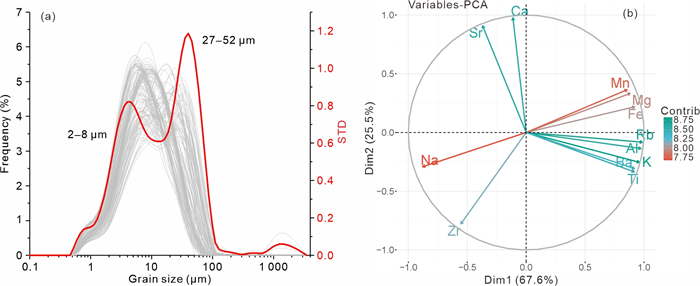
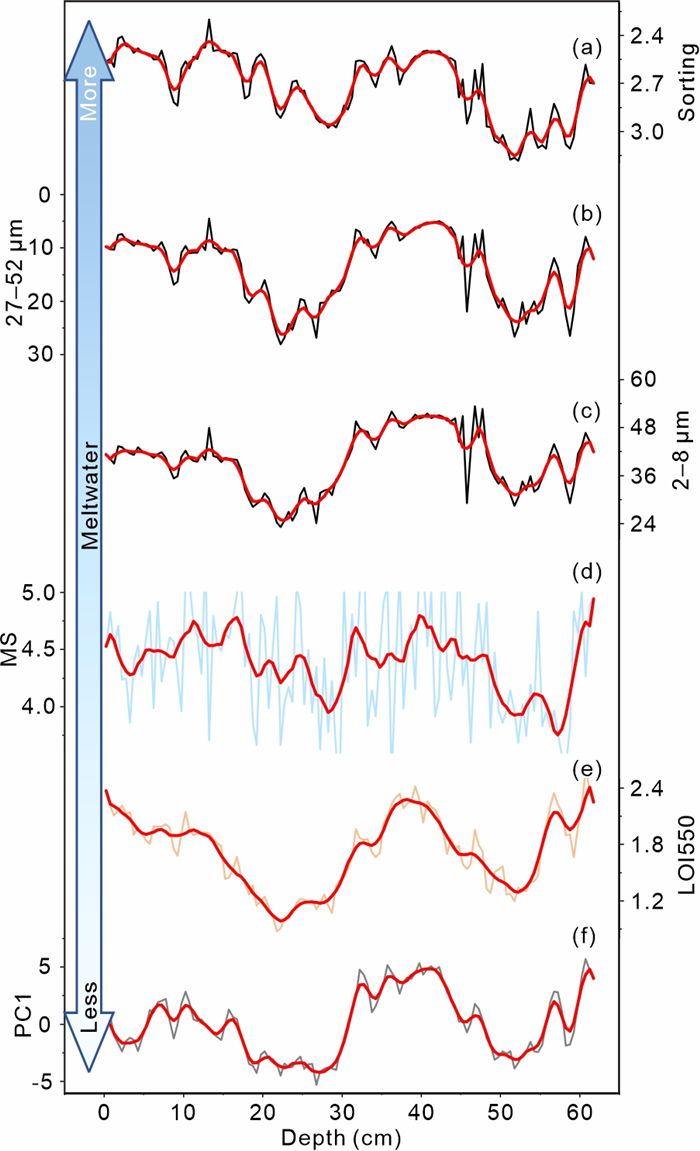
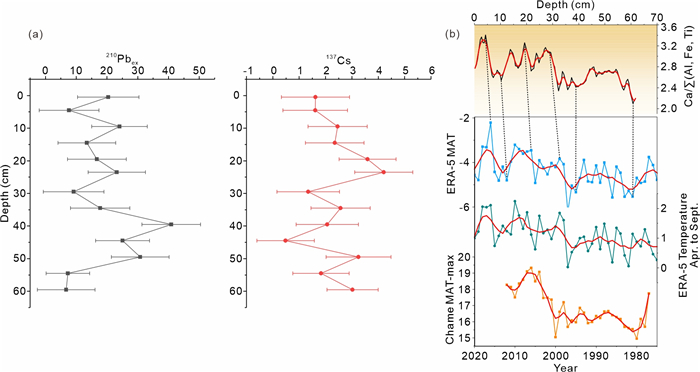
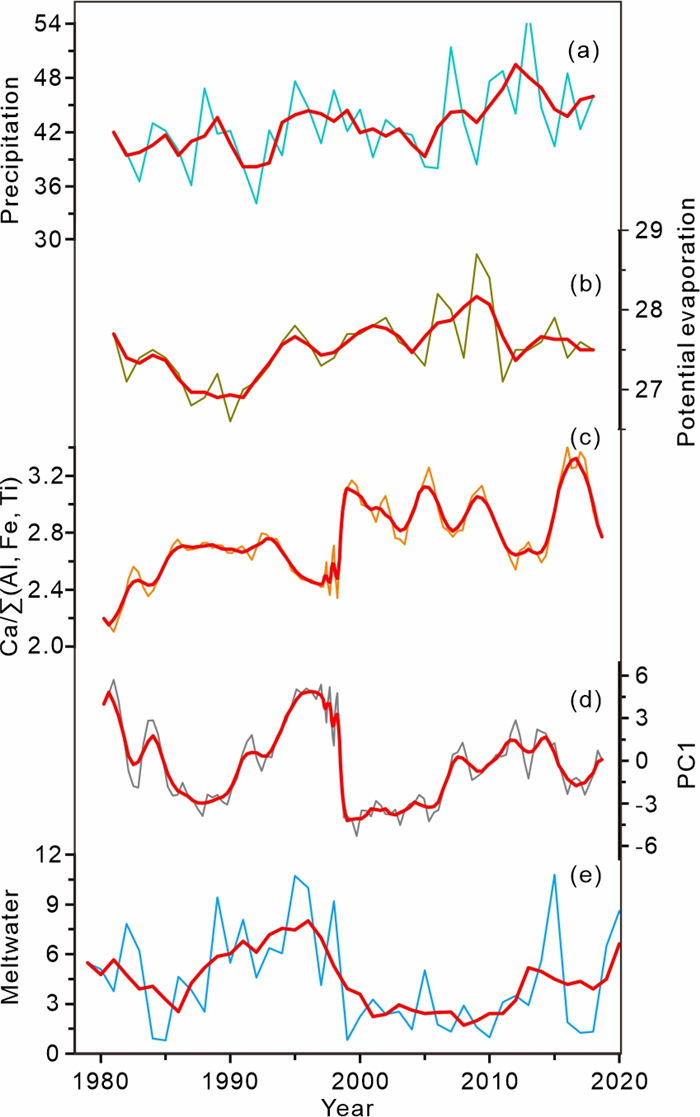
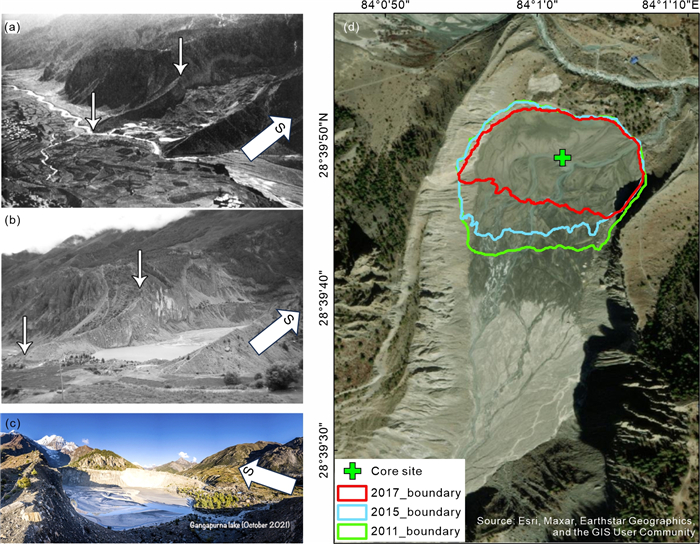
The Himalayan-Tibetan Orogen holds numerous glaciers crucial for the Asian Water Tower, thus influencing the surface energy balance and climate feedback. Understanding glacier fluctuations is essential for improving our knowledge of current and future glacial evolution, but limited by short modern glacial observations. Proglacial lakes provide valuable opportunities to obtain high-resolution and continuous glacial changes, but detailed investigations remain scarce. For example, there is still controversy over whether lake sediments reflect melting or ablation. Therefore, we selected a modern glacial lake in the Himalayan region, formed due to glacial retreat in the 1960s, and compared its sedimentary records with modern observations. This provides a case study for future reconstruction of glacial changes using lake sediments. Our results indicate that the sediments of the proglacial lake are primarily influenced by glacial meltwater. Stronger meltwater fluxes transport more debris, magnetic minerals, and terrestrially derived organic matter to the lake. In terms of grain size distribution, the fine silt component (2–8 μm) can serve as an indicator of glacial meltwater intensity. Additionally, this study reveals an opposite trend between glacial meltwater variations and air temperature trends over the past few decades. This suggests that evaporation may offset the increase in glacial meltwater, though the multi-century (> 100-year) trend requires validation with longer records.

| Boulton, G. S., 1978. Boulder Shapes and Grain-Size Distributions of Debris as Indicators of Transport Paths through a Glacier and till Genesis. Sedimentology, 25(6): 773–799. https://doi.org/10.1111/j.1365-3091.1978.tb00329.x |
| Carosi, R., Montomoli, C., Iaccarino, S., 2018. 20 Years of Geological Mapping of the Metamorphic Core across Central and Eastern Himalayas. Earth-Science Reviews, 177: 124–138. https://doi.org/10.1016/j.earscirev.2017.11.006 |
| Cockburn, J. M. H., Lamoureux, S. F., 2008. Inflow and Lake Controls on Short-Term Mass Accumulation and Sedimentary Particle Size in a High Arctic Lake: Implications for Interpreting Varved Lacustrine Sedimentary Records. Journal of Paleolimnology, 40(3): 923–942. https://doi.org/10.1007/s10933-008-9207-5 |
| Dong, Z. W., Jiang, H. C., Baccolo, G., et al., 2023. Biological and Pollution Aerosols on Snow and Ice—Interplay between the Atmosphere and the Cryosphere. Journal of Earth Science, 34(6): 1951–1956. https://doi.org/10.1007/s12583-023-2004-2 |
| Finkel, R. C., Owen, L. A., Barnard, P. L., et al., 2003. Beryllium-10 Dating of Mount Everest Moraines Indicates a Strong Monsoon Influence and Glacial Synchroneity Throughout the Himalaya. Geology, 31(6): 561–564. https://doi.org/10.1130/0091-7613(2003)0310561:bdomem>2.0.co;2 doi: 10.1130/0091-7613(2003)0310561:bdomem>2.0.co;2 |
| Folk, R. L., Ward, W. C., 1957. Brazos River Bar: A Study in the Significance of Grain Size Parameters. Journal of Sedimentary Research, 27(1): 3–26. https://doi.org/10.1306/74d70646-2b21-11d7-8648000102c1865d |
| Ghezzi, L., Petrini, R., Montomoli, C., et al., 2017. Findings on Water Quality in Upper Mustang (Nepal) from a Preliminary Geochemical and Geological Survey. Environmental Earth Sciences, 76(19): 651. https://doi.org/10.1007/s12665-017-6991-0 |
| Hilton, J., 1987. A Simple Model for the Interpretation of Magnetic Records in Lacustrine and Ocean Sediments. Quaternary Research, 27(2): 160–166. https://doi.org/10.1016/0033-5894(87)90074-3 |
| Hou, J. Z., Tian, Q., Liang, J., et al., 2017. Climatic Implications of Hydrologic Changes in Two Lake Catchments on the Central Tibetan Plateau since the Last Glacial. Journal of Paleolimnology, 58(2): 257–273. https://doi.org/10.1007/s10933-017-9976-9 |
| Huang, L., Zhu, L. P., Wang, J. B., et al., 2016. Glacial Activity Reflected in a Continuous Lacustrine Record since the Early Holocene from the Proglacial Laigu Lake on the Southeastern Tibetan Plateau. Palaeogeography, Palaeoclimatology, Palaeoecology, 456: 37–45. https://doi.org/10.1016/j.palaeo.2016.05.019 |
| Immerzeel, W. W., van Beek, L. P. H., Bierkens, M. F. P., 2010. Climate Change Will Affect the Asian Water Towers. Science, 328(5984): 1382–1385. https://doi.org/10.1126/science.1183188 |
| Ju, J. T., Zhu, L. P., Huang, L., et al., 2015. Ranwu Lake, a Proglacial Lake with the Potential to Reflect Glacial Activity in SE Tibet. Chinese Science Bulletin, 60(1): 16–30 (in Chinese) doi: 10.1360/N972014-00084 |
| Karki, R., Talchabhadel, R., Aalto, J., et al., 2016. New Climatic Classification of Nepal. Theoretical and Applied Climatology, 125(3): 799–808. https://doi.org/10.1007/s00704-015-1549-0 |
| Karlén, W., 1976. Lacustrine Sediments and Tree-Limit Variations as Indicators of Holocene Climatic Fluctuations in Lappland, Northern Sweden. Geografiska Annaler: Series A, Physical Geography, 58(1/2): 1–34. https://doi.org/10.1080/04353676.1976.11879921 |
| Kharal, D. K., Thapa, U. K., St George, S., et al., 2017. Tree-Climate Relations along an Elevational Transect in Manang Valley, Central Nepal. Dendrochronologia, 41: 57–64. https://doi.org/10.1016/j.dendro.2016.04.004 |
| Konchar, K. M., Staver, B., Salick, J., et al., 2015. Adapting in the Shadow of Annapurna: A Climate Tipping Point. Journal of Ethnobiology, 35(3): 449–471. https://doi.org/10.2993/0278-0771-35.3.449 |
| Kotov, S., Pälike, H., 2018. QAnalySeries—A Cross-Platform Time Series Tuning and Analysis Tool. AGU Fall Meeting Abstracts: PP53D-1230 |
| Kylander, M. E., Ampel, L., Wohlfarth, B., et al., 2011. High-Resolution X-Ray Fluorescence Core Scanning Analysis of Les Echets (France) Sedimentary Sequence: new Insights from Chemical Proxies. Journal of Quaternary Science, 26(1): 109–117. https://doi.org/10.1002/jqs.1438 |
| Lan, J. H., Wang, T. L., Chawchai, S., et al., 2020. Time Marker of 137Cs Fallout Maximum in Lake Sediments of Northwest China. Quaternary Science Reviews, 241: 106413. https://doi.org/10.1016/j.quascirev.2020.106413 |
| Landim, P. M. B., Frakes, L. A., 1968. Distinction between Tills and Other Diamictons Based on Textural Characteristics. Journal of Sedimentary Research, 38(4): 1213–1223. https://doi.org/10.1306/74d71b36-2b21-11d7-8648000102c1865d |
| Lemke, P., Ren, J., Alley, R. B., et al., 2007. Observations: Changes in Snow, Ice and Frozen Ground. In: Solomon, S., Qin, D., Manning, M., et al., eds., Climate Change 2007: The Physical Science Basis. Contribution of Working Group Ⅰ to the Fourth Assessment Report of the Intergovernmental Panel on Climate Change, Cambridge, New York |
| Leonard, E. M., 1986. Varve Studies at Hector Lake, Alberta, Canada, and the Relationship between Glacial Activity and Sedimentation. Quaternary Research, 25(2): 199–214. https://doi.org/10.1016/0033-5894(86)90057-8 |
| Li, C. G., Wang, M. D., Liu, W. G., et al., 2021. Quantitative Estimates of Holocene Glacier Meltwater Variations on the Western Tibetan Plateau. Earth and Planetary Science Letters, 559: 116766. https://doi.org/10.1016/j.epsl.2021.116766 |
| Liang, X. G., Song, C. Q., Liu, K., et al., 2023. Reconstructing Centennial-Scale Water Level of Large Pan-Arctic Lakes Using Machine Learning Methods. Journal of Earth Science, 34(4): 1218–1230. https://doi.org/10.1007/s12583-022-1739-5 |
| Lie, Ø., Dahl, S. O., Nesje, A., et al., 2004. Holocene Fluctuations of a Polythermal Glacier in High-Alpine Eastern Jotunheimen, Central-Southern Norway. Quaternary Science Reviews, 23(18/19): 1925–1945. https://doi.org/10.1016/j.quascirev.2004.03.012 |
| Liu, X. Q., Herzschuh, U., Wang, Y. B., et al., 2014. Glacier Fluctuations of Muztagh Ata and Temperature Changes during the Late Holocene in Westernmost Tibetan Plateau, Based on Glaciolacustrine Sediment Records. Geophysical Research Letters, 41(17): 6265–6273. https://doi.org/10.1002/2014gl060444 |
| Long, X. Y., Hu, Y. X., Gan, B. R., et al., 2024. Numerical Simulation of the Mass Movement Process of the 2018 Sedongpu Glacial Debris Flow by Using the Fluid-Solid Coupling Method. Journal of Earth Science, 35(2): 583–596. https://doi.org/10.1007/s12583-022-1625-1 |
| Loso, M. G., Anderson, R. S., Anderson, S. P., et al., 2006. A 1500-Year Record of Temperature and Glacial Response Inferred from Varved Iceberg Lake, Southcentral Alaska. Quaternary Research, 66(1): 12–24. https://doi.org/10.1016/j.yqres.2005.11.007 |
| Lu, Y. B., Fritz, S. C., Stone, J. R., et al., 2017. Trends in Catchment Processes and Lake Evolution during the Late-Glacial and Early- to Mid-Holocene Inferred from High-Resolution XRF Data in the Yellowstone Region. Journal of Paleolimnology, 58(4): 551–569. https://doi.org/10.1007/s10933-017-9991-x |
| Matthews, J. A., Olaf Dahl, S., Nesje, A., et al., 2000. Holocene Glacier Variations in Central Jotunheimen, Southern Norway Based on Distal Glaciolacustrine Sediment Cores. Quaternary Science Reviews, 19(16): 1625–1647. https://doi.org/10.1016/s0277-3791(00)00008-1 |
| Matthews, J. A., Karlen, W., 1992. Asynchronous Neoglaciation and Holocene Climatic Change Reconstructed from Norwegian Glaciolacustrine Sedimentary Sequences. Geology, 20(11): 991–994. https://doi.org/10.1130/0091-7613(1992)0200991:anahcc>2.3.co;2 doi: 10.1130/0091-7613(1992)0200991:anahcc>2.3.co;2 |
| Mueller, A. D., Islebe, G. A., Hillesheim, M. B., et al., 2009. Climate Drying and Associated Forest Decline in the Lowlands of Northern Guatemala during the Late Holocene. Quaternary Research, 71(2): 133–141. https://doi.org/10.1016/j.yqres.2008.10.002 |
|
Muñoz Sabater, J., 2019. ERA5-Land monthly Averaged Data from 1950 to Present. Copernicus Climate Change Service (C3S) Climate Data Store (CDS). [2025-1-10]. |
| Nesje, A., Olaf Dahl, S., Andersson, C., et al., 2000. The Lacustrine Sedimentary Sequence in Sygneskardvatnet, Western Norway: A Continuous, High-Resolution Record of the Jostedalsbreen Ice Cap during the Holocene. Quaternary Science Reviews, 19(11): 1047–1065. https://doi.org/10.1016/s0277-3791(99)00090-6 |
| Oerlemans, J., 2005. Extracting a Climate Signal from 169 Glacier Records. Science, 308(5722): 675–677. https://doi.org/10.1126/science.1107046 |
| Pritchard, H. D., 2017. Addendum: Editorial Expression of Concern: Asia's Glaciers are a regionally Important Buffer against Drought. Nature, 550(7677): 548. https://doi.org/10.1038/nature22062 |
| Pritchard, H. D., 2019. Asia's Shrinking Glaciers Protect Large Populations from Drought Stress. Nature, 569(7758): 649–654. https://doi.org/10.1038/s41586-019-1240-1 |
| Simonneau, A., Chapron, E., Garçon, M., et al., 2014. Tracking Holocene Glacial and High-Altitude Alpine Environments Fluctuations from Minerogenic and Organic Markers in Proglacial Lake Sediments (Lake Blanc Huez, Western French Alps). Quaternary Science Reviews, 89: 27–43. https://doi.org/10.1016/j.quascirev.2014.02.008 |
| Smith, N. D., 1978. Sedimentation Processes and Patterns in a Glacier-Fed Lake with Low Sediment Input. Canadian Journal of Earth Sciences, 15(5): 741–756. https://doi.org/10.1139/e78-081 |
| Snowball, I., Sandgren, P., Petterson, G., 1999. The Mineral Magnetic Properties of an Annually Laminated Holocene Lake-Sediment Sequence in Northern Sweden. The Holocene, 9(3): 353–362. https://doi.org/10.1191/095968399670520633 |
| Stansell, N. D., Polissar, P. J., Abbott, M. B., et al., 2014. Proglacial Lake Sediment Records Reveal Holocene Climate Changes in the Venezuelan Andes. Quaternary Science Reviews, 89: 44–55. https://doi.org/10.1016/j.quascirev.2014.01.021 |
| Su, F., Zhang, L., Ou, T., et al., 2016. Hydrological Response to Future Climate Changes for the Major Upstream River Basins in the Tibetan Plateau. Global and Planetary Change, 136: 82–95. https://doi.org/10.1016/j.gloplacha.2015.10.012 |
| Thompson, L. G., Yao, T., Davis, M. E., et al., 1997. Tropical Climate Instability: The Last Glacial Cycle from a Qinghai-Tibetan Ice Core. Science, 276: 1821–1825 doi: 10.1126/science.276.5320.1821 |
| Xu, T., Zhu, L. P., Lü, X. M., et al., 2019. Mid- to Late-Holocene Paleoenvironmental Changes and Glacier Fluctuations Recon-structed from the Sediments of Proglacial Lake Buruo Co, Northern Tibetan Plateau. Palaeogeography, Palaeoclimatology, Palaeoecology, 517: 74–85. https://doi.org/10.1016/j.palaeo.2018.12.023 |
| Yao, T. D., Thompson, L., Yang, W., et al., 2012. Different Glacier Status with Atmospheric Circulations in Tibetan Plateau and Surroundings. Nature Climate Change, 2(9): 663–667. https://doi.org/10.1038/nclimate1580 |
| Zhang, J. F., Xu, B. Q., Turner, F., et al., 2017. Long-Term Glacier Melt Fluctuations over the Past 2500 yr in Monsoonal High Asia Revealed by Radiocarbon-Dated Lacustrine Pollen Concentrates. Geology, 45(4): 359–362. https://doi.org/10.1130/g38690.1 |
| Zou, Q., Zhou, B., Yang, T., et al., 2024. Spatio-Temporal Differentiation Characteristics of Glacial Lake Outburst in the Himalayas. Earth Science, 49(11): 4047–4062. https://doi.org/10.3799/dqkx.2024.083 (in Chinese with English Abstract) |
Figures(5)
Copyright © 2013-2020 Journal of Earth Science 鄂ICP备15021562号-2
Tel: +86-27-67885075 Fax: +86-27-67885075 E-mail: xbb@cug.edu.cn
Address: Editorial Office of Journal, China University of Geosciences, Yujiashan, Wuhan, Hubei 430074, P. R. China
Supported by:
Beijing Renhe Information Technology Co. Ltd
E-mail:
info@rhhz.net


 DownLoad: