| Citation: | Xiaojun Wu, Jiakun Liu, Zigeng Niu, Pengcheng Qin, Yang Feng, Xihui Gu, Jie Gong, Rui He. Projection of Population Exposure to Compound Extreme Climate Events in the Yangtze River Basin. Journal of Earth Science, 2025, 36(6): 2771-2788. doi: 10.1007/s12583-025-0261-y

|
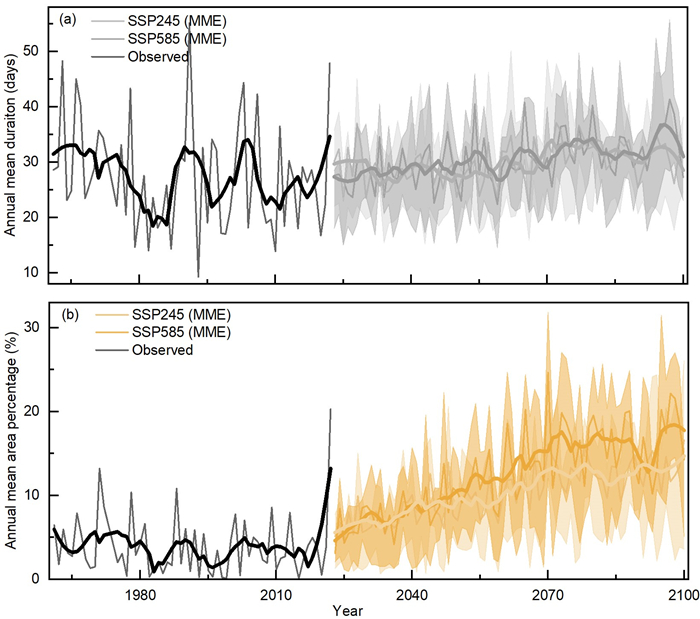
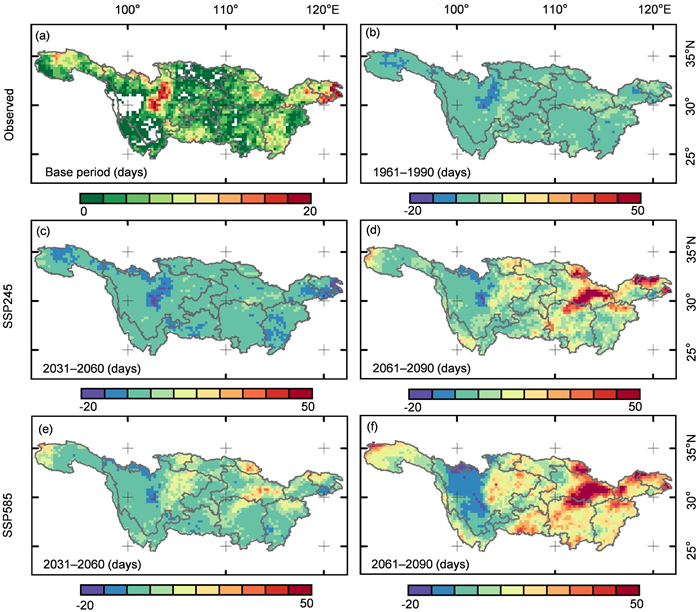
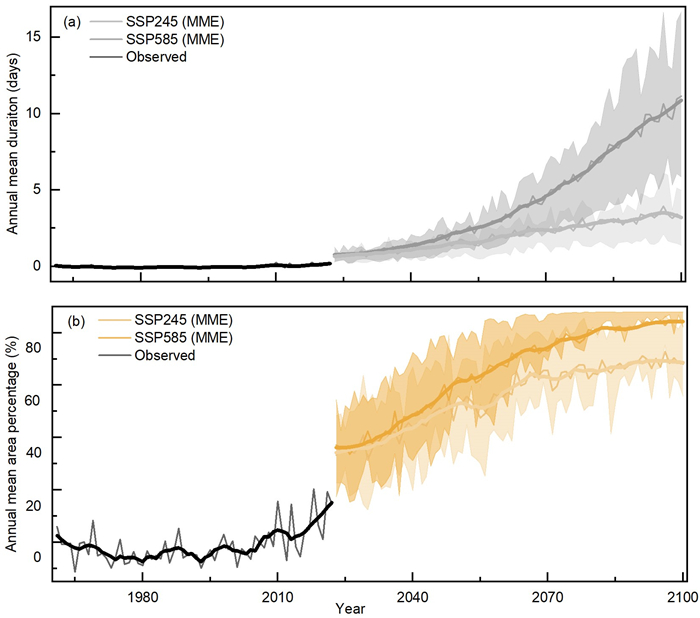
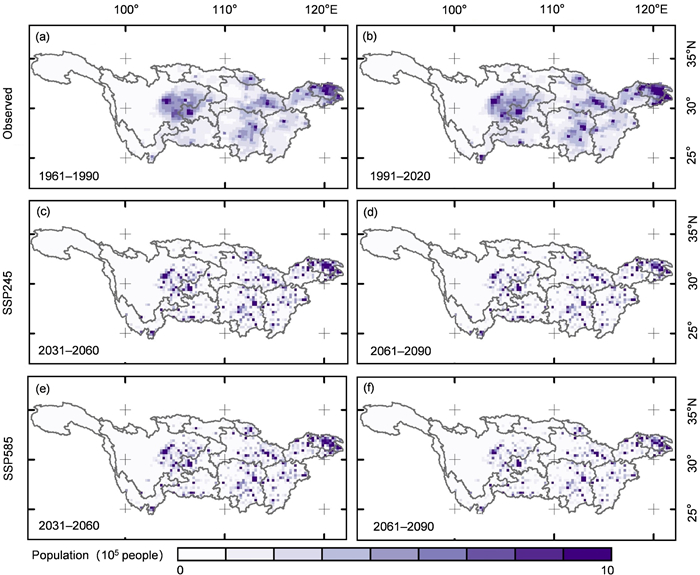
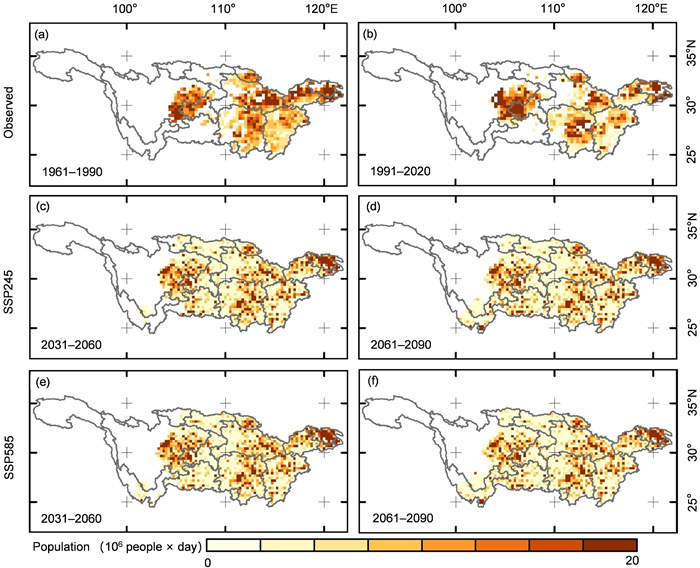
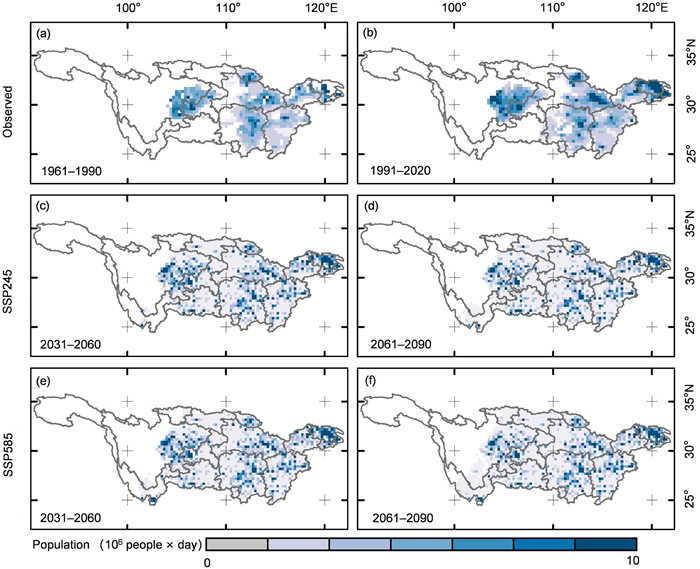
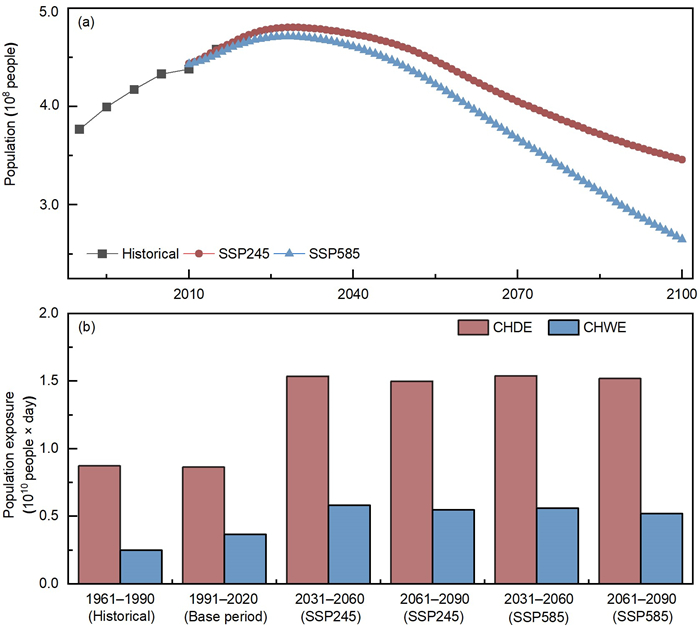
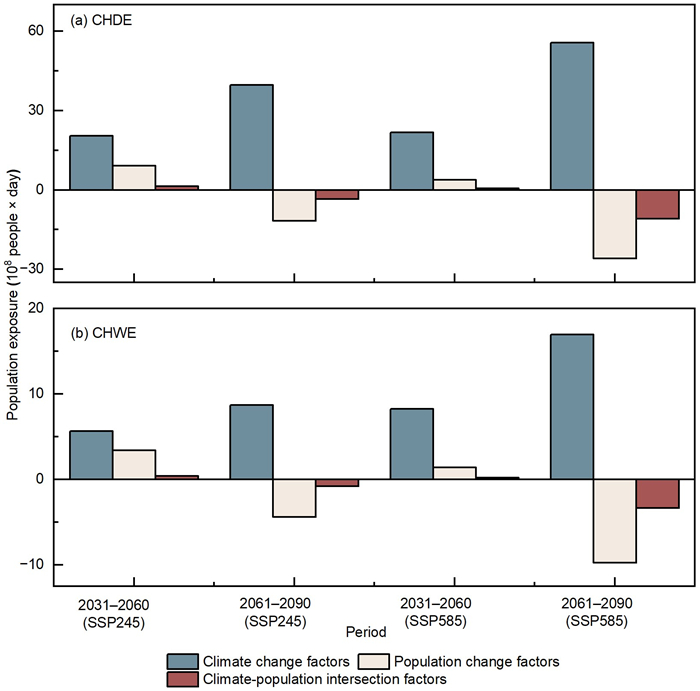
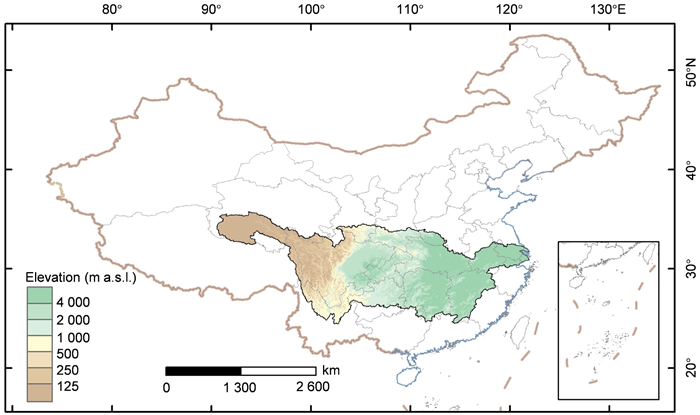
Compound extreme climate events may profoundly affect human activity in the Yangtze River Basin. This study analyzed the long-term spatiotemporal distribution characteristics of compound heatwave-drought and heatwave-waterlogging events in the Yangtze River Basin using multi-period historical observation data and future scenario climate model data. It also examined the changes in population exposure to compound extreme climate events in the basin and their driving factors by combining population statistics and forecast data. The results show that the occurrence days of compound heatwave-drought and heatwave-waterlogging events in the Yangtze River Basin have shown a significant upward trend both in historical periods and future scenarios, accompanied by a marked expansion in the affected areas. Compared to historical periods, population exposure in the Yangtze River Basin under future scenarios is expected to increase by 1.5–2 times, primarily concentrated in the key urban areas of the basin. The main factors driving the changes in population exposure are the increased frequency of extreme climate events and population decline in future scenarios. These findings provide scientific evidence for early mitigation of meteorological disasters in the Yangtze River Basin.

| Batibeniz, F., Ashfaq, M., Diffenbaugh, N. S., et al., 2020. Doubling of U.S. Population Exposure to Climate Extremes by 2050. Earth's Future, 8(4): e2019EF001421. https://doi.org/10.1029/2019ef001421 |
| Bevacqua, E., De Michele, C., Manning, C., et al., 2021. Guidelines for Studying Diverse Types of Compound Weather and Climate Events. Earth's Future, 9(11): e2021EF002340. https://doi.org/10.1029/2021ef002340 |
| Chen, H. P., He, W. Y., Sun, J. Q., et al., 2022. Increases of Extreme Heat-Humidity Days Endanger Future Populations Living in China. Environmental Research Letters, 17(6): 064013. https://doi.org/10.1088/1748-9326/ac69fc |
| Chen, H. P., Sun, J. Q., 2021. Significant Increase of the Global Population Exposure to Increased Precipitation Extremes in the Future. Earth's Future, 9(9): e2020EF001941. https://doi.org/10.1029/2020ef001941 |
| Chen, H. P., Sun, J. Q., Li, H. X., 2020. Increased Population Exposure to Precipitation Extremes under Future Warmer Climates. Environmental Research Letters, 15(3): 034048. https://doi.org/10.1088/1748-9326/ab751f |
| Chen, X. Y., Li, W., Zhang, Q., et al., 2021. Construction and Application of a Flood-Waterlogging Index in the Middle and Lower Reaches of the Yangtze River. Advances in Water Science, 32(6): 834–842. https://doi.org/10.14042/j.cnki.32.1309.2021.06.003 (in Chinese with English Abstract) |
| Chen, Y. D., Guo, F., Wang, J. C., et al., 2020. Provincial and Gridded Population Projection for China under Shared Socioeconomic Pathways from 2010 to 2100. Scientific Data, 7: 83. https://doi.org/10.1038/s41597-020-0421-y |
| Dahl, K., Licker, R., Abatzoglou, J. T., et al., 2019. Increased Frequency of and Population Exposure to Extreme Heat Index Days in the United States during the 21st Century. Environmental Research Communications, 1(7): 075002. https://doi.org/10.1088/2515-7620/ab27cf |
| Dai, K. X., Shen, S., Cheng, C. X., 2022. Evaluation and Analysis of the Projected Population of China. Scientific Reports, 12: 3644. https://doi.org/10.1038/s41598-022-07646-x |
| Das, J., Manikanta, V., Umamahesh, N. V., 2022. Population Exposure to Compound Extreme Events in India under Different Emission and Population Scenarios. Science of the Total Environment, 806: 150424. https://doi.org/10.1016/j.scitotenv.2021.150424 |
| Duan, H. B., Zhou, S., Jiang, K. J., et al., 2021. Assessing China's Efforts to Pursue the 1.5 ℃ Warming Limit. Science, 372(6540): 378–385. https://doi.org/10.1126/science.aba8767 |
| Ebi, K. L., Vanos, J., Baldwin, J. W., et al., 2021. Extreme Weather and Climate Change: Population Health and Health System Implications. Annual Review of Public Health, 42: 293–315. https://doi.org/10.1146/annurev-publhealth-012420-105026 |
| Fang, P., Wang, T. H., Yang, D. W., et al., 2025. Substantial Increases in Compound Climate Extremes and Associated Socio-Economic Exposure across China under Future Climate Change. NPJ Climate and Atmospheric Science, 8: 17. https://doi.org/10.1038/s41612-025-00910-7 |
| Feng, R. D., Wang, F. Y., Liu, S. H., et al., 2023. How Urban Ecological Land Affects Resident Heat Exposure: Evidence from the Mega-Urban Agglomeration in China. Landscape and Urban Planning, 231: 104643. https://doi.org/10.1016/j.landurbplan.2022.104643 |
| Gao, J., Bukovsky, M. S., 2023. Urban Land Patterns Can Moderate Population Exposures to Climate Extremes over the 21st Century. Nature Communications, 14: 6536. https://doi.org/10.1038/s41467-023-42084-x |
| Hao, Z. C., Hao, F. H., Xia, Y. L., et al., 2022. Compound Droughts and Hot extremes: Characteristics, Drivers, Changes, and Impacts. Earth-Science Reviews, 235: 104241. https://doi.org/10.1016/j.earscirev.2022.104241 |
| Hargreaves, G. H., Samani, Z. A., 1985. Reference Crop Evapotranspiration from Temperature. Applied Engineering in Agriculture, 1(2): 96–99. https://doi.org/10.13031/2013.26773 |
| He, B. J., Wang, J. S., Zhu, J., et al., 2022. Beating the Urban heat: Situation, Background, Impacts and the Way Forward in China. Renewable and Sustainable Energy Reviews, 161: 112350. https://doi.org/10.1016/j.rser.2022.112350 |
| He, K. L., Chen, X. H., Zhou, J. Y., et al., 2024. Compound Successive Dry-Hot and Wet Extremes in China with Global Warming and Urbanization. Journal of Hydrology, 636: 131332. https://doi.org/10.1016/j.jhydrol.2024.131332 |
| Huang, S. Z., Zhang, X., Chen, N. C., et al., 2021. Drought Propagation Modification after the Construction of the Three Gorges Dam in the Yangtze River Basin. Journal of Hydrology, 603: 127138. https://doi.org/10.1016/j.jhydrol.2021.127138 |
| Iyakaremye, V., Zeng, G., Yang, X. Y., et al., 2021. Increased High-Temperature Extremes and Associated Population Exposure in Africa by the Mid-21st Century. Science of the Total Environment, 790: 148162. https://doi.org/10.1016/j.scitotenv.2021.148162 |
| Jones, B., O'Neill, B. C., McDaniel, L., et al., 2015. Future Population Exposure to US Heat Extremes. Nature Climate Change, 5(7): 652–655. https://doi.org/10.1038/nclimate2631 |
| Jones, B., Tebaldi, C., O'Neill, B. C., et al., 2018. Avoiding Population Exposure to Heat-Related Extremes: Demographic Change vs Climate Change. Climatic Change, 146(3): 423–437. https://doi.org/10.1007/s10584-017-2133-7 |
| Kemp, L., Xu, C., Depledge, J., et al., 2022. Climate Endgame: Exploring Catastrophic Climate Change Scenarios. Proceedings of the National Academy of Sciences of the United States of America, 119(34): e2108146119. https://doi.org/10.1073/pnas.2108146119 |
| Lafferty, D. C., Sriver, R. L., 2023. Downscaling and Bias-Correction Contribute Considerable Uncertainty to Local Climate Projections in CMIP6. NPJ Climate and Atmospheric Science, 6: 158. https://doi.org/10.1038/s41612-023-00486-0 |
| Lange, S., Volkholz, J., Geiger, T., et al., 2020. Projecting Exposure to Extreme Climate Impact Events across Six Event Categories and Three Spatial Scales. Earth's Future, 8(12): e2020EF001616. https://doi.org/10.1029/2020ef001616 |
| Lee, W., Choi, M., Bell, M. L., et al., 2022. Effects of Urbanization on Vulnerability to Heat-Related Mortality in Urban and Rural Areas in South Korea: A Nationwide District-Level Time-Series Study. International Journal of Epidemiology, 51(1): 111–121. https://doi.org/10.1093/ije/dyab148 |
| Li, B., Fan, C., Chien, Y. H., et al., 2024. Mobility Behaviors Shift Disparity in Flood Exposure in U. S. Population Groups. International Journal of Disaster Risk Reduction, 108: 104545. https://doi.org/10.1016/j.ijdrr.2024.104545 |
| Li, D. W., Yuan, J. C., Kopp, R. E., 2020. Escalating Global Exposure to Compound Heat-Humidity Extremes with Warming. Environmental Research Letters, 15(6): 064003. https://doi.org/10.1088/1748-9326/ab7d04 |
| Li, L., Zha, Y., 2020. Population Exposure to Extreme Heat in China: Frequency, Intensity, Duration and Temporal Trends. Sustainable Cities and Society, 60: 102282. https://doi.org/10.1016/j.scs.2020.102282 |
| Liu, Z., Anderson, B., Yan, K., et al., 2017. Global and Regional Changes in Exposure to Extreme Heat and the Relative Contributions of Climate and Population Change. Scientific Reports, 7: 43909. https://doi.org/10.1038/srep43909 |
| Ma, F., Yuan, X., 2021. Impact of Climate and Population Changes on the Increasing Exposure to Summertime Compound Hot Extremes. Science of the Total Environment, 772: 145004. https://doi.org/10.1016/j.scitotenv.2021.145004 |
| Materia, S., García, L. P., van Straaten, C., et al., 2024. Artificial Intelligence for Climate Prediction of Extremes: State of the Art, Challenges, and Future Perspectives. Wiley Interdisciplinary Reviews: Climate Change, 15(6): e914. https://doi.org/10.1002/wcc.914 |
| Meng, C. Q., Liu, K. Y., Li, Y., et al., 2025. Identification of Compound Flood-Heatwave Extremes in the Yangtze River Basin and Their Socio-Economic Exposure. Journal of Hydrology, 649: 132387. https://doi.org/10.1016/j.jhydrol.2024.132387 |
| Orimoloye, I. R., Belle, J. A., Olusola, A. O., et al., 2021. Spatial Assessment of Drought Disasters, Vulnerability, Severity and Water Shortages: A Potential Drought Disaster Mitigation Strategy. Natural Hazards, 105(3): 2735–2754. https://doi.org/10.1007/s11069-020-04421-x |
|
Seneviratne, S. I., Zhang, X., Adnan, M., et al., 2021. Weather and Climate Extreme Events in a Changing Climate. Cambridge University Press, Cambridge, UK. 1513–1766. |
| Sheng, Y., Shen, C. H., Li, Y., et al., 2024. Projected Population Exposure to Precipitation Extremes in China by the End of the Twenty-First Century: Trends, Change Points, and Spatial Variability. Regional Environmental Change, 24(4): 163. https://doi.org/10.1007/s10113-024-02327-z |
| Smirnov, O., Zhang, M. H., Xiao, T. Y., et al., 2016. The Relative Importance of Climate Change and Population Growth for Exposure to Future Extreme Droughts. Climatic Change, 138(1): 41–53. https://doi.org/10.1007/s10584-016-1716-z |
| Sun, S., Dai, T. L., Wang, Z. Y., et al., 2021. Projected Increases in Population Exposure of Daily Climate Extremes in Eastern China by 2050. Advances in Climate Change Research, 12(6): 804–813. https://doi.org/10.1016/j.accre.2021.09.014 |
| Tellman, B., Sullivan, J. A., Kuhn, C., et al., 2021. Satellite Imaging Reveals Increased Proportion of Population Exposed to Floods. Nature, 596(7870): 80–86. https://doi.org/10.1038/s41586-021-03695-w |
| Tuholske, C., Caylor, K., Funk, C., et al., 2021. Global Urban Population Exposure to Extreme Heat. Proceedings of the National Academy of Sciences of the United States of America, 118(41): e2024792118. https://doi.org/10.1073/pnas.2024792118 |
| Wang, F., Zhang, J. T., 2023. Projection of Population Exposure to Compound Extreme Heat-Humidity Events in China in the 21st Century. Scientia Geographica Sinica, 43(7): 1259–1269. https://doi.org/10.13249/j.cnki.sgs.2023.07.013 (in Chinese with English Abstract) |
| Wang, C. C., Ren, Z. B., Guo, Y. J., et al., 2024. Assessing Urban Population Exposure Risk to Extreme Heat: Patterns, Trends, and Implications for Climate Resilience in China (2000–2020). Sustainable Cities and Society, 103: 105260. https://doi.org/10.1016/j.scs.2024.105260 |
| Wang, T. T., Sun, F. B., 2023. Integrated Drought Vulnerability and Risk Assessment for Future Scenarios: An Indicator Based Analysis. Science of the Total Environment, 900: 165591. https://doi.org/10.1016/j.scitotenv.2023.165591 |
| Wang, Y. Z., Zou, H., Duan, X. J., et al., 2022. Coordinated Evolution and Influencing Factors of Population and Economy in the Yangtze River Economic Belt. International Journal of Environmental Research and Public Health, 19(21): 14395. https://doi.org/10.3390/ijerph192114395 |
| Weber, T., Bowyer, P., Rechid, D., et al., 2020. Analysis of Compound Climate Extremes and Exposed Population in Africa under Two Different Emission Scenarios. Earth's Future, 8(9): e2019EF001473. https://doi.org/10.1029/2019ef001473 |
| Wei, Y. H., She, D. X., Xia, J., et al., 2024. Climate Change Dominates the Increasing Exposure of Global Population to Compound Heatwave and Humidity Extremes in the Future. Climate Dynamics, 62(7): 6203–6217. https://doi.org/10.1007/s00382-024-07199-x |
| Weilnhammer, V., Schmid, J., Mittermeier, I., et al., 2021. Extreme Weather Events in Europe and Their Health Consequences—A Systematic Review. International Journal of Hygiene and Environmental Health, 233: 113688. https://doi.org/10.1016/j.ijheh.2021.113688 |
| Wu, J., Gao, X. J., 2013. A Gridded Daily Observation Dataset over China Region and Comparison with the Other Datasets. Chinese Journal of Geophysics, 56(4): 1102–1111. https://doi.org/10.6038/cjg20130406 (in Chinese with English Abstract) |
| Xu, H. W., Chen, H. P., Wang, H. J., 2022. Future Changes in Precipitation Extremes across China Based on CMIP6 Models. International Journal of Climatology, 42(1): 635–651. https://doi.org/10.1002/joc.7264 |
| Xu, Y. Y., Wu, X. K., Kumar, R., et al., 2020. Substantial Increase in the Joint Occurrence and Human Exposure of Heatwave and High-PM Hazards over South Asia in the Mid-21st Century. AGU Advances, 1(2): e2019AV000103. https://doi.org/10.1029/2019av000103 |
| Yan, H. W., Li, Y. Z., Xing, Y. C., et al., 2025. Increasing Human-Perceived Temperature Exacerbated by Urbanization in China's Major Cities: Spatiotemporal Trends and Associated Driving Factors. Sustainable Cities and Society, 118: 106034. https://doi.org/10.1016/j.scs.2024.106034 |
| Yang, P., Zhang, S. Q., Xia, J., et al., 2022. Analysis of Drought and Flood Alternation and Its Driving Factors in the Yangtze River Basin under Climate Change. Atmospheric Research, 270: 106087. https://doi.org/10.1016/j.atmosres.2022.106087 |
| Zhang, W., Li, Y., Li, Z., et al., 2020. Impacts of Climate Change, Population Growth, and Urbanization on Future Population Exposure to Long-Term Temperature Change during the Warm Season in China. Environmental Science and Pollution Research, 27(8): 8481–8491. https://doi.org/10.1007/s11356-019-07238-9 |
| Zhang, X., Hao, Z. C., Singh, V. P., et al., 2022. Drought Propagation under Global Warming: Characteristics, Approaches, Processes, and Controlling Factors. Science of the Total Environment, 838: 156021. https://doi.org/10.1016/j.scitotenv.2022.156021 |
| Zhao, X., Ma, X. W., Chen, B. Y., et al., 2022. Challenges toward Carbon Neutrality in China: Strategies and Countermeasures. Resources, Conservation and Recycling, 176: 105959. https://doi.org/10.1016/j.resconrec.2021.105959 |
| Zhu, H. H., Jiang, Z. H., Li, L., 2021. Projection of Climate Extremes in China, an Incremental Exercise from CMIP5 to CMIP6. Science Bulletin, 66(24): 2528–2537. https://doi.org/10.1016/j.scib.2021.07.026 |
| Zhu, M., Zhang, Z. X., Zhu, B., et al., 2020. Population and Economic Projections in the Yangtze River Basin Based on Shared Socioeconomic Pathways. Sustainability, 12(10): 4202. https://doi.org/10.3390/su12104202 |
| Zscheischler, J., Westra, S., van den Hurk, B. J. J. M., et al., 2018. Future Climate Risk from Compound Events. Nature Climate Change, 8(6): 469–477. https://doi.org/10.1038/s41558-018-0156-3 |
Figures(13) / Tables(3)
Copyright © 2013-2020 Journal of Earth Science 鄂ICP备15021562号-2
Tel: +86-27-67885075 Fax: +86-27-67885075 E-mail: xbb@cug.edu.cn
Address: Editorial Office of Journal, China University of Geosciences, Yujiashan, Wuhan, Hubei 430074, P. R. China
Supported by:
Beijing Renhe Information Technology Co. Ltd
E-mail:
info@rhhz.net


 DownLoad: