| Citation: | Li Dong, Yunwu Xiong, Quanjiu Wang. Multiscale Pore-Network Investigation of Granular Soils: Pore Architecture and Associated Hydraulic Properties. Journal of Earth Science, 2026, 37(4): 1754-1767. doi: 10.1007/s12583-026-0031-5

|
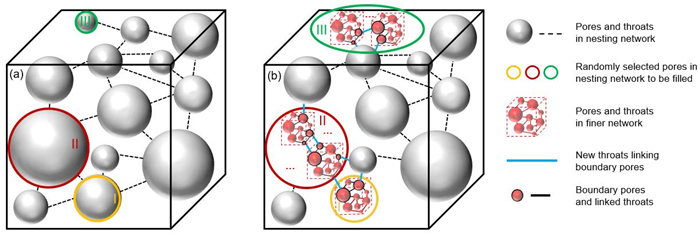
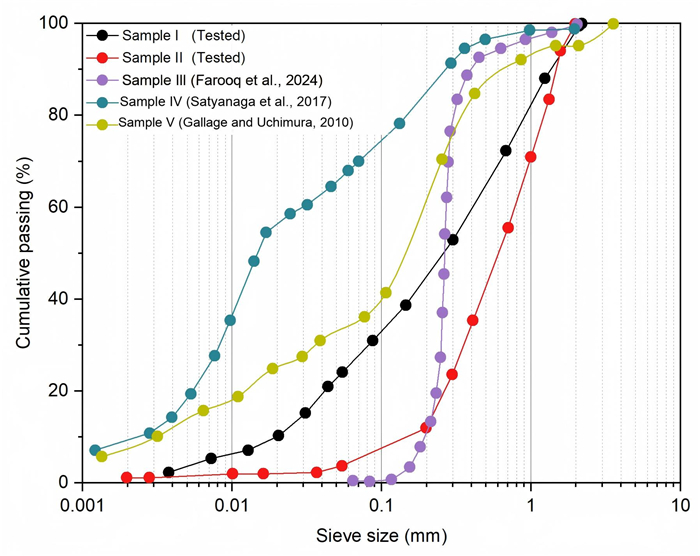
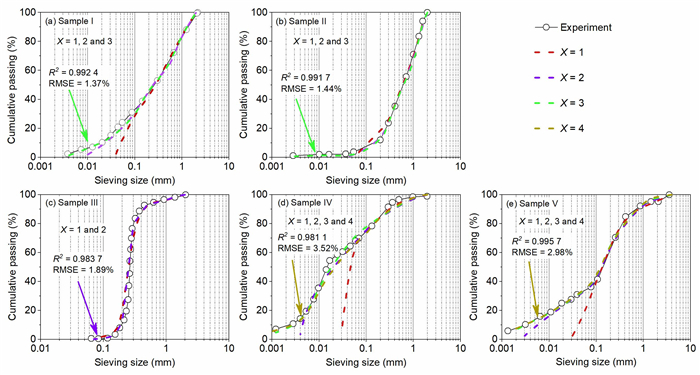
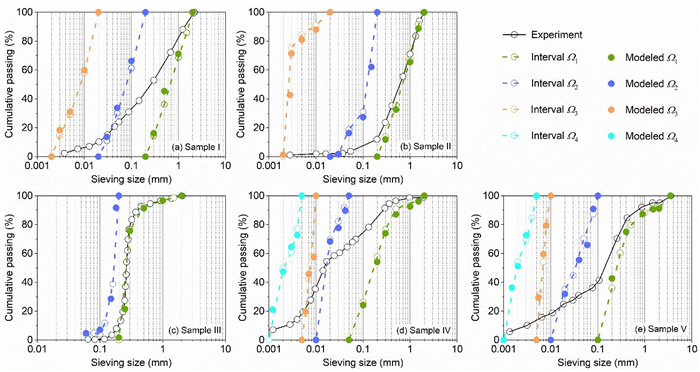
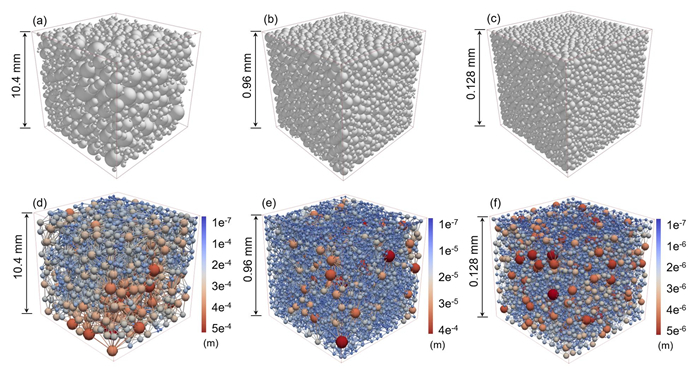
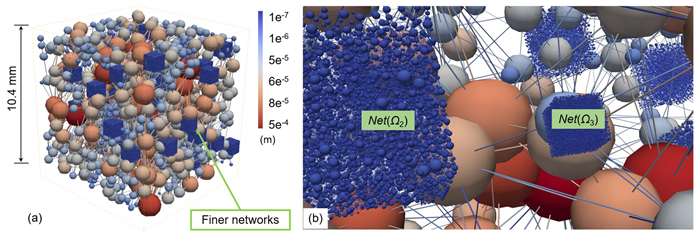
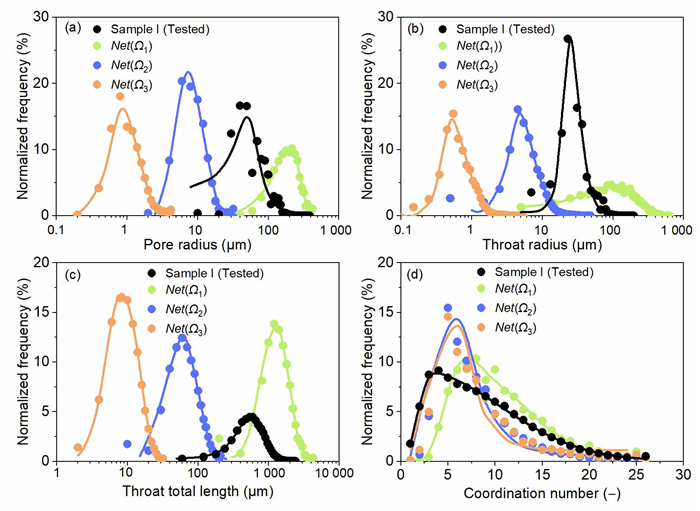
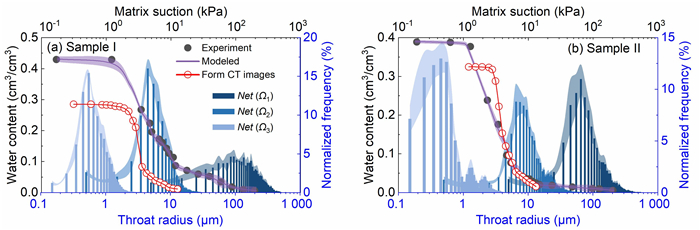
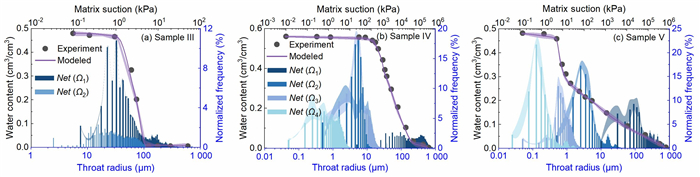
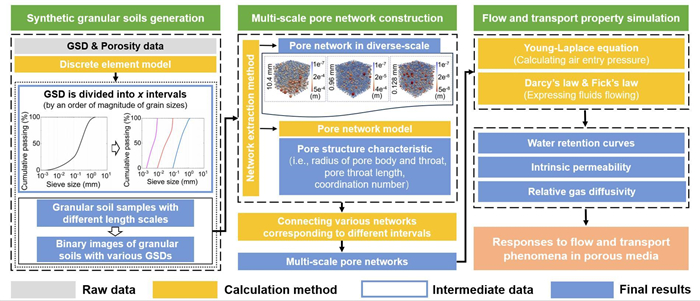
The flow and transport phenomena in granular soils are predominantly governed by the intricate internal structure of the pore space, which is fundamentally determined by grain size distribution and particle spatial arrangement. The characterization of grain-scale packing structures and reliable prediction of flow properties in granular soils, exhibiting broad particle size distributions continue to pose substantial theoretical and computational challenges. In this study, numerical procedures for granular soil generation, multiscale pore-network construction and flow property simulation were systematically applied to granular soils with grain size distribution covering multiple orders of magnitude. Various granular soils are well generated through dividing grain size distribution into multiple intervals with a size ratio not greater than 10 at different length scales. The corresponding topologically equivalent networks of pores and throats are extracted and combined to construct a single multiscale pore-network, which includes pore elements ranging over four orders of magnitude in size, and makes up for the lack of small pore description through X-ray computed tomography method. The flow characteristics of different granular soils are further simulated through the multiscale pore-network modeling, where water retention curves are in good agreement with experimental data, and the intrinsic permeability as well as gas diffusivity are also accurately predicted. The findings of this study provide valuable insights into how grain size distribution influences pore structure and macroscopic flow properties. The developed multiscale pore-network model herein establishes a comprehensive framework that enables investigation of more complex mechanisms, including physical-chemical-biological interactions and other flow phenomena at the pore scale.

| Al-Kharusi, A. S., Blunt, M. J., 2007. Network Extraction from Sandstone and Carbonate Pore Space Images. Journal of Petroleum Science and Engineering, 56(4): 219–231. https://doi.org/10.1016/j.petrol.2006.09.003 |
| Assouline, S., 2006. Modeling the Relationship between Soil Bulk Density and the Water Retention Curve. Vadose Zone Journal, 5(2): 554–563. https://doi.org/10.2136/vzj2005.0083 |
| Banaei, S. M. A., Javid, A. H., Hassani, A. H., 2021. Numerical Simulation of Groundwater Contaminant Transport in Porous Media. International Journal of Environmental Science and Technology, 18(1): 151–162. https://doi.org/10.1007/s13762020-02825-7 |
| Berger, K. J., Hrenya, C. M., 2014. Challenges of DEM: Ⅱ. Wide Particle Size Distributions. Powder Technology, 264: 627–633. https://doi.org/10.1016/j.powtec.2014.04.096 |
| Berisso, F. E., Schjønning, P., Keller, T., et al., 2012. Persistent Effects of Subsoil Compaction on Pore Size Distribution and Gas Transport in a Loamy Soil. Soil and Tillage Research, 122: 42–51. https://doi.org/10.1016/j.still.2012.02.005 |
| Bryant, S., Blunt, M., 1992. Prediction of Relative Permeability in Simple Porous Media. Physical Review A, 46(4): 2004–2011. https://doi.org/10.1103/physreva.46.2004 |
| Chen, L., He, A., Zhao, J. L., et al., 2022. Pore-Scale Modeling of Complex Transport Phenomena in Porous Media. Progress in Energy and Combustion Science, 88: 100968. https://doi.org/10.1016/j.pecs.2021.100968 |
| Daneshian, B., Habibagahi, G., Nikooee, E., 2021. Determination of Unsaturated Hydraulic Conductivity of Sandy Soils: A New Pore Network Approach. Acta Geotechnica, 16(2): 449–466. https://doi.org/10.1007/s11440-020-01088-3 |
| Dong, H., Blunt, M. J., 2009. Pore-Network Extraction from Micro-Computerized-Tomography Images. Physical Review E, 80(3): 036307. https://doi.org/10.1103/physreve.80.036307 |
| Dong, L., Xiong, Y. W., Huang, Q. Z., et al., 2021. Evaporation-Induced Salt Crystallization and Feedback on Hydrological Functions in Porous Media with Different Grain Morphologies. Journal of Hydrology, 598: 126427. https://doi.org/10.1016/j.jhydrol.2021.126427 |
| Dong, L., Zhang, W. T., Xiong, Y. W., et al., 2022. Impact of Short-Term Organic Amendments Incorporation on Soil Structure and Hydrology in Semiarid Agricultural Lands. International Soil and Water Conservation Research, 10(3): 457–469. https://doi.org/10.1016/j.iswcr.2021.10.003 |
| Farooq, U., Gorczewska-Langner, W., Szymkiewicz, A., 2024. Water Retention Curves of Sandy Soils Obtained from Direct Measurements, Particle Size Distribution, and Infiltration Experiments. Vadose Zone Journal, 23(4): e20364. https://doi.org/10.1002/vzj2.20364 |
| Flatt, R. J., Caruso, F., Aguilar Sanchez, A. M., et al., 2014. Chemo-Mechanics of Salt Damage in Stone. Nature Communications, 5: 4823. https://doi.org/10.1038/ncomms5823 |
| Gácsi, Z., Kovács, J., PieczonkaT., 2003. Particle Arrangement Characterization by the Pair Correlation Function. The 3rd Int. PM Conference, September 4–8, 2002, Ankara, Turkey. 30–38 |
| Gallage, C. P. K., Uchimura, T., 2010. Effects of Dry Density and Grain Size Distribution on Soil-Water Characteristic Curves of Sandy Soils. Soils and Foundations, 50(1): 161–172. https://doi.org/10.3208/sandf.50.161 |
| Guida, G., Nicosia, A., Settanni, L., et al., 2023. A Review on Effects of Biological Soil Crusts on Hydrological Processes. Earth-Science Reviews, 243: 104516. https://doi.org/10.1016/j.earsci-rev.2023.104516 |
| Hamamoto, S., Moldrup, P., Kawamoto, K., et al., 2016. Pore Network Structure Linked by X-Ray CT to Particle Characteristics and Transport Parameters. Soils and Foundations, 56(4): 676–690. https://doi.org/10.1016/j.sandf. 2016.07.008 doi: 10.1016/j.sandf.2016.07.008 |
| Hosseinzadegan, A., Raoof, A., Mahdiyar, H., et al., 2023. Review on Pore-Network Modeling Studies of Gas-Condensate Flow: Pore Structure, Mechanisms, and Implementations. Geoenergy Science and Engineering, 226: 211693. https://doi.org/10.1016/j.geoen.2023.211693 |
| Katuwal, S., Arthur, E., Tuller, M., et al., 2015. Quantification of Soil Pore Network Complexity with X-Ray Computed Tomography and Gas Transport Measurements. Soil Science Society of America Journal, 79(6): 1577–1589. https://doi.org/10.2136/sssaj2015.06.0227 |
| Kreba, S. A., Wendroth, O., Coyne, M. S., et al., 2017. Soil Gas Diffusivity, Air-Filled Porosity, and Pore Continuity: Land Use and Spatial Patterns. Soil Science Society of America Journal, 81(3): 477–489. https://doi.org/10.2136/sssaj2016.10.0344 |
| Li, X., Teng, Q. Z., Zhang, Y. H., et al., 2020. Three-Dimensional Multiscale Fusion for Porous Media on Microtomography Images of Different Resolutions. Physical Review E, 101(5): 053308. https://doi.org/10.1103/physreve.101.053308 |
| Lindquist, W. B., Lee, S. -M., Coker, D. A., et al., 1996. Medial Axis Analysis of Void Structure in Three-Dimensional Tomographic Images of Porous Media. Journal of Geophysical Research: Solid Earth, 101(B4): 8297–8310. https://doi.org/10.1029/95jb 03039 doi: 10.1029/95jb03039 |
| Liu, Y. F., Jeng, D. S., 2019. Pore Scale Study of the Influence of Particle Geometry on Soil Permeability. Advances in Water Resources, 129: 232–249. https://doi.org/10.1016/j.advwatres. 2019.05.024 doi: 10.1016/j.advwatres.2019.05.024 |
| Mahmoodlu, M. G., Raoof, A., Sweijen, T., et al., 2016. Effects of Sand Compaction and Mixing on Pore Structure and the Unsaturated Soil Hydraulic Properties. Vadose Zone Journal, 15(8): 1–11. https://doi.org/10.2136/vzj2015.10.0136 |
| Marcato, A., Boccardo, G., Marchisio, D., 2022. From Computational Fluid Dynamics to Structure Interpretation via Neural Networks: an Application to Flow and Transport in Porous Media. Industrial & Engineering Chemistry Research, 61(24): 8530–8541. https://doi.org/10.1021/acs.iecr.1c04760 |
| Mehlhorn, T., Prohaska, S., Homberg, U., et al., 2008. Modelling and Analysis of Particle and Pore Structures in Soils. Workshop Internal Erosion, Bauhaus‐Universität Weimar, Germany. 53–60 |
| Molaeimanesh, G. R., Googarchin, H. S., Moqaddam, A. Q., 2016. Lattice Boltzmann Simulation of Proton Exchange Membrane Fuel Cells: A Review on Opportunities and Challenges. International Journal of Hydrogen Energy, 41(47): 22221–22245. https://doi.org/10.1016/j.ijhydene.2016.09.211 |
| Moslemipour, A., Sadeghnejad, S., 2021. Dual-Scale Pore Network Reconstruction of Vugular Carbonates Using Multi-Scale Imaging Techniques. Advances in Water Resources, 147: 103795. https://doi.org/10.1016/j.advwatres.2020.103795 |
| Mufti, S., Das, A., 2023. Multiscale Pore Network Construction for Two Phase Flow Simulations in Granular Soils. Advances in Water Resources, 173: 104386. https://doi.org/10.1016/j.advwatres.2023.104386 |
| Qie, Z. P., Rabbani, A., Liang, Y., et al., 2022. Multiscale Investigation of Pore Network Heterogeneity and Permeability of Fluid Catalytic Cracking (FCC) Particles. Chemical Engineering Journal, 440: 135843. https://doi.org/10.1016/j.cej.2022.135843 |
| Rabot, E., Wiesmeier, M., Schlüter, S., et al., 2018. Soil Structure as an Indicator of Soil Functions: a Review. Geoderma, 314: 122–137. https://doi.org/10.1016/j.geoderma.2017.11.009 |
| Ren, X. W., Santamarina, J. C., 2018. The Hydraulic Conductivity of Sediments: a Pore Size Perspective. Engineering Geology, 233: 48–54. https://doi.org/10.1016/j.enggeo.2017.11.022 |
| Satyanaga, A., Rahardjo, H., Zhai, Q., 2017. Estimation of Unimodal Water Characteristic Curve for Gap-Graded Soil. Soils and Foundations, 57(5): 789–801. https://doi.org/10.1016/j.sandf. 2017.08.009 doi: 10.1016/j.sandf.2017.08.009 |
| Shokri, N., Hassani, A., Sahimi, M., 2024. Multi-Scale Soil Salinization Dynamics from Global to Pore Scale: A Review. Reviews of Geophysics, 62(4): e2023RG000804. https://doi.org/10.1029/2023rg000804 |
| Shukla, R., Ranjith, P., Haque, A., et al., 2010. A Review of Studies on CO2 Sequestration and Caprock Integrity. Fuel, 89(10): 2651–2664. https://doi.org/10.1016/j.fuel.2010.05.012 |
| Starkloff, T., Larsbo, M., Stolte, J., et al., 2017. Quantifying the Impact of a Succession of Freezing-Thawing Cycles on the Pore Network of a Silty Clay Loam and a Loamy Sand Topsoil Using X-Ray Tomography. CATENA, 156: 365–374. https://doi.org/10.1016/j.catena.2017.04.026 |
| Suh, H. S., Kang, D. H., Jang, J., et al., 2017. Capillary Pressure at Irregularly Shaped Pore Throats: Implications for Water Retention Characteristics. Advances in Water Resources, 110: 51–58. https://doi.org/10.1016/j.advwatres.2017.09.025 |
| Sweijen, T., Aslannejad, H., Hassanizadeh, S. M., 2017. Capillary Pressure-Saturation Relationships for Porous Granular Materials: Pore Morphology Method vs. Pore Unit Assembly Method. Advances in Water Resources, 107: 22–31. https://doi.org/10.1016/j.advwatres.2017.06.001 |
| Tansey, J., Balhoff, M. T., 2016. Pore Network Modeling of Reactive Transport and Dissolution in Porous Media. Transport in Porous Media, 113(2): 303–327. https://doi.org/10.1007/s11242-016-0695-x |
| Tartakovsky, A. M., Trask, N., Pan, K., et al., 2016. Smoothed Particle Hydrodynamics and Its Applications for Multiphase Flow and Reactive Transport in Porous Media. Computational Geosciences, 20(4): 807–834. https://doi.org/10.1007/s10596-015-9468-9 |
| Tian, Z. C., Gao, W. D., Kool, D., et al., 2018. Approaches for Estimating Soil Water Retention Curves at Various Bulk Densities with the Extended van Genuchten Model. Water Resources Research, 54(8): 5584–5601. https://doi.org/10.1029/2018wr022871 |
| van Genuchten, M. T., 1980. A Closed-Form Equation for Predicting the Hydraulic Conductivity of Unsaturated Soils. Soil Science Society of America Journal, 44(5): 892–898. https://doi.org/10.2136/sssaj1980.03615995004400050002x |
| Wang, Q. M., Hu, Q. H., Zhang, C. J., et al., 2024. Applications and Prospective of X-Ray Scattering on Geological Porous Media. Earth Science, 49(12): 4465–4482. https://doi.org/10.3799/dqkx.2024.028 (in Chinese with English Abstract) |
| Willson, C. S., Lu, N., Likos, W. J., 2012. Quantification of Grain, Pore, and Fluid Microstructure of Unsaturated Sand from X-Ray Computed Tomography Images. Geotechnical Testing Journal, 35(6): 1–13. https://doi.org/10.1520/gtj20120075 |
| Xiong, Q. R., Baychev, T. G., Jivkov, A. P., 2016. Review of Pore Network Modelling of Porous Media: Experimental Characterisations, Network Constructions and Applications to Reactive Transport. Journal of Contaminant Hydrology, 192: 101–117. https://doi.org/10.1016/j.jconhyd.2016.07.002 |
| Xiong, Q. R., Jivkov, A. P., 2015. Analysis of Pore Structure Effects on Diffusive Transport in Opalinus Clay via Pore Network Models. Mineralogical Magazine, 79(6): 1369–1377. https://doi.org/10.1180/minmag.2015.079.6.12 |
| Xiong, Y. W., Dong, L., Long, X. X., et al., 2022. Pore-Network Model to Quantify Internal Structure and Hydraulic Characteristics of Randomly Packed Grains with Different Morphologies. Granular Matter, 24: 10. https://doi.org/10.1007/s10035-021-01174-7 |
| Xu, Z. P., Lin, M., Jiang, W. B., et al., 2024. A Pore Network-Based Multiscale Coupled Model for Rapid Permeability Prediction of Tight Sandstone Gas. Marine and Petroleum Geology, 160: 106600. https://doi.org/10.1016/j.marpetgeo.2023.106600 |
| Yuan, Z., Ren, P. G., Liu, J. H., et al., 2024. Research on Whole Strata Geological Modeling Technology for CO2 Geological Storage in Salt Water Layer. Earth Science, 50(5): 1987–1998. https://doi.org/10.3799/dqkx.2024.107 (in Chinese with English Abstract) |
| Zang, Q. B., Liu, C. L., Awan, R. S., et al., 2025. Occurrence Models of Movable Fluid in Lacustrine Sandstone Reservoir of Chang 7 Member in the Heshui Block, Ordos Basin, China. Journal of Earth Science, 36(1): 57–74. https://doi.org/10.1007/s12583-021-1598-5 |
Figures(10) / Tables(4)
Copyright © 2013-2020 Journal of Earth Science 鄂ICP备15021562号-2
Tel: +86-27-67885075 Fax: +86-27-67885075 E-mail: xbb@cug.edu.cn
Address: Editorial Office of Journal, China University of Geosciences, Yujiashan, Wuhan, Hubei 430074, P. R. China
Supported by:
Beijing Renhe Information Technology Co. Ltd
E-mail:
info@rhhz.net


 DownLoad: