| Citation: | Miao Li, Yushuang Zhou, Yongqiang Zhao, Juan Xu, Fei Wu, Feng Geng. Petrographic, Mineralogical and Geochemical Constraints on the Origin of Regional-Scale Dolomitization: A Case Study of the Cambrian–Lower Ordovician Dolomites in the Bachu Area, Central Tarim Basin, China. Journal of Earth Science, 2026, 37(1): 23-35. doi: 10.1007/s12583-023-1838-y

|
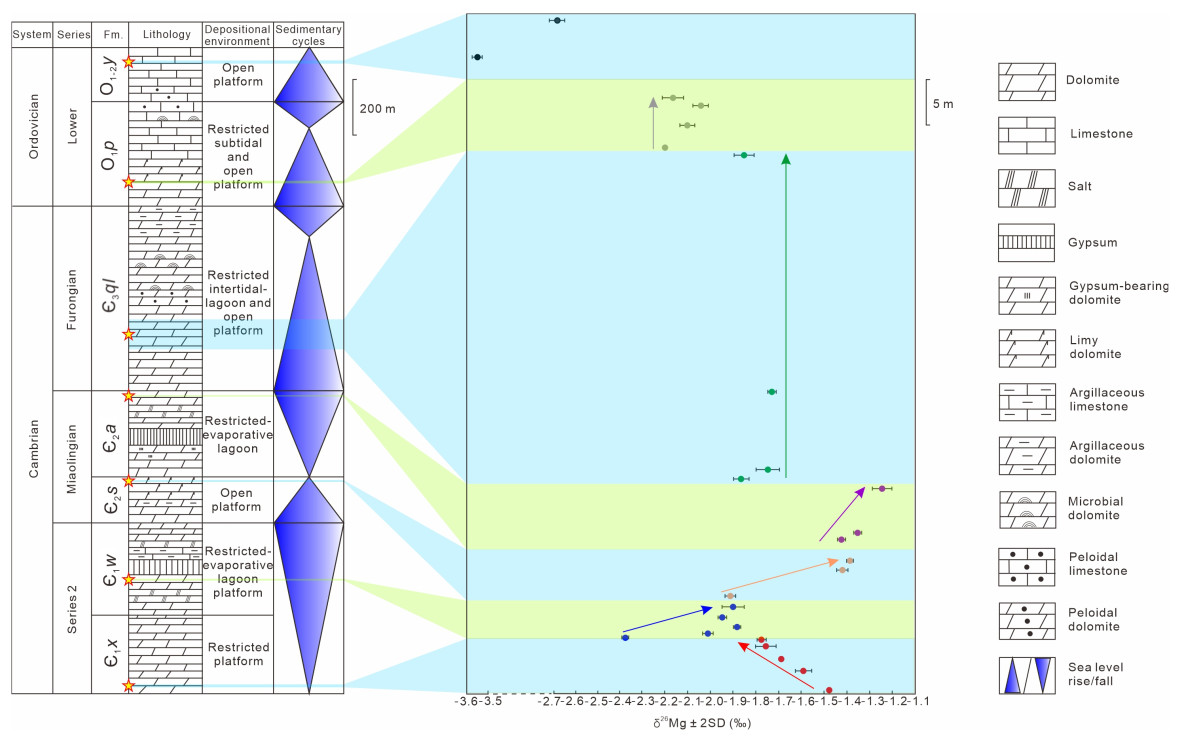
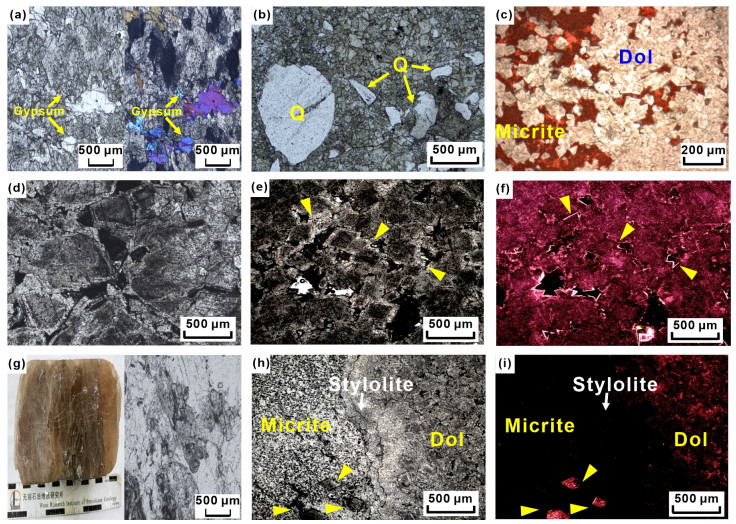
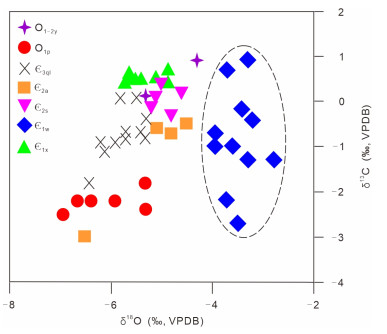
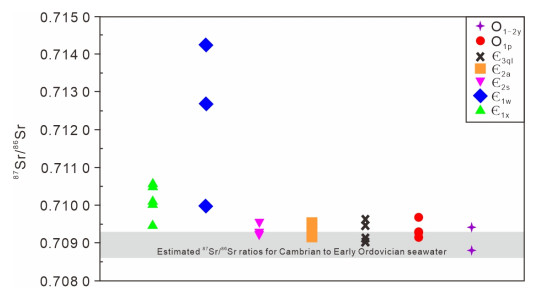
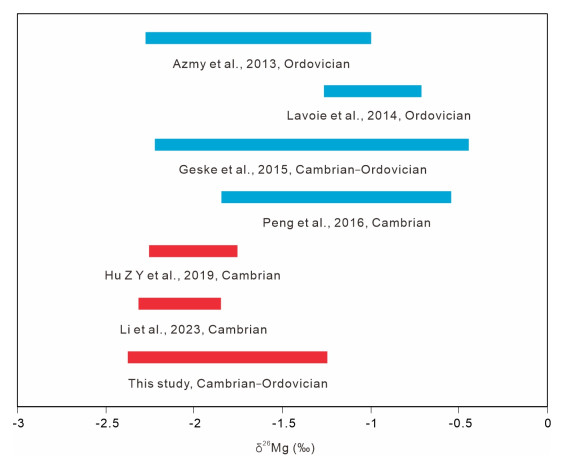
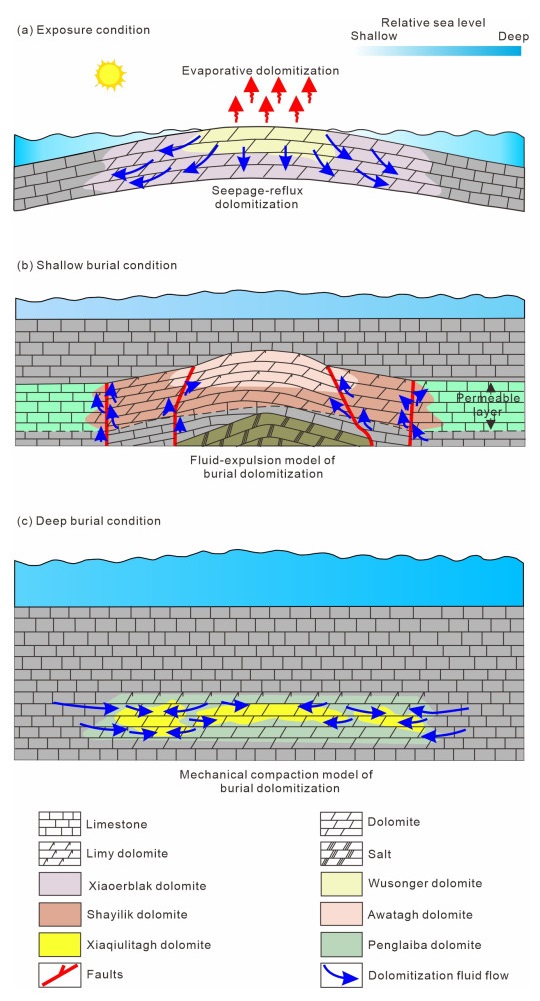
The Cambrian and Lower Ordovician strata of the Bachu area in central Tarim Basin are characterized by extensively dolomitized, which have significant potential for favourable hydrocarbon reservoirs. The study herein combined petrographic, mineralogical and geochemical analyses to investigate the formation environments of these dolomite units and utilized Mg isotopic profiles to constrain the changes in the fluid flow trajectory. Positive excursions of δ18O and upward-increasing δ26Mg profiles were observed in samples of the Wusonger formation (Є1

| An, Y. J., Huang, F., 2014. A Review of Mg Isotope Analytical Methods by MC-ICP-MS. Journal of Earth Science, 25(5): 822–840. https://doi.org/10.1007/s12583-014-0477-8 |
| An, Y. J., Wu, F., Xiang, Y. X., et al., 2014. High-Precision Mg Isotope Analyses of Low-Mg Rocks by MC-ICP-MS. Chemical Geology, 390: 9–21. https://doi.org/10.1016/j.chemgeo.2014.09.014 |
| Azmy, K., Lavoie, D., Wang, Z. R., et al., 2013. Magnesium-Isotope and REE Compositions of Lower Ordovician Carbonates from Eastern Laurentia: Implications for the Origin of Dolomites and Limestones. Chemical Geology, 356: 64–75. https://doi.org/10.1016/j.chemgeo.2013.07.015 |
| Baker, P. A., Kastner, M., 1981. Constraints on the Formation of Sedimentary Dolomite. Science, 213(4504): 214–216. https://doi.org/10.1126/science.213.4504.214 |
| Burke, W. H., Denison, R. E., Hetherington, E. A., et al., 1982. Variation of Seawater 87Sr/86Sr Throughout Phanerozoic Time. Geology, 10(10): 516–519.https://doi.org/10.1130/0091-7613(1982)10<516:vosstp>2.0.co;2 doi: 10.1130/0091-7613(1982)10<516:vosstp>2.0.co;2 |
| Charreau, J., Kent-Corson, M. L., Barrier, L., et al., 2012. A High-Resolution Stable Isotopic Record from the Junggar Basin (NW China): Implications for the Paleotopographic Evolution of the Tianshan Mountains. Earth and Planetary Science Letters, 341/342/343/344: 158–169. https://doi.org/10.1016/j.epsl.2012.05.033 |
| Davies, G. R., Smith, L. B. Jr, 2007. Structurally Controlled Hydrothermal Dolomite Reservoir Facies: An Overview. AAPG Bulletin, 90(11): 1641–1690. https://doi.org/10.1306/05220605164 |
| Dong, S. F., Chen, D. Z., Zhou, X. Q., et al., 2017. Tectonically Driven Dolomitization of Cambrian to Lower Ordovician Carbonates of the Quruqtagh Area, North-Eastern Flank of Tarim Basin, North-West China. Sedimentology, 64(4): 1079–1106. https://doi.org/10.1111/sed.12341 |
| Du, Y., Fan, T. L., Machel, H. G., et al., 2018. Genesis of Upper Cambrian-Lower Ordovician Dolomites in the Tahe Oilfield, Tarim Basin, NW China: Several Limitations from Petrology, Geochemistry, and Fluid Inclusions. Marine and Petroleum Geology, 91: 43–70. https://doi.org/10.1016/j.marpetgeo.2017.12.023 |
| Elderfield, H., 1986. Strontium Isotope Stratigraphy. Palaeogeography, Palaeoclimatology, Palaeoecology, 57(1): 71–90. https://doi.org/10.1016/0031-0182(86)90007-6 |
| Fantle, M. S., Higgins, J., 2014. The Effects of Diagenesis and Dolomitization on Ca and Mg Isotopes in Marine Platform Carbonates: Implications for the Geochemical Cycles of Ca and Mg. Geochimica et Cosmochimica Acta, 142: 458–481. https://doi.org/10.1016/j.gca.2014.07.025 |
|
Friedman, G. M., Sanders, J. E., 1967. Chapter 6 Origin and Occurrence of Dolostones. In: Chilingar, G. V., Bissel, H. J., Fairbridge, R. W., eds., Carbonate Rocks Origin, Occurrence and Classification. Elsevier, Amsterdam. 267–348. |
| Frimmel, H. E., 2009. Trace Element Distribution in Neoproterozoic Carbonates as Palaeoenvironmental Indicator. Chemical Geology, 258(3/4): 338–353. https://doi.org/10.1016/j.chemgeo.2008.10.033 |
| Gao, Z. Q., Fan, T. L., 2014. Intra-Platform Tectono-Sedimentary Response to Geodynamic Transition along the Margin of the Tarim Basin, NW China. Journal of Asian Earth Sciences, 96: 178–193. https://doi.org/10.1016/j.jseaes.2014.08.023 |
| Gao, Z. Q., Fan, T. L., 2015. Carbonate Platform-Margin Architecture and Its Influence on Cambrian-Ordovician Reef-Shoal Development, Tarim Basin, NW China. Marine and Petroleum Geology, 68: 291–306. https://doi.org/10.1016/j.marpetgeo.2015.08.033 |
| Geske, A., Goldstein, R. H., Mavromatis, V., et al., 2015. The Magnesium Isotope (δ26Mg) Signature of Dolomites. Geochimica et Cosmochimica Acta, 149: 131–151. https://doi.org/10.1016/j.gca.2014.11.003 |
| Guo, C., Chen, D. Z., Fu, Y., et al., 2025. Origin of Burrow-Associated Dolomites and Its Reservoir Implications: a Case Study from the Lower–Middle Ordovician Carbonates of Tarim Basin (NW China). Journal of Earth Science, 36(4): 1568–1590. https://doi.org/10.1007/s12583-022-1673-6 |
| Guo, C., Chen, D. Z., Qing, H. R., et al., 2016. Multiple Dolomitization and Later Hydrothermal Alteration on the Upper Cambrian–Lower Ordovician Carbonates in the Northern Tarim Basin, China. Marine and Petroleum Geology, 72: 295–316. https://doi.org/10.1016/j.marpetgeo.2016.01.023 |
| He, B. Z., Jiao, C. L., Xu, Z. Q., et al., 2016. The Paleotectonic and Paleogeography Reconstructions of the Tarim Basin and Its Adjacent Areas (NW China) during the Late Early and Middle Paleozoic. Gondwana Research, 30: 191–206. https://doi.org/10.1016/j.gr.2015.09.011 |
| Higgins, J. A., Schrag, D. P., 2010. Constraining Magnesium Cycling in Marine Sediments Using Magnesium Isotopes. Geochimica et Cosmochimica Acta, 74(17): 5039–5053. https://doi.org/10.1016/j.gca.2010.05.019 |
| Hu, M. Y., Ngia, N. R., Gao, D., 2019. Dolomitization and Hydrotectonic Model of Burial Dolomitization of the Furongian-Lower Ordovician Carbonates in the Tazhong Uplift, Central Tarim Basin, NW China: Implications from Petrography and Geochemistry. Marine and Petroleum Geology, 106: 88–115. https://doi.org/10.1016/j.marpetgeo.2019.04.018 |
| Hu, Z. Y., Hu, W. X., Liu, C., et al., 2019. Conservative Behavior of Mg Isotopes in Massive Dolostones: From Diagenesis to Hydrothermal Reworking. Sedimentary Geology, 381: 65–75. https://doi.org/10.1016/j.sedgeo.2018.12.007 |
| Huang, B. C., Zhu, R. X., Otofuji, Y., et al., 2000. The Early Paleozoic Paleogeography of the North China Block and the Other Major Blocks of China. Chinese Science Bulletin, 45(12): 1057–1065. https://doi.org/10.1007/BF02887174 |
| Huang, K. J., Shen, B., Lang, X. G., et al., 2015. Magnesium Isotopic Compositions of the Mesoproterozoic Dolostones: Implications for Mg Isotopic Systematics of Marine Carbonates. Geochimica et Cosmochimica Acta, 164: 333–351. https://doi.org/10.1016/j.gca.2015.05.002 |
| Jia, C. Z., 1999. Structural Characteristics and Oil/Gas Accumulative Regularity in Tarim Basin. Xinjiang Petroleum Geology, 20(3): 177–183 (in Chinese with English Abstract) |
| Jiang, L., Cai, C. F., Worden, R. H., et al., 2016. Multiphase Dolomitization of Deeply Buried Cambrian Petroleum Reservoirs, Tarim Basin, North-West China. Sedimentology, 63(7): 2130–2157. https://doi.org/10.1111/sed.12300 |
| Kırmacı, M. Z., Akdağ, K., 2005. Origin of Dolomite in the Late Cretaceous–Paleocene Limestone Turbidites, Eastern Pontides, Turkey. Sedimentary Geology, 181(1/2): 39–57. https://doi.org/10.1016/j.sedgeo.2005.07.003 |
| Lavoie, D., Jackson, S., Girard, I., 2014. Magnesium Isotopes in High-Temperature Saddle Dolomite Cements in the Lower Paleozoic of Canada. Sedimentary Geology, 305: 58–68. https://doi.org/10.1016/j.sedgeo.2014.03.002 |
| Li, X., Zhu, G. Y., Li, T. T., et al., 2023. Conservative Behavior of Mg Isotopes in Dolomite during Diagenesis and Hydrothermal Alteration: A Case Study in the Lower Cambrian Qiulitage Formation, Gucheng Area, Tarim Basin. Applied Geochemistry, 148: 105540. https://doi.org/10.1016/j.apgeochem.2022.105540 |
| Lin, C. S., Yang, H. J., Liu, J. Y., et al., 2009. Paleostructural Geomorphology of the Paleozoic Central Uplift Belt and Its Constraint on the Development of Depositional Facies in the Tarim Basin. Science in China Series D: Earth Sciences, 52(6): 823–834. https://doi.org/10.1007/s11430-009-0061-8 |
| Lin, C. S., Yang, H. J., Liu, J. Y., et al., 2012. Distribution and Erosion of the Paleozoic Tectonic Unconformities in the Tarim Basin, Northwest China: Significance for the Evolution of Paleo-Uplifts and Tectonic Geography during Deformation. Journal of Asian Earth Sciences, 46: 1–19. https://doi.org/10.1016/j.jseaes.2011.10.004 |
| Ling, H. F., Chen, X., Li, D., et al., 2013. Cerium Anomaly Variations in Ediacaran–Earliest Cambrian Carbonates from the Yangtze Gorges Area, South China: Implications for Oxygenation of Coeval Shallow Seawater. Precambrian Research, 225: 110–127. https://doi.org/10.1016/j.precamres.2011.10.011 |
| Machel, H. G., 1997. Recrystallization versus Neomorphism, and the Concept of ‘Significant Recrystallization’ in Dolomite Research. Sedimentary Geology, 113(3/4): 161–168. https://doi.org/10.1016/S0037-0738(97)00078-X |
| Machel, H. G., Buschkuehle, B. E., 2008. Diagenesis of the Devonian Southesk-Cairn Carbonate Complex, Alberta, Canada: Marine Cementation, Burial Dolomitization, Thermochemical Sulfate Reduction, Anhydritization, and Squeegee Fluid Flow. Journal of Sedimentary Research, 78(5): 366–389. https://doi.org/10.2110/jsr.2008.037 |
| Mavromatis, V., Gautier, Q., Bosc, O., et al., 2013. Kinetics of Mg Partition and Mg Stable Isotope Fractionation during Its Incorporation in Calcite. Geochimica et Cosmochimica Acta, 114: 188–203. https://doi.org/10.1016/j.gca.2013.03.024 |
|
McArthur, J. M., Howarth, R. J., Shields, G. A., et al., 2012. Chapter 7: Strontium Isotope Stratigraphy. In: Gradstein, F. M., Ogg, J. G., Schmitz, M. D., et al., eds., The Geologic Time Scale 2012. 127–144. |
| McCrea, J. M., 1950. On the Isotopic Chemistry of Carbonates and a Paleotemperature Scale. The Journal of Chemical Physics, 18(6): 849–857. https://doi.org/10.1063/1.1747785 |
| McKerrow, W. S., Scotese, C. R., Brasier, M. D., 1992. Early Cambrian Continental Reconstructions. Journal of the Geological Society, 149(4): 599–606. https://doi.org/10.1144/gsjgs.149.4.0599 |
| Melim, L. A., Scholle, P. A., 2002. Dolomitization of the Capitan Formation Forereef Facies (Permian, West Texas and New Mexico): Seepage Reflux Revisited. Sedimentology, 49(6): 1207–1227. https://doi.org/10.1046/j.1365-3091.2002.00492.x |
| Merdith, A. S., Collins, A. S., Williams, S. E., et al., 2017. A Full-Plate Global Reconstruction of the Neoproterozoic. Gondwana Research, 50: 84–134. https://doi.org/10.1016/j.gr.2017.04.001 |
| Mresah, M. H., 1998. The Massive Dolomitization of Platformal and Basinal Sequences: Proposed Models from the Paleocene, Northeast Sirte Basin, Libya. Sedimentary Geology, 116(3/4): 199–226. https://doi.org/10.1016/S0037-0738(97)00107-3 |
| Ngia, N. R., Hu, M. Y., Gao, D., 2019a. Tectonic and Geothermal Controls on Dolomitization and Dolomitizing Fluid Flows in the Cambrian-Lower Ordovician Carbonate Successions in the Western and Central Tarim Basin, NW China. Journal of Asian Earth Sciences, 172: 359–382. https://doi.org/10.1016/j.jseaes.2018.09.020 |
| Ngia, N. R., Hu, M. Y., Gao, D., et al., 2019b. Application of Stable Strontium Isotope Geochemistry and Fluid Inclusion Microthermometry to Studies of Dolomitization of the Deeply Buried Cambrian Carbonate Successions in West-Central Tarim Basin, NW China. Journal of Earth Science, 30(1): 176–193. https://doi.org/10.1007/s12583-017-0954-y |
| Ning, M., Lang, X. G., Huang, K. J., et al., 2020. Towards Understanding the Origin of Massive Dolostones. Earth and Planetary Science Letters, 545: 116403. https://doi.org/10.1016/j.epsl.2020.116403 |
| Peng, Y., Shen, B., Lang, X. G., et al., 2016. Constraining Dolomitization by Mg Isotopes: A Case Study from Partially Dolomitized Limestones of the Middle Cambrian Xuzhuang Formation, North China. Geochemistry, Geophysics, Geosystems, 17(3): 1109–1129. https://doi.org/10.1002/2015GC006057 |
| Qing, H. R., Mountjoy, E. W., 1994. Rare Earth Element Geochemistry of Dolomites in the Middle Devonian Presqu’ile Barrier, Western Canada Sedimentary Basin: Implications for Fluid-Rock Ratios during Dolomitization. Sedimentology, 41(4): 787–804. https://doi.org/10.1111/j.1365-3091.1994.tb01424.x |
| Qiu, N. S., Chang, J., Zuo, Y. H., et al., 2012. Thermal Evolution and Maturation of Lower Paleozoic Source Rocks in the Tarim Basin, Northwest China. AAPG Bulletin, 96(5): 789–821. https://doi.org/10.1306/09071111029 |
| Shields, G. A., Carden, G. A. F., Veizer, J., et al., 2003. Sr, C, and O Isotope Geochemistry of Ordovician Brachiopods: A Major Isotopic Event around the Middle–Late Ordovician Transition. Geochimica et Cosmochimica Acta, 67(11): 2005–2025. https://doi.org/10.1016/S0016-7037(02)01116-X |
| Taylor, S. R., McLennan, S. M., 1985. The Continental Crust: Its Composition and Evolution. Blackwell, Oxford. 1–312 |
| Teng, F. Z., 2017. Magnesium Isotope Geochemistry. Reviews in Mineralogy and Geochemistry, 82(1): 219–287. https://doi.org/10.2138/rmg.2017.82.7 |
| Van Kranendonk, M. J., Webb, G. E., Kamber, B. S., 2003. Geological and Trace Element Evidence for a Marine Sedimentary Environment of Deposition and Biogenicity of 3.45 Ga Stromatolitic Carbonates in the Pilbara Craton, and Support for a Reducing Archaean Ocean. Geobiology, 1(2): 91–108. https://doi.org/10.1046/j.1472-4669.2003.00014.x |
| Veizer, J., Ala, D., Azmy, K., et al., 1999. 87Sr/86Sr, δ13C and δ18O Evolution of Phanerozoic Seawater. Chemical Geology, 161(1/2/3): 59–88. https://doi.org/10.1016/S0009-2541(99)00081-9 |
| Wang, L. C., Hu, W. X., Wang, X. L., et al., 2014. Seawater Normalized REE Patterns of Dolomites in Geshan and Panlongdong Sections, China: Implications for Tracing Dolomitization and Diagenetic Fluids. Marine and Petroleum Geology, 56: 63–73. https://doi.org/10.1016/j.marpetgeo.2014.02.018 |
| Wang, Q. M., Nishidai, T., Coward, M. P., 1992. The Tarim Basin, NW China: Formation and Aspects of Petroleum Geology. Journal of Petroleum Geology, 15(1): 5–34. https://doi.org/10.1111/j.1747-5457.1992.tb00863.x |
| Wang, Y. Z., Wu, C. D., Fang, Y. N., et al., 2020. Mg, C and O Isotopic Compositions of Late Cretaceous Lacustrine Dolomite and Travertine in the Northern Tianshan Mountains, Northwest China. Chemical Geology, 541: 119569. https://doi.org/10.1016/j.chemgeo.2020.119569 |
| Warren, J., 2000. Dolomite: Occurrence, Evolution and Economically Important Associations. Earth-Science Reviews, 52(1/2/3): 1–81. https://doi.org/10.1016/S0012-8252(00)00022-2 |
| Webb, G. E., Kamber, B. S., 2000. Rare Earth Elements in Holocene Reefal Microbialites: A New Shallow Seawater Proxy. Geochimica et Cosmochimica Acta, 64(9): 1557–1565. https://doi.org/10.1016/S0016-7037(99)00400-7 |
| Wierzbicki, R., Dravis, J. J., Al-Aasm, I., et al., 2006. Burial Dolomitization and Dissolution of Upper Jurassic Abenaki Platform Carbonates, Deep Panuke Reservoir, Nova Scotia, Canada. AAPG Bulletin, 90(11): 1843–1861. https://doi.org/10.1306/03200605074 |
| Wombacher, F., Eisenhauer, A., Heuser, A., et al., 2009. Separation of Mg, Ca and Fe from Geological Reference Materials for Stable Isotope Ratio Analyses by MC-ICP-MS and Double-Spike TIMS. Journal of Analytical Atomic Spectrometry, 24(5): 627–636. https://doi.org/10.1039/B820154D |
| Xiang, P. F., Ji, H. C., Shi, Y. Q., et al., 2020. Petrographic, Rare Earth Elements and Isotope Constraints on the Dolomite Origin of Ordovician Majiagou Formation (Jizhong Depression, North China). Marine and Petroleum Geology, 117: 104374. https://doi.org/10.1016/j.marpetgeo.2020.104374 |
| Xu, H., Yan, Z. Y., Fu, H. P., et al., 2025. Characterization of Mg Isotopes in Dolomites and Advances in Island-Basin Studies. Earth Science, 50(8): 3225–3240. https://doi.org/10.3799/dqkx.2025.047 (in Chinese with English Abstract) |
| Yang, W. Q., Li, T., Lan, C. J., et al., 2024. Distribution and Controlling Factors of Dolostone in Lower Cambrian Longwangmiao Formation, Sichuan Basin. Earth Science, 49(7): 2388–2406. https://doi.org/10.3799/dqkx.2022.438 (in Chinese with English Abstract) |
| Yang, X. Y., Mei, Q. Y., Wang, X. Z., et al., 2018. Indication of Rare Earth Element Characteristics to Dolomite Petrogenesis—A Case Study of the Fifth Member of Ordovician Majiagou Formation in the Ordos Basin, Central China. Marine and Petroleum Geology, 92: 1028–1040. https://doi.org/10.1016/j.marpetgeo.2017.12.004 |
| Zhang, J. T., Hu, W. X., Qian, Y. X., et al., 2009. Formation of Saddle Dolomites in Upper Cambrian Carbonates, Western Tarim Basin (Northwest China): Implications for Fault-Related Fluid Flow. Marine and Petroleum Geology, 26(8): 1428–1440. https://doi.org/10.1016/j.marpetgeo.2009.04.004 |
| Zhang, Y. G., Yang, T., Hohl, S. V., et al., 2020. Seawater Carbon and Strontium Isotope Variations through the Late Ediacaran to Late Cambrian in the Tarim Basin. Precambrian Research, 345: 105769. https://doi.org/10.1016/j.precamres.2020.105769 |
| Zhao, M. Y., Zheng, Y. F., 2014. Marine Carbonate Records of Terrigenous Input into Paleotethyan Seawater: Geochemical Constraints from Carboniferous Limestones. Geochimica et Cosmochimica Acta, 141: 508–531. https://doi.org/10.1016/j.gca.2014.07.001 |
| Zhao, Y. Y., Zheng, Y. F., Chen, F. K., 2009. Trace Element and Strontium Isotope Constraints on Sedimentary Environment of Ediacaran Carbonates in Southern Anhui, South China. Chemical Geology, 265(3/4): 345–362. https://doi.org/10.1016/j.chemgeo.2009.04.015 |
| Zhu, D. Y., Meng, Q. Q., Jin, Z. J., et al., 2015. Formation Mechanism of Deep Cambrian Dolomite Reservoirs in the Tarim Basin, Northwestern China. Marine and Petroleum Geology, 59: 232–244. https://doi.org/10.1016/j.marpetgeo.2014.08.022 |
Figures(8)
Copyright © 2013-2020 Journal of Earth Science 鄂ICP备15021562号-2
Tel: +86-27-67885075 Fax: +86-27-67885075 E-mail: xbb@cug.edu.cn
Address: Editorial Office of Journal, China University of Geosciences, Yujiashan, Wuhan, Hubei 430074, P. R. China
Supported by:
Beijing Renhe Information Technology Co. Ltd
E-mail:
info@rhhz.net


 DownLoad: