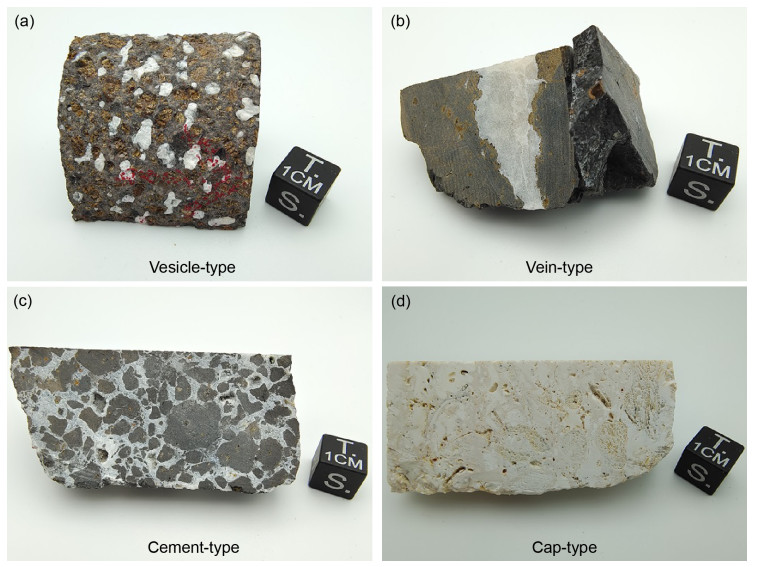
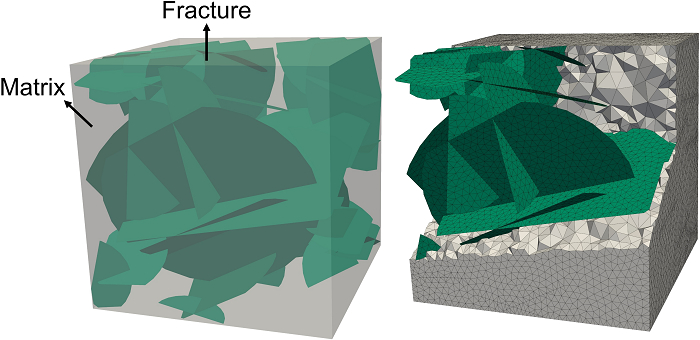
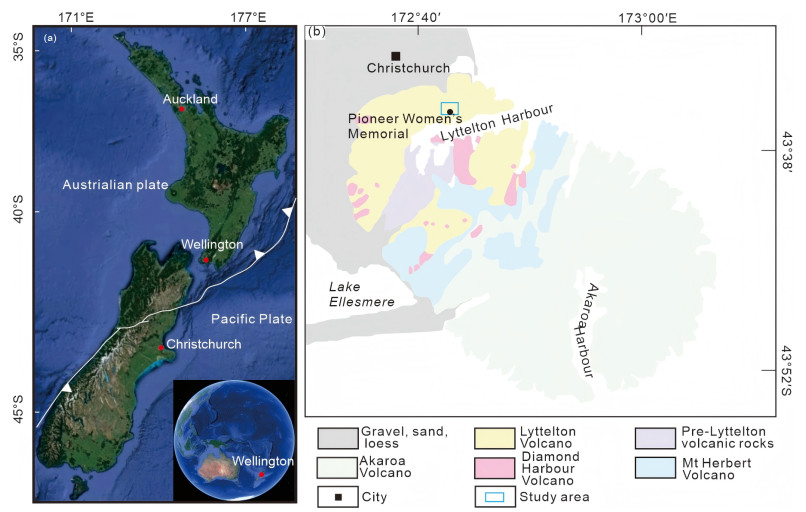
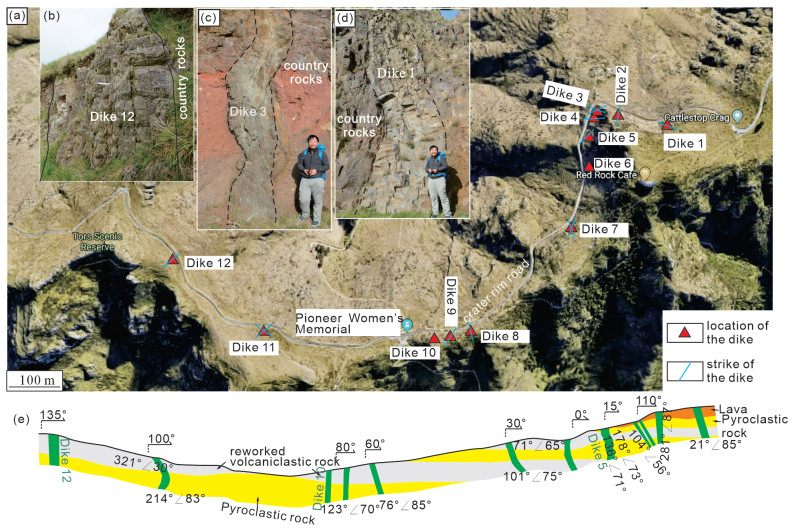
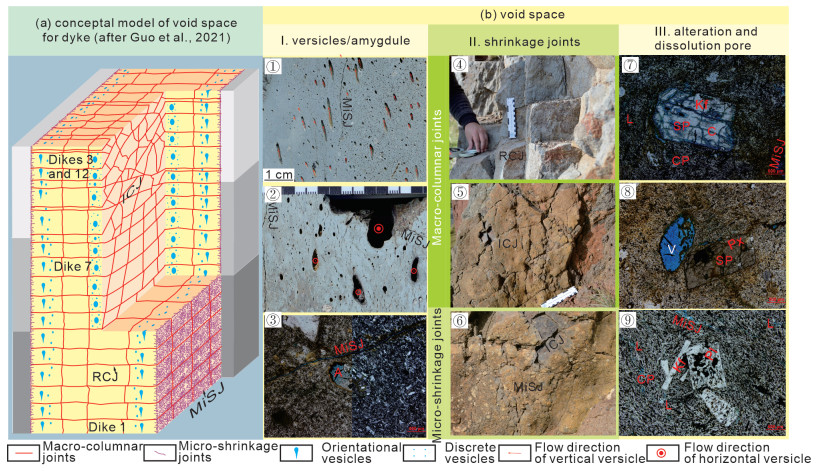
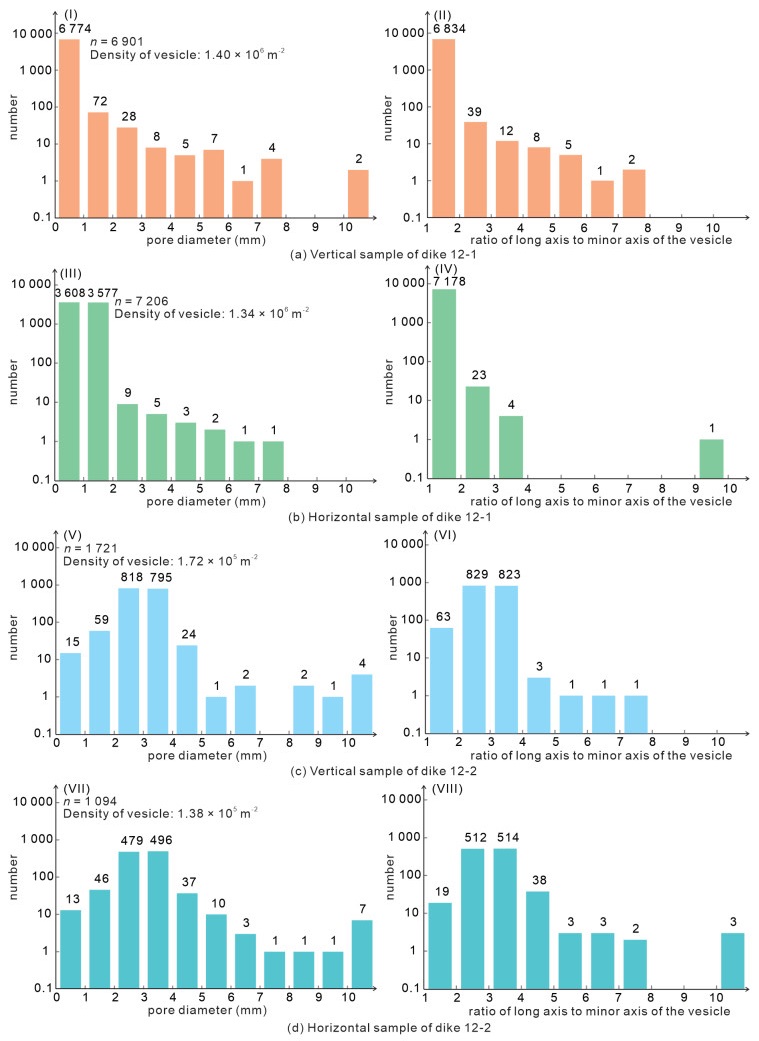
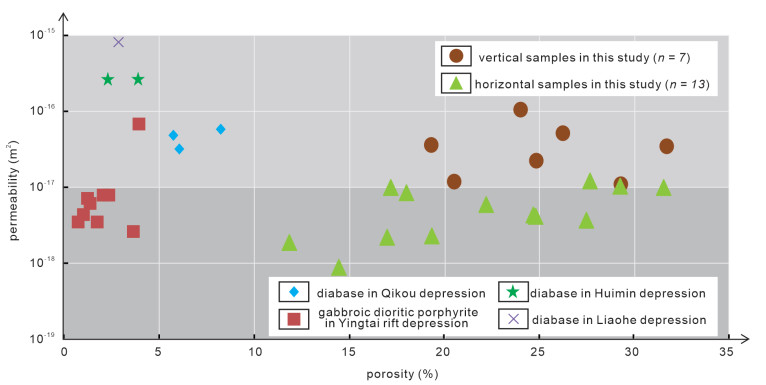
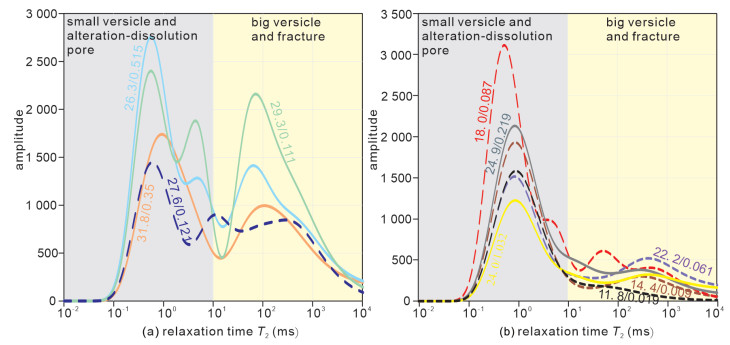
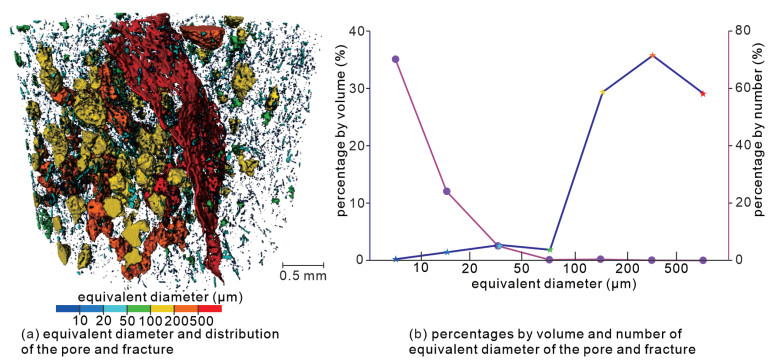
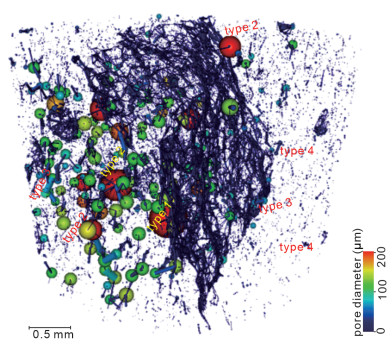
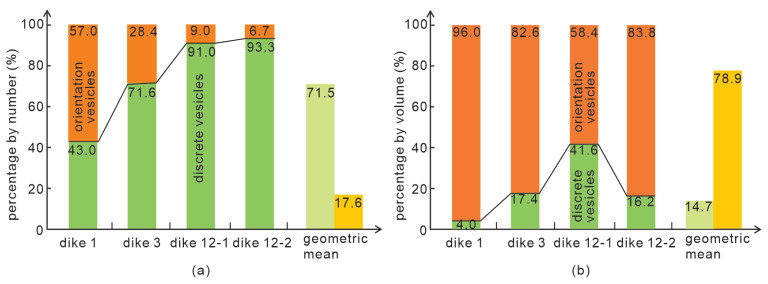
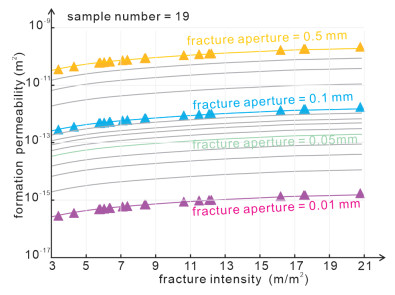
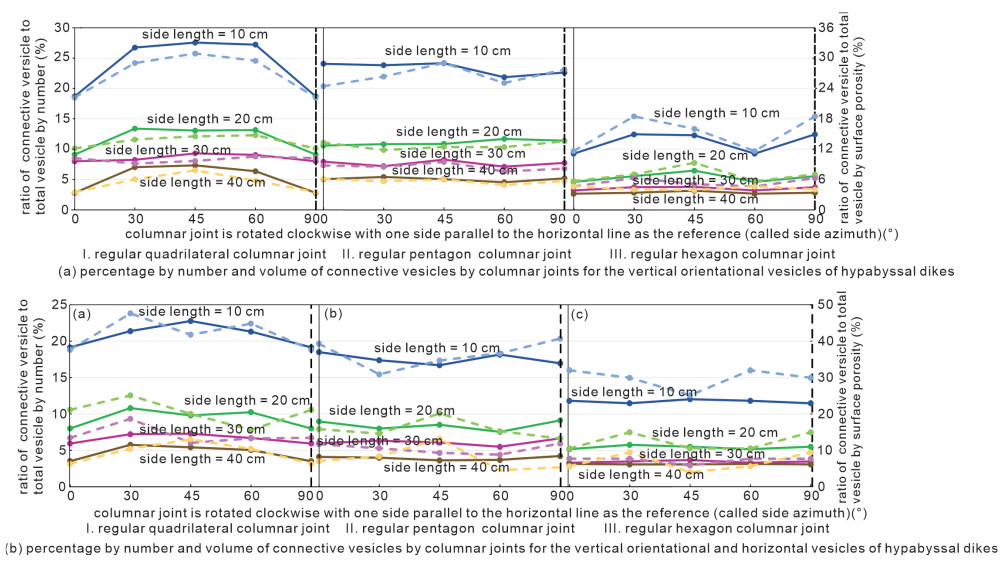
Dikes are widely distributed in volcanic outcrops and volcanic basins around the world. The pores and fractures in these dikes control the fluid-rock interactions and fluid flow. The quantitative reservoir characteristics of dikes with primary vesicles remain unclear. In this manuscript, the Miocene hypabyssal dikes in Lyttelton Volcano, Christchurch, New Zealand, are taken as an example. The porosity content, porosity, permeability, and reservoir controlling factors are analyzed through field outcrop surveys, porosity-permeability testing, nuclear magnetic resonance (NMR) testing, X-ray-computed tomography (X-CT) scanning, and permeability calculations. The results show that the types of reservoir spaces in the hypabyssal dikes in Lyttelton Volcano are mainly vesicles, followed by cooling and shrinkage fractures (especially columnar joints). They are a pore-fracture type reservoir. There were two types of vesicles, namely, pipe-like-elliptical directionally oriented vesicles with large diameters and discrete circular vesicles with small diameters. The surface porosity of the former was 58.4%–96.0%, with a geometric mean of 78.9%. The columnar joints can be classified into regular and irregular joints. The irregular joints have a higher fracture intensity. The geometric means of the porosity and permeability of the joints are 22.34% and 0.09 × 10⁻¹⁵ m2, respectively. The shapes of the NMR T2 spectra are bimodal, trimodal, and unimodal in descending order of abundance. This means that the pore diameter is large. The X-CT results indicate that there are four types of pore-throat connectivity modes: macro-pores and macro-throats, macro-pores and micro-throats, micro-pores and micro-throats, and micro-pores and macro-throats. The columnar joints are the main cause of the high permeability of the dikes, and the side amount and side length of the columnar joints control the dikes' permeability. The pores can be connected by the columnar joints, and their connectivity is controlled by the side amount, side length, and side azimuth of the columnar joint. The initial connectivity ratio of the vesicles in the dikes in Lyttelton Volcano was up to 47.6% based on the surface porosity. In conclusion, the shallow dikes with primary pores and fractures have a good reservoir quality and fluid migration capacity, and fluid flow studies of volcanic strata should pay attention to the important influence of the primary porosity and permeability of dikes.