| Citation: | Junqi Li, Yao Du, Teng Ma, Dian Li, Ziyan Cai, Yu Xu. Spatiotemporal Characterization, Risk Assessment, and Source Identification of Dissolved Trace Elements in the Zijiang River, Central China. Journal of Earth Science, 2026, 37(2): 752-762. doi: 10.1007/s12583-023-1841-3

|
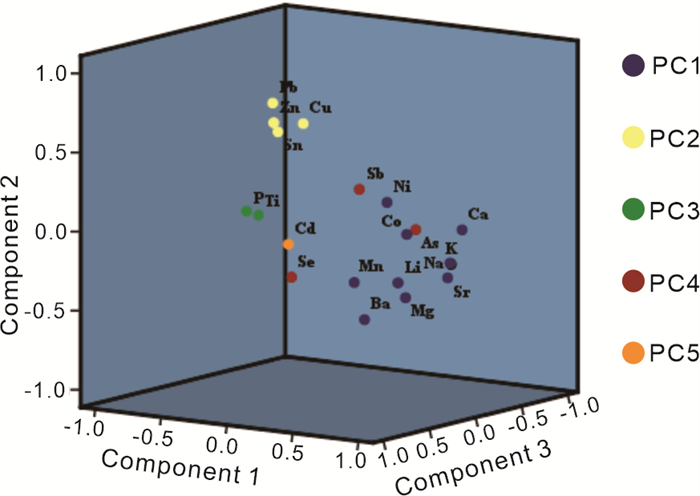
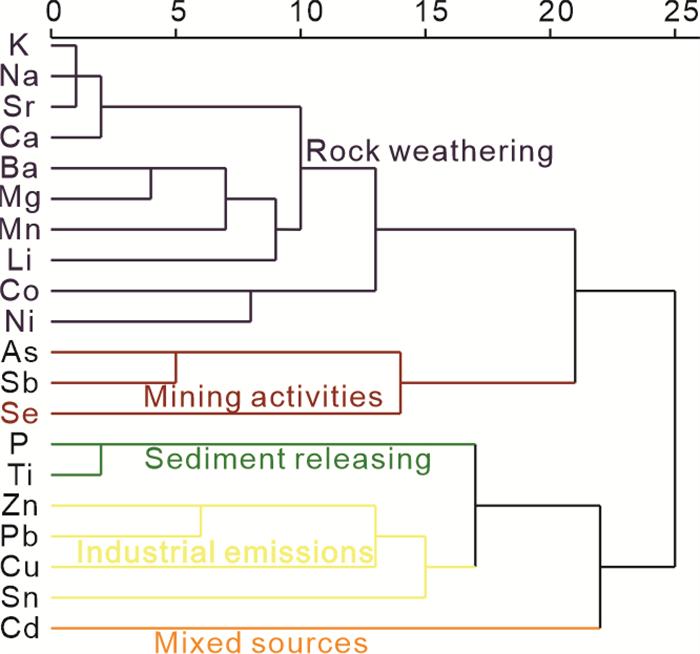
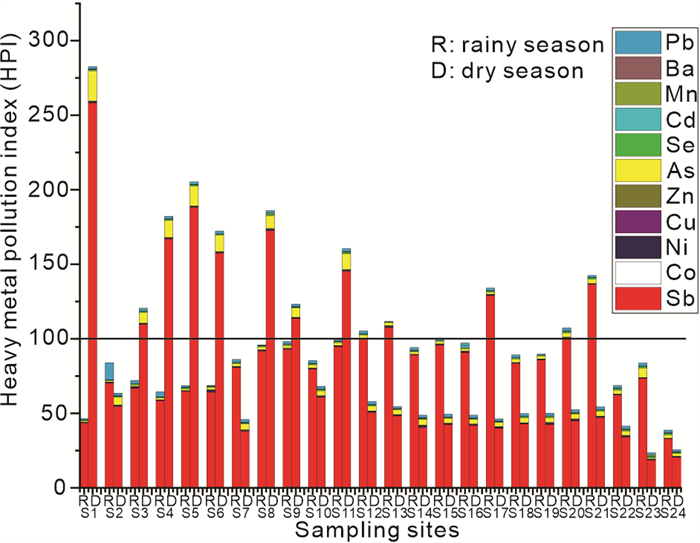
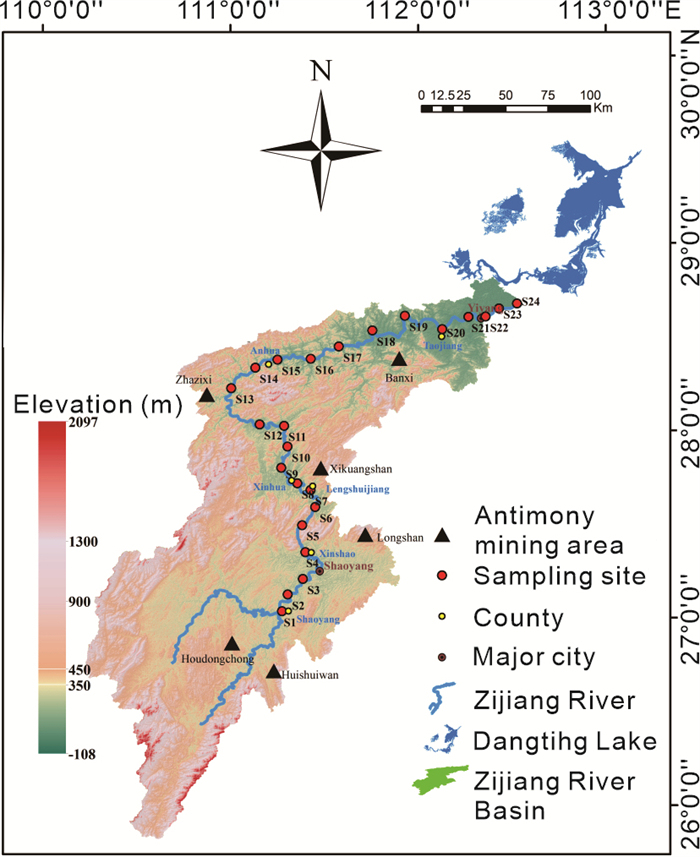
The Zijiang River Basin is home to the world's largest antimony reserves, but it also grapples with severe ecological contamination. Notably, there is a lack of information on surface water pollution, particularly with regard to trace elements (TEs). In order to gain a better understanding of the situation, risk, and sources of TEs, we conducted an extensive study on the Zijiang River. Our findings revealed that 95.83% of the samples had antimony levels exceeding China's drinking water limit of 5 μg/L. By using multiple multivariate statistical techniques, we identified five main sources of TEs. Sr, Mn, Co, Ni, and Ba are primarily derived from the natural weathering of rocks. Human activities, such as industrial emissions, are major contributors to the presence of Pb, Cu, Zn, and Sn. P and Ti are released from sediment influenced by cascading reservoirs. Sb, As, and Se stem from antimony mining activities. The hazard index indicated that antimony poses a non-carcinogenic risk to human health, with children being especially vulnerable. Furthermore, antimony was found to be the most significant factor for residential exposure. Consequently, we recommend paying close attention to antimony pollution and intensifying research efforts on antimony in the Zijiang River Basin.

| Alves, R. I. S., Sampaio, C. F., Nadal, M., et al., 2014. Metal Concentrations in Surface Water and Sediments from Pardo River, Brazil: Human Health Risks. Environmental Research, 133: 149–155. https://doi.org/10.1016/j.envres.2014.05.012 |
| Asante, K. A., Agusa, T., Subramanian, A., et al., 2007. Contamination Status of Arsenic and Other Trace Elements in Drinking Water and Residents from Tarkwa, a Historic Mining Township in Ghana. Chemosphere, 66(8): 1513–1522. https://doi.org/10.1016/j.chemosphere.2006.08.022 |
| Canpolat, Ö., Varol, M., Okan, Ö. Ö., et al., 2020. A Comparison of Trace Element Concentrations in Surface and Deep Water of the Keban Dam Lake (Turkey) and Associated Health Risk Assessment. Environmental Research, 190: 110012. https://doi.org/10.1016/j.envres.2020.110012 |
| Cavallo, D., Iavicoli, I., Setini, A., et al., 2002. Genotoxic Risk and Oxidative DNA Damage in Workers Exposed to Antimony Trioxide. Environmental and Molecular Mutagenesis, 40(3): 184–189. https://doi.org/10.1002/em.10102 |
| Chen, Z. R., Cheng, J. G., 1988. The Features of Sulphur, Carbon and Oxygen Isotopes and Their Ore Forming Significance in Mt. DAMU Antimony Ore Field of Hubei Province. Earth Science, 13(6): 613–619 (in Chinese with English Abstract) |
| Chen, Z. R., Chen, J. G., 1988. The Features of Sulphur, Carbon and Oxygen Isotopes and Their Ore Forming Significance in Mt. Damu Antimony Ore Field of Hubei Province. Earth Science, 13(6): 613–619 (In Chinese with English Abstract) |
| CMH (Chinese Ministry of Health), 2007. Chinese State Standards (CSS) for Drinking Water Quality (GB5749-2006) |
| Dou, L., Zhou, Y. Z., Ma, J., et al., 2008. Using Multivariate Statistical and Geostatistical Methods to Identify Spatial Variability of Trace Elements in Agricultural Soils in Dongguan City, Guangdong, China. Journal of China University of Geosciences, 19(4): 343–353. https://doi.org/10.1016/s1002-0705(08)60067-9 |
| EC (European Community), 1998. The Quality of Water Intended to Human Consumption, Directive 1998/83/EC. Official Journal, 12: 32–54 |
| Edet, A. E., Offiong, O. E., 2002. Evaluation of Water Quality Pollution Indices for Heavy Metal Contamination Monitoring: A Study Case from Akpabuyo-Odukpani Area, Lower Cross River Basin (Southeastern Nigeria). GeoJournal, 57(4): 295–304. https://doi.org/10.1023/b:gejo.0000007250.92458.de |
| Fantin-Cruz, I., Pedrollo, O., Girard, P., et al., 2016. Changes in River Water Quality Caused by a Diversion Hydropower Dam Bordering the Pantanal Floodplain. Hydrobiologia, 768(1): 223–238. https://doi.org/10.1007/s10750-015-2550-4 |
| Fu, Z. Y., Wu, F. C., Mo, C. L., et al., 2016. Comparison of Arsenic and Antimony Biogeochemical Behavior in Water, Soil and Tailings from Xikuangshan, China. Science of The Total Environment, 539: 97–104. https://doi.org/10.1016/j.scitotenv.2015.08.146 |
| Gaillardet, J., Viers, J., Dupré, B., 2003. Trace Elements in River Waters. In: Drever, J. I., Holland, H. D., Turekian, K. K., eds., Treatise on Geochemistry: Surface and Ground Water, Weathering, and Soils. Elsevier, Amsterdam. 225–272 |
| Gao, L., Chen, J. Y., Tang, C. Y., et al., 2015. Distribution, Migration and Potential Risk of Heavy Metals in the Shima River Catchment Area, South China. Environmental Science: Processes & Impacts, 17(10): 1769–1782. https://doi.org/10.1039/c5em00156k |
| Gibbs, R. J., 1970. Mechanisms Controlling World Water Chemistry. Science, 170(3962): 1088–1090. https://doi.org/10.1126/science.170.3962.1088 |
| Giri, S., Singh, A. K., 2014. Risk Assessment, Statistical Source Identification and Seasonal Fluctuation of Dissolved Metals in the Subarnarekha River, India. Journal of Hazardous Materials, 265: 305–314. https://doi.org/10.1016/j.jhazmat.2013.09.067 |
| Guo, W. J., Fu, Z. Y., Wang, H., et al., 2018. Environmental Geochemical and Spatial/Temporal Behavior of Total and Speciation of Antimony in Typical Contaminated Aquatic Environment from Xikuangshan, China. Microchemical Journal, 137: 181–189. https://doi.org/10.1016/j.microc.2017.10.010 |
| Islam, M. S., Ahmed, M. K., Raknuzzaman, M., et al., 2015. Heavy Metal Pollution in Surface Water and Sediment: A Preliminary Assessment of an Urban River in a Developing Country. Ecological Indicators, 48: 282–291. https://doi.org/10.1016/j.ecolind.2014.08.016 |
| Ji, R. S., 1986. The Structure Characteristics and the Mechanism of Ore-Control of Xikuangshan Antimony Field, Hunan Province. Earth Science, 11(5): 525–532 (in Chinese with English Abstract) |
| Khan, M. Y. A., Gani, K. M., Chakrapani, G. J., 2017. Spatial and Temporal Variations of Physicochemical and Heavy Metal Pollution in Ramganga River—A Tributary of River Ganges, India. Environmental Earth Sciences, 76(5): 231. https://doi.org/10.1007/s12665-017-6547-3 |
| Krishna, A. K., Mohan, K. R., 2014. Risk Assessment of Heavy Metals and Their Source Distribution in Waters of a Contaminated Industrial Site. Environmental Science and Pollution Research, 21(5): 3653–3669. https://doi.org/10.1007/s11356-013-2359-5 |
| Kumar, M., Rahman, M. M., Ramanathan, A., et al., 2016. Arsenic and Other Elements in Drinking Water and Dietary Components from the Middle Gangetic Plain of Bihar, India: Health Risk Index. Science of the Total Environment, 539: 125–134. https://doi.org/10.1016/j.scitotenv.2015.08.039 |
| Kumar, M., Ramanathan, A., Tripathi, R., et al., 2017. A Study of Trace Element Contamination Using Multivariate Statistical Techniques and Health Risk Assessment in Groundwater of Chhaprola Industrial Area, Gautam Buddha Nagar, Uttar Pradesh, India. Chemosphere, 166: 135–145. https://doi.org/10.1016/j.chemosphere.2016.09.086 |
| Kyllönen, K., Karlsson, V., Ruoho-Airola, T., 2009. Trace Element Deposition and Trends during a Ten Year Period in Finland. Science of the Total Environment, 407(7): 2260–2269. https://doi.org/10.1016/j.scitotenv.2008.11.045 |
| Lemly, A. D., 1996. Evaluation of the Hazard Quotient Method for Risk Assessment of Selenium. Ecotoxicology and Environmental Safety, 35(2): 156–162. https://doi.org/10.1006/eesa.1996.0095 |
| Lewis, W. M., Hamilton, S. K., Jones, S. L., et al., 1987. Major Element Chemistry, Weathering and Element Yields for the Caura River Drainage, Venezuela. Biogeochemistry, 4(2): 159–181. https://doi.org/10.1007/bf02180153 |
| Li, J., Zheng, C., 1989. The Handbook of Environmental Background Values in China. Environmental Science Press of China, Beijing (in Chinese) |
| Li, L., Zhou, Y., Li, J. B., 2016. Analysis on Joint Storage and Discharge Rules of Xiluodu and Xiangjiaba Cascade Hydropower Stations. Yangtze River, 47(2): 92–94, 105 (in Chinese with English Abstract) |
| Li, S. Y., Li, J., Zhang, Q. F., 2011. Water Quality Assessment in the Rivers along the Water Conveyance System of the Middle Route of the South to North Water Transfer Project (China) Using Multivariate Statistical Techniques and Receptor Modeling. Journal of Hazardous Materials, 195: 306–317. https://doi.org/10.1016/j.jhazmat.2011.08.043 |
| Li, S. Y., Zhang, Q. F., 2010. Risk Assessment and Seasonal Variations of Dissolved Trace Elements and Heavy Metals in the Upper Han River, China. Journal of Hazardous Materials, 181(1/2/3): 1051–1058. https://doi.org/10.1016/j.jhazmat.2010.05.120 |
| Liati, A., Schreiber, D., Dimopoulos Eggenschwiler, P., et al., 2013. Metal Particle Emissions in the Exhaust Stream of Diesel Engines: An Electron Microscope Study. Environmental Science & Technology, 47(24): 14495–14501. https://doi.org/10.1021/es403121y |
| Liu, F. Y., Le, X. C., McKnight-Whitford, A., et al., 2010. Antimony Speciation and Contamination of Waters in the Xikuangshan Antimony Mining and Smelting Area, China. Environmental Geochemistry and Health, 32(5): 401–413. https://doi.org/10.1007/s10653-010-9284-z |
| Liu, J. J., Zheng, M. H., Lu, W. Q., 1992. Antimonselite is no Longer a Synthetic Mineral. Chinese Science Bulletin, 37(15): 1438–1439 (in Chinese with English Abstract) doi: 10.1360/csb1992-37-15-1438 |
| Marsden, M. W., 1989. Lake Restoration by Reducing External Phosphorus Loading: The Influence of Sediment Phosphorus Release. Freshwater Biology, 21(2): 139–162. https://doi.org/10.1111/j.1365-2427.1989.tb01355.x |
| Meng, Q. P., Zhang, J., Zhang, Z. Y., et al., 2016. Geochemistry of Dissolved Trace Elements and Heavy Metals in the Dan River Drainage (China): Distribution, Sources, and Water Quality Assessment. Environmental Science and Pollution Research, 23(8): 8091–8103. https://doi.org/10.1007/s11356-016-6074-x |
| Merkle, L. A., Layne, C. S., Bloomberg, J. J., et al., 1998. Using Factor Analysis to Identify Neuromuscular Synergies during Treadmill Walking. Journal of Neuroscience Methods, 82(2): 207–214. https://doi.org/10.1016/s0165-0270(98)00054-5 |
| Meybeck, M., 1982. Carbon, Nitrogen, and Phosphorus Transport by World Rivers. American Journal of Science, 282(4): 401–450. https://doi.org/10.2475/ajs.282.4.401 |
| Mohan, S. V., Nithila, P., Reddy, S. J., 1996. Estimation of Heavy Metals in Drinking Water and Development of Heavy Metal Pollution Index. Journal of Environmental Science and Health Part A: Environmental Science and Engineering and Toxicology, 31(2): 283–289. https://doi.org/10.1080/10934529609376357 |
| Obst, U., 2003. Strategies of Maintaining the Natural Purification Potential of Rivers and Lakes. Environmental Science and Pollution Research, 10(4): 251–255. https://doi.org/10.1065/espr2003.07.160 |
| Pant, R. R., Zhang, F., Rehman, F. U., et al., 2018. Spatiotemporal Variations of Hydrogeochemistry and Its Controlling Factors in the Gandaki River Basin, Central Himalaya Nepal. Science of the Total Environment, 622: 770–782. https://doi.org/10.1016/j.scitotenv.2017.12.063 |
| Pant, R. R., Zhang, F., Rehman, F. U., et al., 2020. Spatiotemporal Characterization of Dissolved Trace Elements in the Gandaki River, Central Himalaya Nepal. Journal of Hazardous Materials, 389: 121913. https://doi.org/10.1016/j.jhazmat.2019.121913 |
| Paudyal, R., Kang, S. C., Sharma, C. M., et al., 2016. Variations of the Physicochemical Parameters and Metal Levels and Their Risk Assessment in Urbanized Bagmati River, Kathmandu, Nepal. Journal of Chemistry, 2016: 6025905. https://doi.org/10.1155/2016/6025905 |
| Pekey, H., Karakaş, D., Bakogˇlu, M., 2004. Source Apportionment of Trace Metals in Surface Waters of a Polluted Stream Using Multivariate Statistical Analyses. Marine Pollution Bulletin, 49(9/10): 809–818. https://doi.org/10.1016/j.marpolbul.2004.06.029 |
| Prasad, B., Bose, J., 2001. Evaluation of the Heavy Metal Pollution Index for Surface and Spring Water near a Limestone Mining Area of the Lower Himalayas. Environmental Geology, 41(1): 183–188. https://doi.org/10.1007/s002540100380 |
| Ramesh, R., Zhang, F., Faizan, U., et al., 2020. Spatiotemporal Characterization of Dissolved Trace Elements in the Gandaki River, Central Himalaya Nepal-Sciencedirect. J. Hazard Mater. , 389: 121913 doi: 10.1016/j.jhazmat.2019.121913 |
| Rapin, A., Rabiet, M., Mourier, B., et al., 2020. Sedimentary Phosphorus Accumulation and Distribution in the Continuum of Three Cascade Dams (Creuse River, France). Environmental Science and Pollution Research, 27(6): 6526–6539. https://doi.org/10.1007/s11356-019-07184-6 |
| Shen, R. L., Bao, Z. Y., Zhou, W., 2007. Earth-Chemical Analysis for Heavy Metal in the Dongting Lake. Yangtze River, 11: 121–123 (in Chinese) |
| Shi, W. Q., Chen, Q. W., Zhang, J. Y., et al., 2020. Nitrous Oxide Emissions from Cascade Hydropower Reservoirs in the Upper Mekong River. Water Research, 173: 115582. https://doi.org/10.1016/j.watres.2020.115582 |
| Škácha, P., Plášil, J., Sejkora, J., et al., 2015. Sulfur-Rich Antimonselite, Sb2(Se, S)3 in the Se-Bearing Mineral Association from the Příbram Uranium and Base Metal Ore District, Czech Republic. Journal of Geosciences, 60: 23–29. https://doi.org/10.3190/jgeosci.186 |
| Tariq, S. R., Shah, M. H., Shaheen, N., et al., 2008. Statistical Source Identification of Metals in Groundwater Exposed to Industrial Contamination. Environmental Monitoring and Assessment, 138(1): 159–165. https://doi.org/10.1007/s10661-007-9753-8 |
| Tokatlı, C., Varol, M., 2021. Impact of the COVID-19 Lockdown Period on Surface Water Quality in the Meriç-Ergene River Basin, Northwest Turkey. Environmental Research, 197: 111051. https://doi.org/10.1016/j.envres.2021.111051 |
| USEPA, 2004. Risk Assessment Guidance for Superfund Volume Ⅰ: Human Health Evaluation Manual (Part E, Supplemental Guidance for Dermal Risk Assessment) Final. EPA/540/R/99/005 OSWER 9285.7-02EP PB99-963312 July 2004, Office of Superfund Remediation and Technology Innovation; U. S. Environmental Protection Agency, Washington D. C. |
| USEPA, 2009. Drinking Water Standards and Health Advisories. EPA 822-R-09-011 Office of Water. U. S. Environmental Protection Agency, Washington D. C. |
| Vagnetti, R., Miana, P., Fabris, M., et al., 2003. Self-Purification Ability of a Resurgence Stream. Chemosphere, 52(10): 1781–1795. https://doi.org/10.1016/s0045-6535(03)00445-4 |
| Varol, M., 2011. Assessment of Heavy Metal Contamination in Sediments of the Tigris River (Turkey) Using Pollution Indices and Multivariate Statistical Techniques. Journal of Hazardous Materials, 195: 355–364. https://doi.org/10.1016/j.jhazmat.2011.08.051 |
| Varol, M., Gökot, B., Bekleyen, A., 2013. Dissolved Heavy Metals in the Tigris River (Turkey): Spatial and Temporal Variations. Environmental Science and Pollution Research, 20(9): 6096–6108. https://doi.org/10.1007/s11356-013-1627-8 |
| Varol, M., Karakaya, G., Sünbül, M. R., 2021. Spatiotemporal Variations, Health Risks, Pollution Status and Possible Sources of Dissolved Trace Metal(Loid)s in the Karasu River, Turkey. Environmental Research, 202: 111733. https://doi.org/10.1016/j.envres.2021.111733 |
| Varol, M., Tokatlı, C., 2023. Evaluation of the Water Quality of a Highly Polluted Stream with Water Quality Indices and Health Risk Assessment Methods. Chemosphere, 311: 137096. https://doi.org/10.1016/j.chemosphere.2022.137096 |
| Waalkes, M. P., 2000. Cadmium Carcinogenesis in Review. Journal of Inorganic Biochemistry, 79(1/2/3/4): 241–244. https://doi.org/10.1016/s0162-0134(00)00009-x |
| Wang, E., Zhang, T., 2019. Application of Time Series in GDP Forecasting of Hunan Province—Based on ARIMA Model. Journal of Qingdao University (Natural Science Edition), 32(3): 136–140 (in Chinese with English Abstract) |
| Wang, J., Liu, G. J., Liu, H. Q., et al., 2017. Multivariate Statistical Evaluation of Dissolved Trace Elements and a Water Quality Assessment in the Middle Reaches of Huaihe River, Anhui, China. Science of the Total Environment, 583: 421–431. https://doi.org/10.1016/j.scitotenv.2017.01.088 |
| Wang, X. Q., He, M. C., Xi, J. H., et al., 2011. Antimony Distribution and Mobility in Rivers around the World's Largest Antimony Mine of Xikuangshan, Hunan Province, China. Microchemical Journal, 97(1): 4–11. https://doi.org/10.1016/j.microc.2010.05.011 |
| Wang, X., Wang, J. P., Liu, C. H., et al., 2014. Situation Analysis and Sustainable Development Strategy of Antimony Resources in China. China Mining Magazine, 23(5): 9–13 (in Chinese with English Abstract) |
| Wang, Y., Shen, Z. Y., Niu, J. F., et al., 2009. Adsorption of Phosphorus on Sediments from the Three-Gorges Reservoir (China) and the Relation with Sediment Compositions. Journal of Hazardous Materials, 162(1): 92–98. https://doi.org/10.1016/j.jhazmat.2008.05.013 |
| WHO, 2011. Guidelines for Drinking-Water Quality. World Health Organisation, Geneva |
| Winship, K. A., 1987. Toxicity of Antimony and Its Compounds. Adverse Drug Reactions and Acute Poisoning Reviews, 6(2): 67–90 |
| Wu, B., Zhao, D. Y., Jia, H. Y., et al., 2009. Preliminary Risk Assessment of Trace Metal Pollution in Surface Water from Yangtze River in Nanjing Section, China. Bulletin of Environmental Contamination and Toxicology, 82(4): 405–409. https://doi.org/10.1007/s00128-008-9497-3 |
| Xie, L. Q., Xie, P., Tang, H. J., 2003. Enhancement of Dissolved Phosphorus Release from Sediment to Lake Water by Microcystis Blooms—An Enclosure Experiment in a Hyper-Eutrophic, Subtropical Chinese Lake. Environmental Pollution, 122(3): 391–399. https://doi.org/10.1016/s0269-7491(02)00305-6 |
| Yang, M. D., Li, X. D., Huang, J., et al., 2020. Damming Effects on River Sulfur Cycle in Karst Area: A Case Study of the Wujiang Cascade Reservoirs. Agriculture, Ecosystems & Environment, 294: 106857. https://doi.org/10.1016/j.agee.2020.106857 |
| Yang, Z. F., Xia, X. Q., Wang, Y. P., et al., 2014. Dissolved and Particulate Partitioning of Trace Elements and Their Spatial-Temporal Distribution in the Changjiang River. Journal of Geochemical Exploration, 145: 114–123. https://doi.org/10.1016/j.gexplo.2014.05.013 |
| Yuan, X. F., Li, L. Q., Zhang, Y. P., et al., 2024. Methylated Arsenic Enrichment in Groundwater of Jianghan Plain: Insights from Carbon Isotope and DOM EEMs Analysis. Earth Science, 49(11): 3917–3929 (in Chinese with English Abstract) |
| Zeng, H., Song, L. R., Yu, Z. G., et al., 2006. Distribution of Phytoplankton in the Three-Gorge Reservoir during Rainy and Dry Seasons. Science of the Total Environment, 367(2/3): 999–1009. https://doi.org/10.1016/j.scitotenv.2006.03.001 |
| Zeng, J., Han, G. L., Zhang, S. T., et al., 2022. Potentially Toxic Elements in Cascade Dams-Influenced River Originated from Tibetan Plateau. Environmental Research, 208: 112716. https://doi.org/10.1016/j.envres.2022.112716 |
| Zeng, X. X., Liu, Y. G., You, S. H., et al., 2015. Spatial Distribution, Health Risk Assessment and Statistical Source Identification of the Trace Elements in Surface Water from the Xiangjiang River, China. Environmental Science and Pollution Research, 22(12): 9400–9412. https://doi.org/10.1007/s11356-014-4064-4 |
| Zhang, H., Jiang, Y. H., Wang, M., et al., 2017. Spatial Characterization, Risk Assessment, and Statistical Source Identification of the Dissolved Trace Elements in the Ganjiang River—Feeding Tributary of the Poyang Lake, China. Environmental Science and Pollution Research, 24(3): 2890–2903. https://doi.org/10.1007/s11356-016-7988-z |
| Zhang, J., Huang, W. W., Létolle, R., et al., 1995. Major Element Chemistry of the Huanghe (Yellow River), China—Weathering Processes and Chemical Fluxes. Journal of Hydrology, 168(1/2/3/4): 173–203. https://doi.org/10.1016/0022-1694(94)02635-o |
| Zhang, T., Xiang, P., Zhu, S. J., et al., 2021. Analysis of the Water Quality Condition of the Zijiang River in Summer and the Applicability of Evaluation Methods. E3S Web of Conferences, 237: 01027. https://doi.org/10.1051/e3sconf/202123701027 |
| Zhang, Z. X., Lu, Y., Li, H. P., et al., 2018. Assessment of Heavy Metal Contamination, Distribution and Source Identification in the Sediments from the Zijiang River, China. Science of the Total Environment, 645: 235–243. https://doi.org/10.1016/j.scitotenv.2018.07.026 |
| Zhang, Z. X., Zhang, N., Li, H. P., et al., 2019. Risk Assessment, Spatial Distribution, and Source Identification of Heavy Metal(Loid)s in Paddy Soils along the Zijiang River Basin, in Hunan Province, China. Journal of Soils and Sediments, 19(12): 4042–4051. https://doi.org/10.1007/s11368-019-02352-0 |
| Zhu, J., Wu, F. C., Deng, Q. J., et al., 2009. Environmental Characteristics of Water near the Xikuangshan Antimony Mine, Hunan Province. Acta Scientiae Circumstantiae, 29(3): 655–661 (in Chinese with English Abstract) |
Figures(6) / Tables(2)
Copyright © 2013-2020 Journal of Earth Science 鄂ICP备15021562号-2
Tel: +86-27-67885075 Fax: +86-27-67885075 E-mail: xbb@cug.edu.cn
Address: Editorial Office of Journal, China University of Geosciences, Yujiashan, Wuhan, Hubei 430074, P. R. China
Supported by:
Beijing Renhe Information Technology Co. Ltd
E-mail:
info@rhhz.net


 DownLoad: