| Citation: | Han Shi, Weifeng Ding, Shaoru Yin, Jinyao Gao, Jiabiao Li. Erosion-Dominated Modern Submarine Gully-Canyon-Channel Systems in Offshore Northwest Palawan, Southern South China Sea. Journal of Earth Science, 2026, 37(1): 329-350. doi: 10.1007/s12583-023-1850-2

|
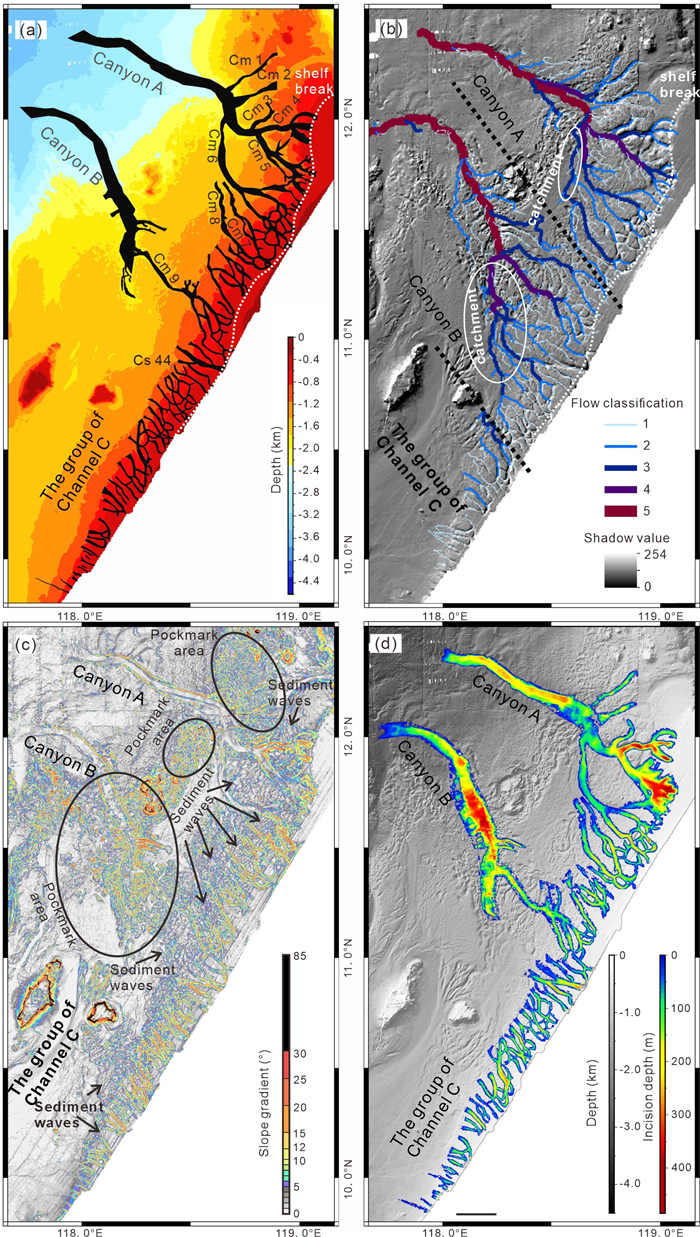
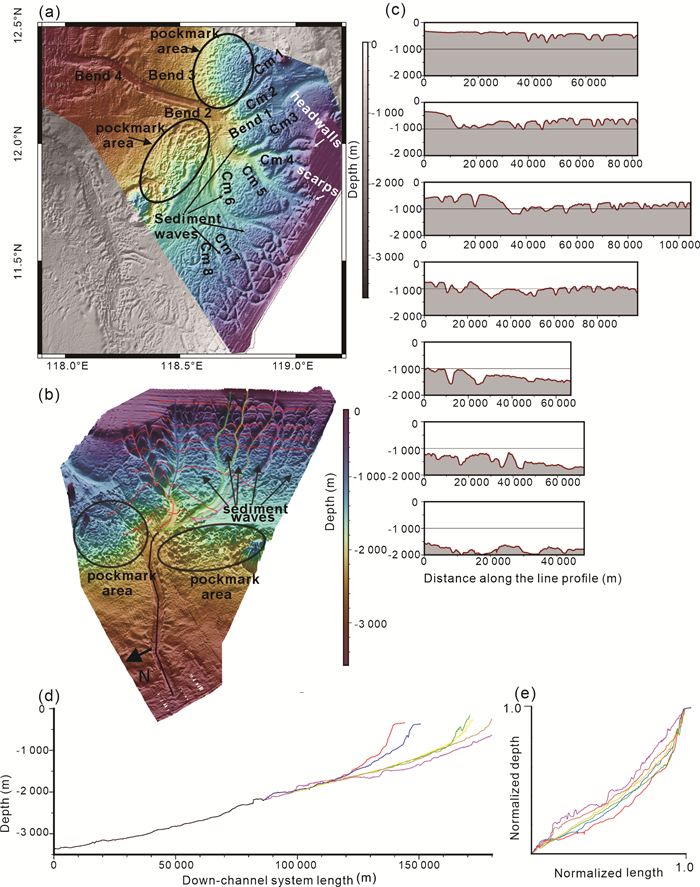
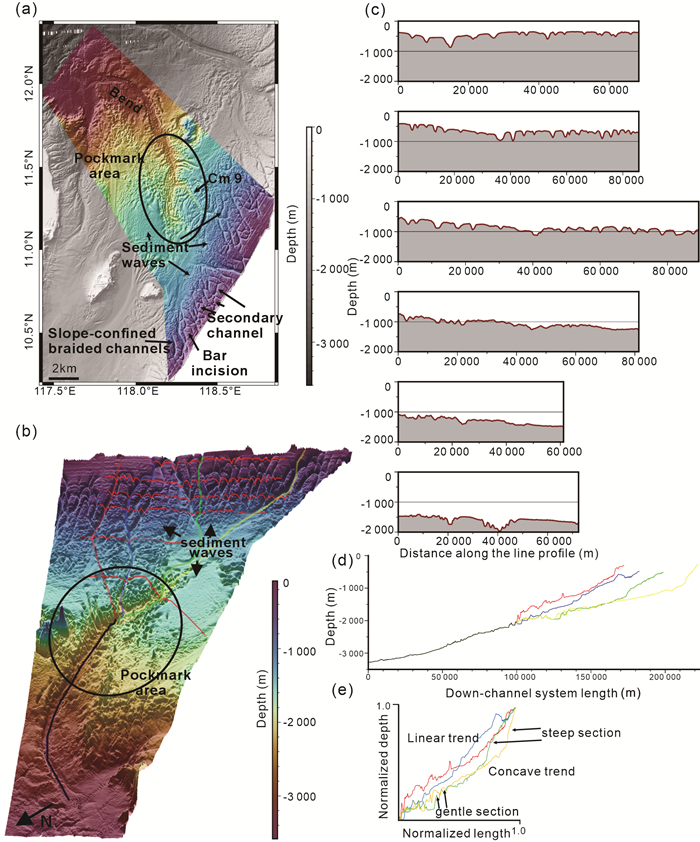
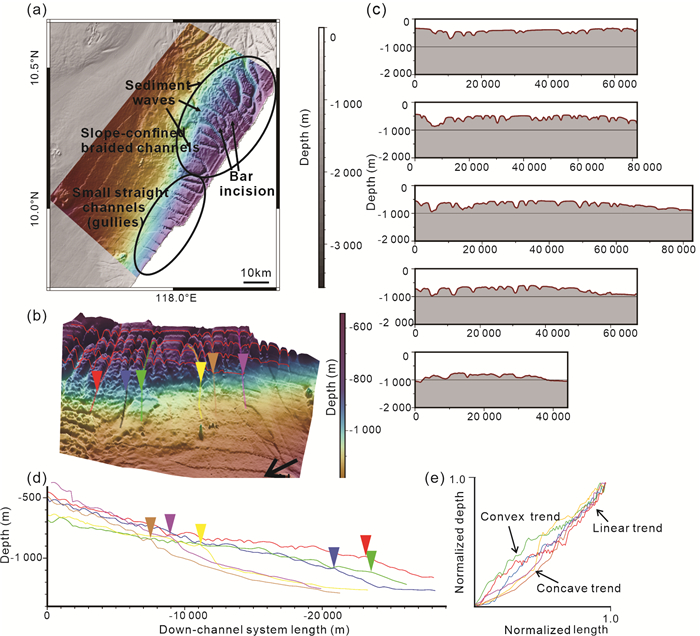
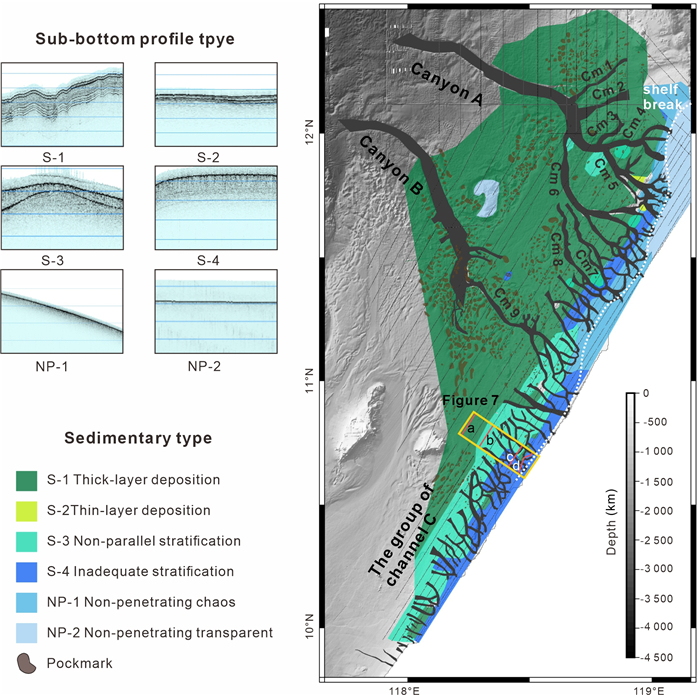
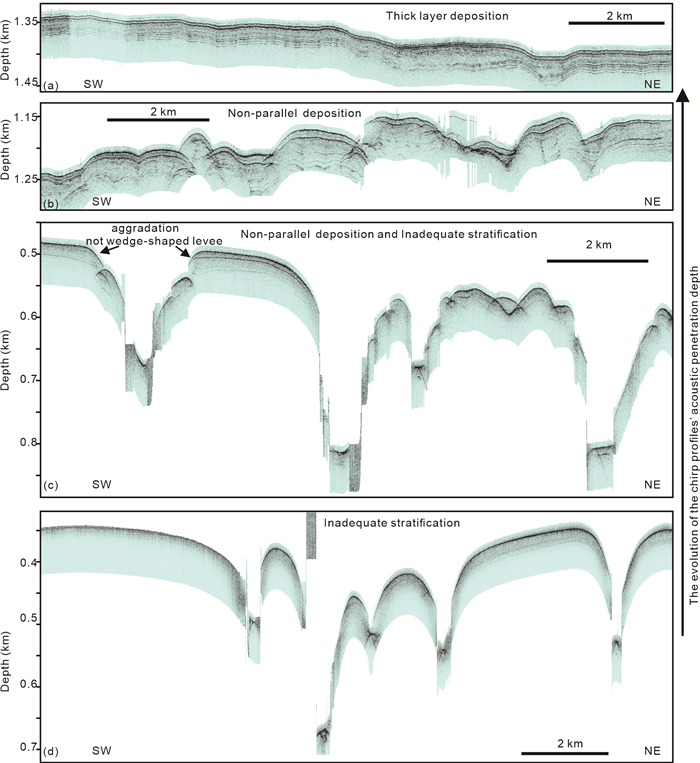
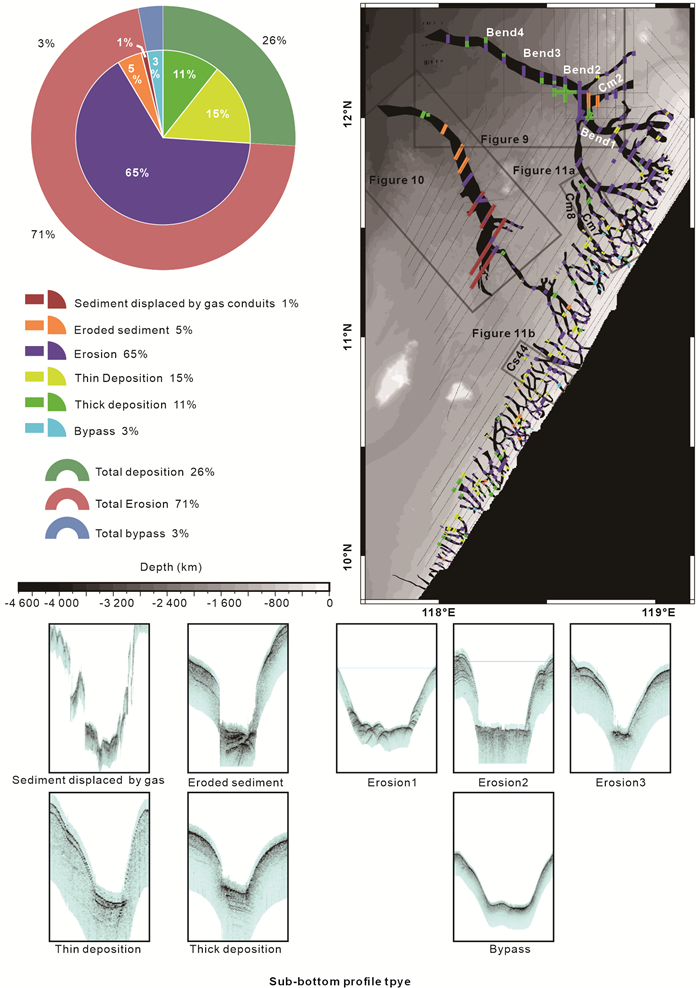
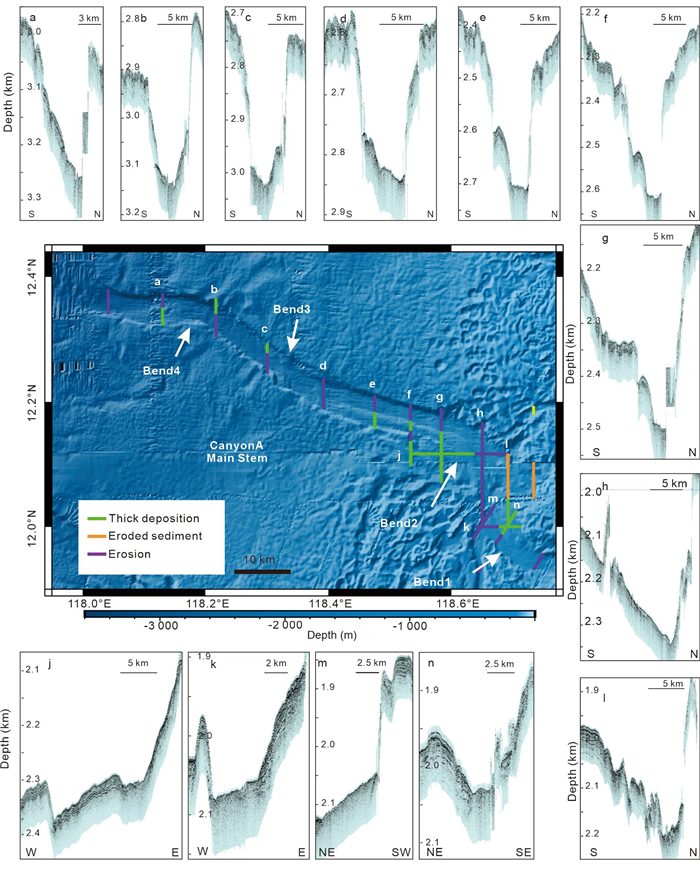
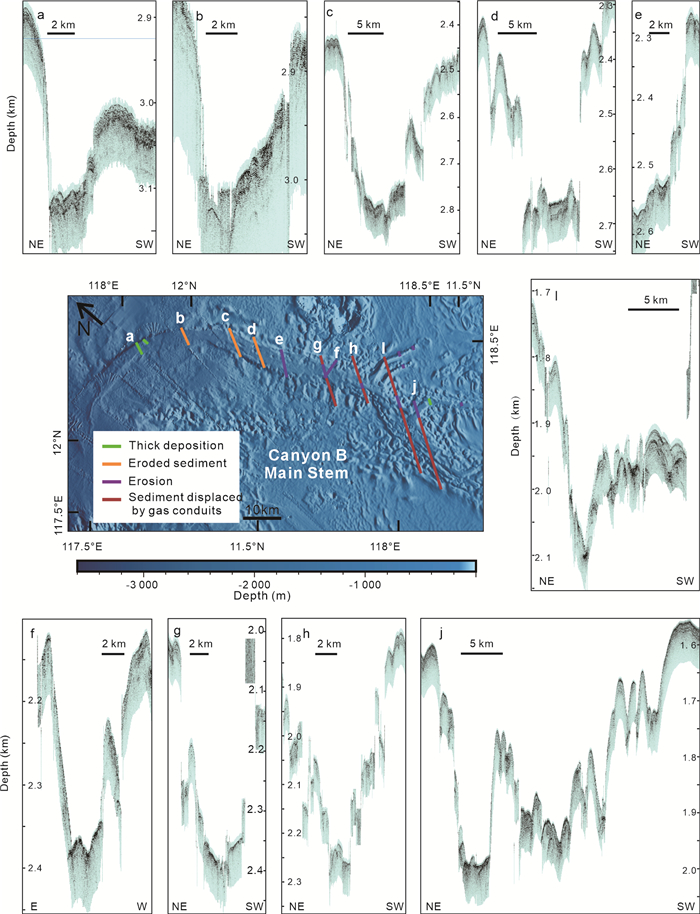
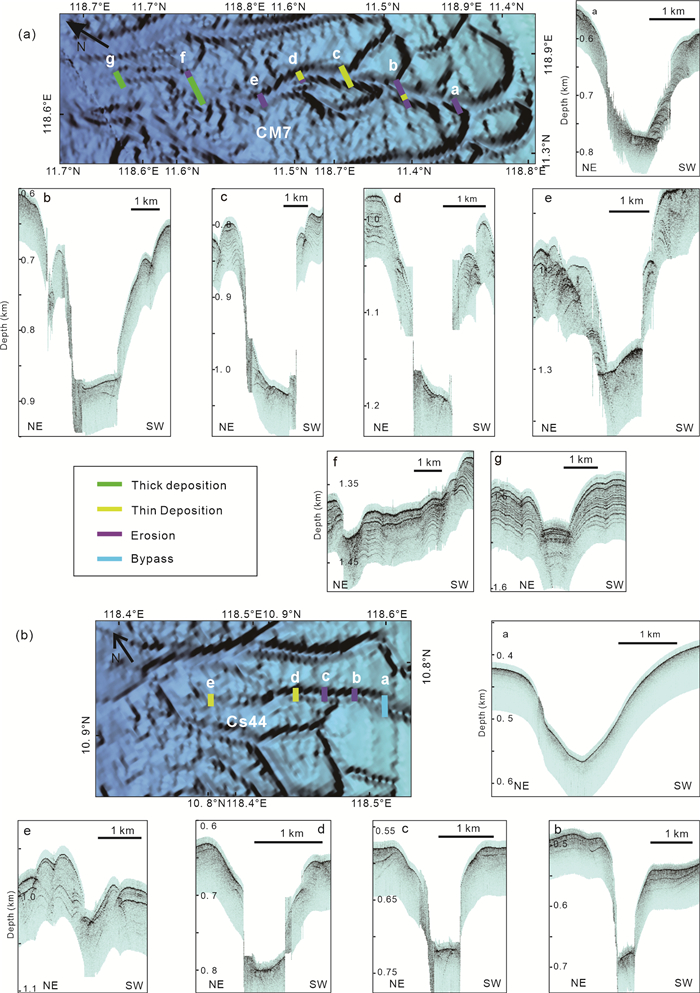
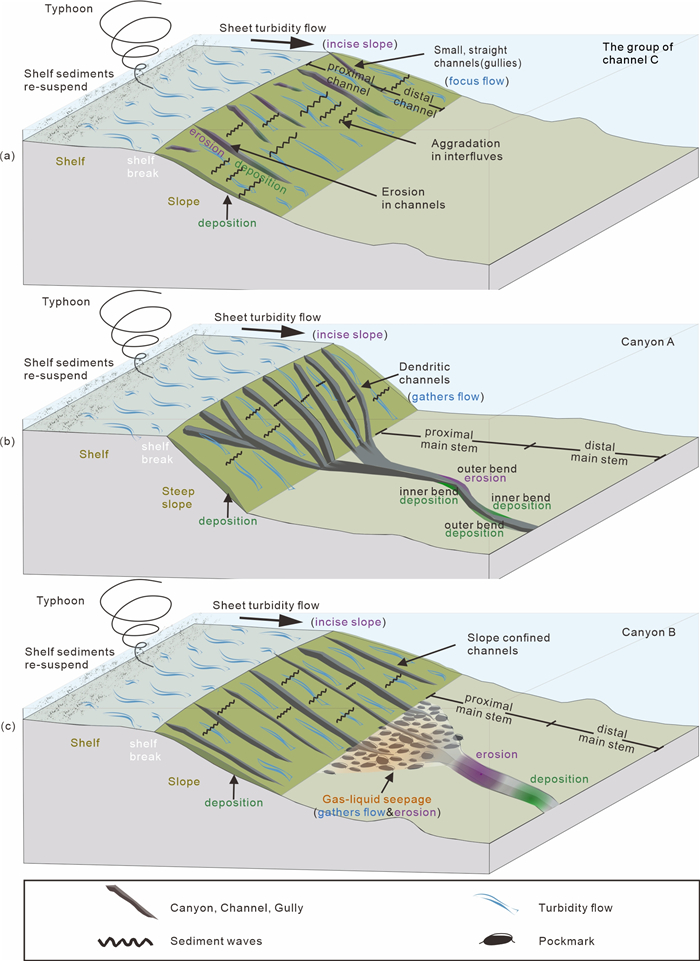
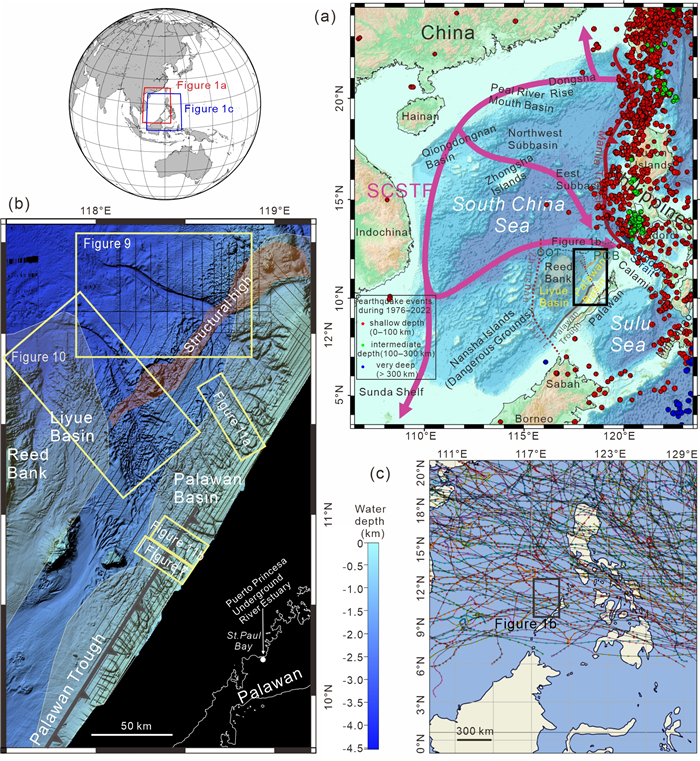
We investigated the morphology and sedimentary state of an extensive modern canyon system on the northwest continental slope of Palawan Island in the southern South China Sea using multibeam bathymetry data and chirp sub-bottom profiles. The canyon system in Northwest Palawan consists of a fairly large dendritic canyon, a braided canyon, and a set of short, straight, and slope-confined gullies. The erosion state covers 71% of the system. Sediment accumulates downstream of the bend's inner side in the proximal main stem of the dendritic canyon and is eroded in its outer side. In the distal main stem, sediment is deposited inside and outside the bend. In most of the system's tributaries, decreasing slope gradients result in more sediment deposition. There is thick aggradation of sediment waves in the interfluve throughout the system, which exhibit increasing levels of stratification as the slope decreases. The lack of slump scars and headward erosion at the canyon heads, as well as the presence of regular gullies and sediment wave fields, suggest that large areas of unconfined downslope turbidity currents formed the system. We propose that frequent storms in northwestern Palawan triggered these currents by resuspending sediments on the shelf.

| Allin, J. R., Hunt, J. E., Clare, M. A., et al., 2018. Eustatic Sea-Level Controls on the Flushing of a Shelf-Incising Submarine Canyon. GSA Bulletin, 130(1/2): 222–237. https://doi.org/10.1130/b31658.1 |
| Amos, K. J., Peakall, J., Bradbury, P. W., et al., 2010. The Influence of Bend Amplitude and Planform Morphology on Flow and Sedimentation in Submarine Channels. Marine and Petroleum Geology, 27(7): 1431–1447. https://doi.org/10.1016/j.marpetgeo.2010.05.004 |
| Bailey, L. P., Clare, M. A., Rosenberger, K. J., et al., 2021. Preconditioning by Sediment Accumulation Can Produce Powerful Turbidity Currents without Major External Triggers. Earth and Planetary Science Letters, 562: 116845. https://doi.org/10.1016/j.epsl.2021.116845 |
| Barckhausen, U., Engels, M., Franke, D., et al., 2014. Evolution of the South China Sea: Revised Ages for Breakup and Seafloor Spreading. Marine and Petroleum Geology, 58: 599–611. https://doi.org/10.1016/j.marpetgeo.2014.02.022 |
| Bernhardt, A., Melnick, D., Jara-Muñoz, J., et al., 2015. Controls on Submarine Canyon Activity during Sea-Level Highstands: The Biobío Canyon System Offshore Chile. Geosphere, 11(4): 1226–1255. https://doi.org/10.1130/ges01063.1 |
| Cao, L. C., Shao, L., Qiao, P. J., et al., 2021. Formation and Paleogeographic Evolution of the Palawan Continental Terrane along the Southeast Asian Margin Revealed by Detrital Fingerprints. GSA Bulletin, 133(5/6): 1167–1193. https://doi.org/10.1130/b35707.1 |
| Chiang, C. S., Hsiung, K. H., Yu, H. S., et al., 2020. Three Types of Modern Submarine Canyons on the Tectonically Active Continental Margin Offshore Southwestern Taiwan. Marine Geophysical Research, 41(1): 1–17. https://doi.org/10.1007/s11001-020-09403-z |
| Covault, J. A., Kostic, S., Paull, C. K., et al., 2014. Submarine Channel Initiation, Filling and Maintenance from Sea-Floor Geomorphology and Morphodynamic Modelling of Cyclic Steps. Sedimentology, 61(4): 1031–1054. https://doi.org/10.1111/sed.12084 |
| Dalla Valle, G., Gamberi, F., Trincardi, F., et al., 2013. Contrasting Slope Channel Styles on a Prograding Mud-Prone Margin. Marine and Petroleum Geology, 41: 72–82. https://doi.org/10.1016/j.marpetgeo.2012.02.003 |
| Davarpanah Jazi, S., Wells, M. G., Peakall, J., et al., 2020. Influence of Coriolis Force Upon Bottom Boundary Layers in a Large-Scale Gravity Current Experiment: Implications for Evolution of Sinuous Deep-Water Channel Systems. Journal of Geophysical Research: Oceans, 125(3): e2019JC015284. https://doi.org/10.1029/2019JC015284 |
| Dietterich, H. R., Cashman, K. V., 2014. Channel Networks within Lava Flows: Formation, Evolution, and Implications for Flow Behavior. Journal of Geophysical Research: Earth Surface, 119(8): 1704–1724. https://doi.org/10.1002/2014JF003103 |
| Ding, W. F., Fu, X. M., Zhang, J. B., et al., 2012. The New Techonolgy of Acquistion, Processing and Interpretation in Marine Acoustic Sub-Bottom and Single-Channel Seisimic Data. China Science and Technology Achievements, 14: 40–45 (in Chinese) |
| Ding, W. W., Li, J. B., Dong, C. Z., et al., 2015. Oligocene–Miocene Carbonates in the Reed Bank Area, South China Sea, and Their Tectono-Sedimentary Evolution. Marine Geophysical Research, 36(2): 149–165. https://doi.org/10.1007/s11001-014-9237-5 |
| Ding, W. F., Qin, L. J., Feng, X., et al., 2022. A New Perspective on the Continent–Ocean Boundary of Palawan Continental Block Identified with Geophysical Data. Tectonophysics, 826: 229239. https://doi.org/10.1016/j.tecto.2022.229239 |
| Dobbs, S. C., McHargue, T., Malkowski, M. A., et al., 2019. Are Submarine and Subaerial Drainages Morphologically Distinct? Geology, 47(11): 1093–1097. https://doi.org/10.1130/g46329.1 |
| Ducassou, E., Migeon, S., Mulder, T., et al., 2009. Evolution of the Nile Deep-Sea Turbidite System during the Late Quaternary: Influence of Climate Change on Fan Sedimentation. Sedimentology, 56(7): 2061–2090. https://doi.org/10.1111/j.1365-3091.2009.01070.x |
| Ekström, G., Nettles, M., Dziewoński, A. M., 2012. The Global CMT Project 2004–2010: Centroid-Moment Tensors for 13, 017 Earthquakes. Physics of the Earth and Planetary Interiors, 200/201: 1–9. https://doi.org/10.1016/j.pepi.2012.04.002 |
| Fernane, L., Matougui, R., Amarni, N., et al., 2022. Variation in Canyon Morphology and Their Relationship with Tectonic: The Example of the Western Algerian Margin. Arabian Journal of Geosciences, 15(3): 254. https://doi.org/10.1007/s12517-022-09566-6 |
| Fildani, A., Normark, W. R., Kostic, S., et al., 2006. Channel Formation by Flow Stripping: Large-Scale Scour Features along the Monterey East Channel and Their Relation to Sediment Waves. Sedimentology, 53(6): 1265–1287. https://doi.org/10.1111/j.1365-3091.2006.00812.x |
| Flood, R. D., Hiscott, R. N., Aksu, A. E., 2009. Morphology and Evolution of an Anastomosed Channel Network where Saline Underflow Enters the Black Sea. Sedimentology, 56(3): 807–839. https://doi.org/10.1111/j.1365-3091.2008.00998.x |
| Franke, D., Barckhausen, U., Baristeas, N., et al., 2011. The Continent-Ocean Transition at the Southeastern Margin of the South China Sea. Marine and Petroleum Geology, 28(6): 1187–1204. https://doi.org/10.1016/j.marpetgeo.2011.01.004 |
| Gordon, A. L., Villanoy, C. L., 2011. The Oceanography of the Philippine Archipelago: Introduction to the Special Issue. Oceanography, 24(1): 13–13. https://doi.org/10.5670/oceanog.2011.13 |
| Gordon, A. L., Huber, B. A., Metzger, E. J., et al., 2012. South China Sea Throughflow Impact on the Indonesian Throughflow. Geophysical Research Letters, 39(11): 2012GL052021. https://doi.org/10.1029/2012GL052021 |
|
Gordon, A. L., Sprintall, J., Ffield, A., 2011. Regional Oceanography of the Philippine Archipelago. Oceanography, 24(1): 14–27. |
| Hall, R., 2013. Contraction and Extension in Northern Borneo Driven by Subduction Rollback. Journal of Asian Earth Sciences, 76: 399–411. https://doi.org/10.1016/j.jseaes.2013.04.010 |
|
Harriman, L. M., 2018. Tropical Cyclone Activities. In: Bartlett, D., Singh, R. P., eds., Exploring Natural Hazards: A Case Study Approach. Chapman and Hall/CRC, New York. 141–158. |
| Heerema, C. J., Talling, P. J., Cartigny, M. J., et al., 2020. What Determines the Downstream Evolution of Turbidity Currents? Earth and Planetary Science Letters, 532: 116023. https://doi.org/10.1016/j.epsl.2019.116023 |
| Heijnen, M. S., Mienis, F., Gates, A. R., et al., 2022. Challenging the Highstand-Dormant Paradigm for Land-Detached Submarine Canyons. Nature Communications, 13(1): 3448. https://doi.org/10.1038/s41467-022-31114-9 |
| Henrich, R., Cherubini, Y., Meggers, H., 2010. Climate and Sea Level Induced Turbidite Activity in a Canyon System Offshore the Hyperarid Western Sahara (Mauritania): The Timiris Canyon. Marine Geology, 275(1/2/3/4): 178–198. https://doi.org/10.1016/j.margeo.2010.05.011 |
| Hill, P. R., Lintern, D. G., 2021. Sedimentary Processes at the Mouth of a Tidally-Influenced Delta: New Insights from Submarine Observatory Measurements, Fraser Delta, Canada. Sedimentology, 68(6): 2649–2670. https://doi.org/10.1111/sed.12868 |
| Hill, P. R., Lintern, D. G., 2022. Turbidity Currents on the Open Slope of the Fraser Delta. Marine Geology, 445: 106738. https://doi.org/10.1016/j.margeo.2022.106738 |
| Hizzett, J. L., Hughes Clarke, J. E., Sumner, E. J., et al., 2018. Which Triggers Produce the Most Erosive, Frequent, and Longest Runout Turbidity Currents on Deltas? Geophysical Research Letters, 45(2): 855–863. https://doi.org/10.1002/2017GL075751 |
| Hudson, J. H., Shinn, E. A., Robbin, D. M., 1982. Effects of Offshore Oil Drilling on Philippine Reef Corals. Bulletin of Marine Science, 32(4): 890–908. https://doi.org/10.1016/0198-0254(83)90318-7 |
| Jobe, Z. R., Lowe, D. R., Uchytil, S. J., 2011. Two Fundamentally Different Types of Submarine Canyons along the Continental Margin of Equatorial Guinea. Marine and Petroleum Geology, 28(3): 843–860. https://doi.org/10.1016/j.marpetgeo.2010.07.012 |
| Lai, S. Y. J., Gerber, T. P., Amblas, D., 2016. An Experimental Approach to Submarine Canyon Evolution. Geophysical Research Letters, 43(6): 2741–2747. https://doi.org/10.1002/2015GL067376 |
| Lemay, M., Grimaud, J. L., Cojan, I., et al., 2020. Geomorphic Variability of Submarine Channelized Systems along Continental Margins: Comparison with Fluvial Meandering Channels. Marine and Petroleum Geology, 115: 104295. https://doi.org/10.1016/j.marpetgeo.2020.104295 |
| Li, C. F., Xu, X., Lin, J., et al., 2014. Ages and Magnetic Structures of the South China Sea Constrained by Deep Tow Magnetic Surveys and IODP Expedition 349. Geochemistry, Geophysics, Geosystems, 15(12): 4958–4983. https://doi.org/10.1002/2014GC005567 |
| Li, M. T., Wei, J., Wang, D. X., et al., 2019. Exploring the Importance of the Mindoro-Sibutu Pathway to the Upper-Layer Circulation of the South China Sea and the Indonesian Throughflow. Journal of Geophysical Research: Oceans, 124(7): 5054–5066. https://doi.org/10.1029/2018JC014910 |
| Li, M. T., Xue, H. J., Wei, J., et al., 2021. The Role of the Mindoro-Sibutu Pathway on the South China Sea Multi-Layer Circulation. Journal of Physical Oceanography, 51(9): 2767–2782. https://doi.org/10.1175/jpo-d-20-0165.1 |
| Li, X. S., Zhou, Q. J., Su, T. Y., et al., 2016. Slope-Confined Submarine Canyons in the Baiyun Deep-Water Area, Northern South China Sea: Variation in Their Modern Morphology. Marine Geophysical Research, 37(2): 95–112. https://doi.org/10.1007/s11001-016-9269-0 |
| Lighty, R. G., Roberts, M. T., Link, M. H., et al., 1983. Alternating Carbonate and Siliciclastic Deep-Water Facies in Tectonic Evolution of Northwest Palawan Margin (Philippines), South China Sea. AAPG Bulletin, 67(3): 503–503. https://doi.org/10.1306/03b5b259-16d1-11d7-8645000102c1865d |
| Liu, J. T., Wang, Y. H., Yang, R. J., et al., 2012. Cyclone-Induced Hyperpycnal Turbidity Currents in a Submarine Canyon. Journal of Geophysical Research: Oceans, 117(C4): 2011JC007630. https://doi.org/10.1029/2011JC007630 |
| Micallef, A., Mountjoy, J. J., 2011. A Topographic Signature of a Hydrodynamic Origin for Submarine Gullies. Geology, 39(2): 115–118. https://doi.org/10.1130/g31475.1 |
| Mountjoy, J. J., Micallef, A., Stevens, C. L., et al., 2014. Holocene Sedimentary Activity in a Non-Terrestrially Coupled Submarine Canyon: Cook Strait Canyon System, New Zealand. Deep Sea Research Part II: Topical Studies in Oceanography, 104: 120–133. https://doi.org/10.1016/j.dsr2.2013.09.001 |
| Nirrengarten, M., Mohn, G., Kusznir, N. J., et al., 2020. Extension Modes and Breakup Processes of the Southeast China-Northwest Palawan Conjugate Rifted Margins. Marine and Petroleum Geology, 113: 104123. https://doi.org/10.1016/j.marpetgeo.2019.104123 |
| Normandeau, A., Campbell, D. C., 2020. Recurrence of Turbidity Currents on Glaciated Continental Margins: A Conceptual Model from Eastern Canada. Journal of Sedimentary Research, 90(10): 1305–1321. https://doi.org/10.2110/jsr.2020.66 |
| Normandeau, A., Bourgault, D., Neumeier, U., et al., 2020. Storm-Induced Turbidity Currents on a Sediment-Starved Shelf: Insight from Direct Monitoring and Repeat Seabed Mapping of Upslope Migrating Bedforms. Sedimentology, 67(2): 1045–1068. https://doi.org/10.1111/sed.12673 |
| Normandeau, A., Campbell, D. C., Cartigny, M. J. B., 2019. The Influence of Turbidity Currents and Contour Currents on the Distribution of Deep-Water Sediment Waves Offshore Eastern Canada. Sedimentology, 66(5): 1746–1767. https://doi.org/10.1111/sed.12557 |
| Normark, W. R., Carlson, P. R., 2003. Giant Submarine Canyons: Is Size any Clue to Their Importance in the Rock Record? Extreme Depositional Environments: Mega end Members in Geologic Time. Geological Society of America, 370: 175. https://doi.org/10.1130/0-8137-2370-1.175. |
| Normark, W. R., Piper, D. J. W., Sliter, R., 2006. Sea-Level and Tectonic Control of Middle to Late Pleistocene Turbidite Systems in Santa Monica Basin, Offshore California. Sedimentology, 53(4): 867–897. https://doi.org/10.1111/j.1365-3091.2006.00797.x |
| Padrones, J. T., Tani, K., Tsutsumi, Y., et al., 2017. Imprints of Late Mesozoic Tectono-Magmatic Events on Palawan Continental Block in Northern Palawan, Philippines. Journal of Asian Earth Sciences, 142: 56–76. https://doi.org/10.1016/j.jseaes.2017.01.027 |
| Paull, C. K., Talling, P. J., Maier, K. L., et al., 2018. Powerful Turbidity Currents Driven by Dense Basal Layers. Nature Communications, 9: 4114. https://doi.org/10.1038/s41467-018-06254-6 |
| Peakall, J., Amos, K. J., Keevil, G. M., et al., 2007. Flow Processes and Sedimentation in Submarine Channel Bends. Marine and Petroleum Geology, 24(6/7/8/9): 470–486. https://doi.org/10.1016/j.marpetgeo.2007.01.008 |
| Peakall, J., Sumner, E. J., 2015. Submarine Channel Flow Processes and Deposits: A Process-Product Perspective. Geomorphology, 244: 95–120. https://doi.org/10.1016/j.geomorph.2015.03.005 |
| Peakall, J., McCaffrey, B., Kneller, B., 2000. A Process Model for the Evolution, Morphology, and Architecture of Sinuous Submarine Channels. Journal of Sedimentary Research, 70(3): 434–448. https://doi.org/10.1306/2dc4091c-0e47-11d7-8643000102c1865d |
| Pettinga, L. A., Jobe, Z. R., 2020. How Submarine Channels (Re)Shape Continental Margins. Journal of Sedimentary Research, 90(11): 1581–1600. https://doi.org/10.2110/jsr.2020.72 |
| Pope, E. L., Talling, P. J., Carter, L., et al., 2017. Damaging Sediment Density Flows Triggered by Tropical Cyclones. Earth and Planetary Science Letters, 458: 161–169. https://doi.org/10.1016/j.epsl.2016.10.046 |
| Porcile, G., Bolla Pittaluga, M., Frascati, A., et al., 2020. Typhoon-Induced Megarips as Triggers of Turbidity Currents Offshore Tropical River Deltas. Communications Earth & Environment, 1(1): 1–13. https://doi.org/10.1038/s43247-020-0002-1 |
| Post, A. L., Przeslawski, R., Nanson, R., et al., 2022. Modern Dynamics, Morphology and Habitats of Slope-Confined Canyons on the Northwest Australian Margin. Marine Geology, 443: 106694. https://doi.org/10.1016/j.margeo.2021.106694 |
| Puga-Bernabéu, Á., Webster, J. M., Beaman, R. J., et al., 2013. Variation in Canyon Morphology on the Great Barrier Reef Margin, North-Eastern Australia: The Influence of Slope and Barrier Reefs. Geomorphology, 191: 35–50. https://doi.org/10.1016/j.geomorph.2013.03.001 |
| Puig, P., Palanques, A., Martín, J., 2014. Contemporary Sediment-Transport Processes in Submarine Canyons. Annual Review of Marine Science, 6: 53–77. https://doi.org/10.1146/annurev-marine-010213-135037 |
| Sequeiros, O. E., Bolla Pittaluga, M., Frascati, A., et al., 2019. How Typhoons Trigger Turbidity Currents in Submarine Canyons. Scientific Reports, 9: 9220. https://doi.org/10.1038/s41598-019-45615-z |
| Shepard, F. P., Dill, R. F., Rad, U. V., 1969. Physiography and Sedimentary Processes of La Jolla Submarine Fan and Fan-Valley, California. AAPG Bulletin, 53(2): 390–420. https://doi.org/10.1306/5d25c615-16c1-11d7-8645000102c1865d |
| Shumaker, L. E., Jobe, Z. R., Graham, S. A., 2017. Evolution of Submarine Gullies on a Prograding Slope: Insights from 3D Seismic Reflection Data. Marine Geology, 393: 35–46. https://doi.org/10.1016/j.margeo.2016.06.006 |
| Sømme, T. O., Helland-Hansen, W., Martinsen, O. J., et al., 2009. Relationships between Morphological and Sedimentological Parameters in Source-to-Sink Systems: A Basis for Predicting Semi-Quantitative Characteristics in Subsurface Systems. Basin Research, 21(4): 361–387. https://doi.org/10.1111/j.1365-2117.2009.00397.x |
| Soutter, E. L., Kane, I. A., Hodgson, D. M., et al., 2021. The Concavity of Submarine Canyon Longitudinal Profiles. Journal of Geophysical Research: Earth Surface, 126(10): e2021JF006185. https://doi.org/10.1029/2021JF006185 |
| Spinelli, G. A., Field, M. E., 2001. Evolution of Continental Slope Gullies on the Northern California Margin. Journal of Sedimentary Research, 71(2): 237–245. https://doi.org/10.1306/092500710237 |
| Steuer, S., Franke, D., Meresse, F., et al., 2013. Time Constraints on the Evolution of Southern Palawan Island, Philippines from Onshore and Offshore Correlation of Miocene Limestones. Journal of Asian Earth Sciences, 76: 412–427. https://doi.org/10.1016/j.jseaes.2013.01.007 |
| Straub, K. M., Mohrig, D., McElroy, B., et al., 2008. Interactions between Turbidity Currents and Topography in Aggrading Sinuous Submarine Channels: A Laboratory Study. Geological Society of America Bulletin, 120(3/4): 368–385. https://doi.org/10.1130/b25983.1 |
| Talling, P. J., Paull, C. K., Piper, D. J. W., 2013. How are Subaqueous Sediment Density Flows Triggered, What is Their Internal Structure and How does It Evolve? Direct Observations from Monitoring of Active Flows. Earth-Science Reviews, 125: 244–287. https://doi.org/10.1016/j.earscirev.2013.07.005 |
| Tong, D. J., Ren, J. Y., Liao, Y. T., et al., 2019. Cenozoic Tectonic Events and Their Implications for Constraining the Structure and Stratigraphic Styles from Rifting to Collision at the Southeastern Margin of the South China Sea. Marine Geophysical Research, 40(2): 145–161. https://doi.org/10.1007/s11001-018-09376-0 |
| Tournadour, E., Mulder, T., Borgomano, J., et al., 2017. Submarine Canyon Morphologies and Evolution in Modern Carbonate Settings: The Northern Slope of Little Bahama Bank, Bahamas. Marine Geology, 391: 76–97. https://doi.org/10.1016/j.margeo.2017.07.014 |
| Voigt, I., Henrich, R., Preu, B. M., et al., 2013. A Submarine Canyon as a Climate Archive—Interaction of the Antarctic Intermediate Water with the Mar Del Plata Canyon (Southwest Atlantic). Marine Geology, 341: 46–57. https://doi.org/10.1016/j.margeo.2013.05.002 |
| Walia, M., Yang, T. F., Knittel, U., et al., 2013. Cenozoic Tectonics in the Buruanga Peninsula, Panay Island, Central Philippines, as Constrained by U-Pb, 40Ar/39Ar and Fission Track Thermochronometers. Tectonophysics, 582: 205–220. https://doi.org/10.1016/j.tecto.2012.10.002 |
| Wang, J., Huang, W. G., Yang, J. S., et al., 2013. Study of the Propagation Direction of the Internal Waves in the South China Sea Using Satellite Images. Acta Oceanologica Sinica, 32(5): 42–50. https://doi.org/10.1007/s13131-013-0312-6 |
| Wang, X. X., Cai, F., Sun, Z. L., et al., 2022. Tectonic and Oceanographic Controls on the Slope-Confined Dendritic Canyon System in the Dongsha Slope, South China Sea. Geomorphology, 410: 108285. https://doi.org/10.1016/j.geomorph.2022.108285 |
| Warratz, G., Schwenk, T., Voigt, I., et al., 2019. Interaction of a Deep-Sea Current with a Blind Submarine Canyon (Mar Del Plata Canyon, Argentina). Marine Geology, 417: 106002. https://doi.org/10.1016/j.margeo.2019.106002 |
| Wei, J., Li, M. T., Malanotte-Rizzoli, P., et al., 2016. Opposite Variability of Indonesian Throughflow and South China Sea Throughflow in the Sulawesi Sea. Journal of Physical Oceanography, 46(10): 3165–3180. https://doi.org/10.1175/jpo-d-16-0132.1 |
| Weill, P., Lajeunesse, E., Devauchelle, O., et al., 2014. Experimental Investigation on Self-Channelized Erosive Gravity Currents. Journal of Sedimentary Research, 84(6): 487–498. https://doi.org/10.2110/jsr.2014.41 |
| Xu, J. P., 2010. Normalized Velocity Profiles of Field-Measured Turbidity Currents. Geology, 38(6): 563–566. https://doi.org/10.1130/g30582.1 |
| Xu, Z., Hu, T., Pang, X. Q., et al., 2022. Research Progress and Challenges of Natural Gas Hydrate Resource Evaluation in the South China Sea. Petroleum Science, 19(1): 13–25. https://doi.org/10.1016/j.petsci.2021.12.007 |
| Yin, S. R., Li, J. B., Ding, W. W., et al., 2020. Migration of the Lower North Palawan Submarine Canyon: Characteristics and Controls. International Geology Review, 62(7/8): 988–1005. https://doi.org/10.1080/00206814.2018.1522519 |
| Yin, S. R., Lin, L., Pope, E. L., et al., 2019. Continental Slope-Confined Canyons in the Pearl River Mouth Basin in the South China Sea Dominated by Erosion, 2004–2018. Geomorphology, 344: 60–74. https://doi.org/10.1016/j.geomorph.2019.07.016 |
| Yu, B., Cantelli, A., Marr, J., et al., 2006. Experiments on Self-Channelized Subaqueous Fans Emplaced by Turbidity Currents and Dilute Mudflows. Journal of Sedimentary Research, 76(6): 889–902. https://doi.org/10.2110/jsr.2006.069 |
| Zhang, Y. W., Liu, Z. F., Zhao, Y. L., et al., 2018. Long-Term in situ Observations on Typhoon-Triggered Turbidity Currents in the Deep Sea. Geology, 46(8): 675–678. https://doi.org/10.1130/g45178.1 |
| Zhang, Y. X., Xia, S. H., Cao, J. H., et al., 2020. Extensional Tectonics and Post-Rift Magmatism in the Southern South China Sea: New Constraints from Multi-Channel Seismic Data. Marine and Petroleum Geology, 117: 104396. https://doi.org/10.1016/j.marpetgeo.2020.104396 |
| Zhu, Y. H., Wang, P. K., Pang, S. J., et al., 2021. A Review of the Resource and Test Production of Natural Gas Hydrates in China. Energy & Fuels, 35(11): 9137–9150. https://doi.org/10.1021/acs.energyfuels.1c00485 |
Figures(12)
Copyright © 2013-2020 Journal of Earth Science 鄂ICP备15021562号-2
Tel: +86-27-67885075 Fax: +86-27-67885075 E-mail: xbb@cug.edu.cn
Address: Editorial Office of Journal, China University of Geosciences, Yujiashan, Wuhan, Hubei 430074, P. R. China
Supported by:
Beijing Renhe Information Technology Co. Ltd
E-mail:
info@rhhz.net


 DownLoad: