| Citation: | Guofeng Wang, Dawei Zhang, Liang Yang, Yongqing Zhang, Junling He, Jilin Xing, Jun Jiang, Jijun Li, Shuning Zhang, Chenxu Yan, Hang You, Ketao Zheng, Yinwu Zhang, Jiaheng Xue. Classification and Evaluation of a Shale Oil Reservoir in the Qingshankou Formation in the Southern Songliao Basin, NE China. Journal of Earth Science, 2026, 37(2): 544-558. doi: 10.1007/s12583-023-1936-8

|
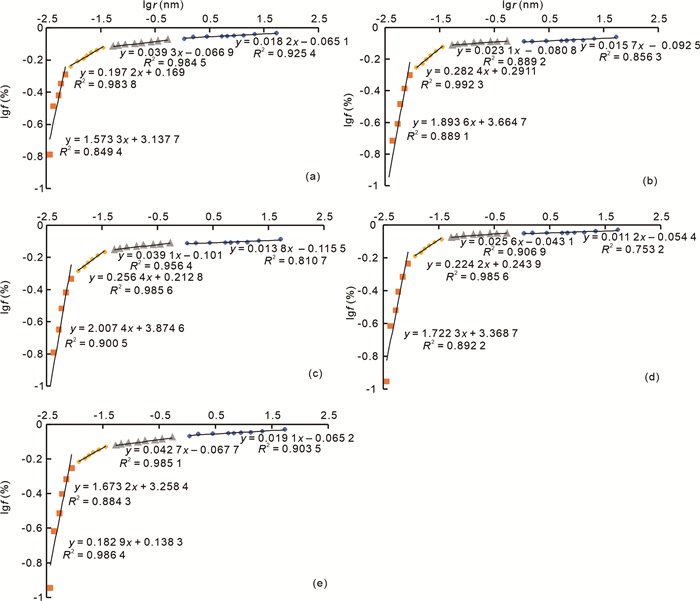
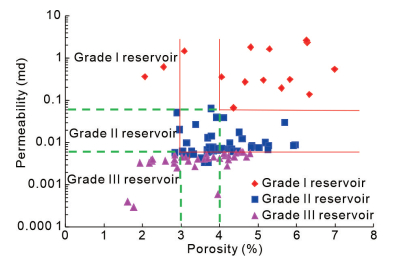
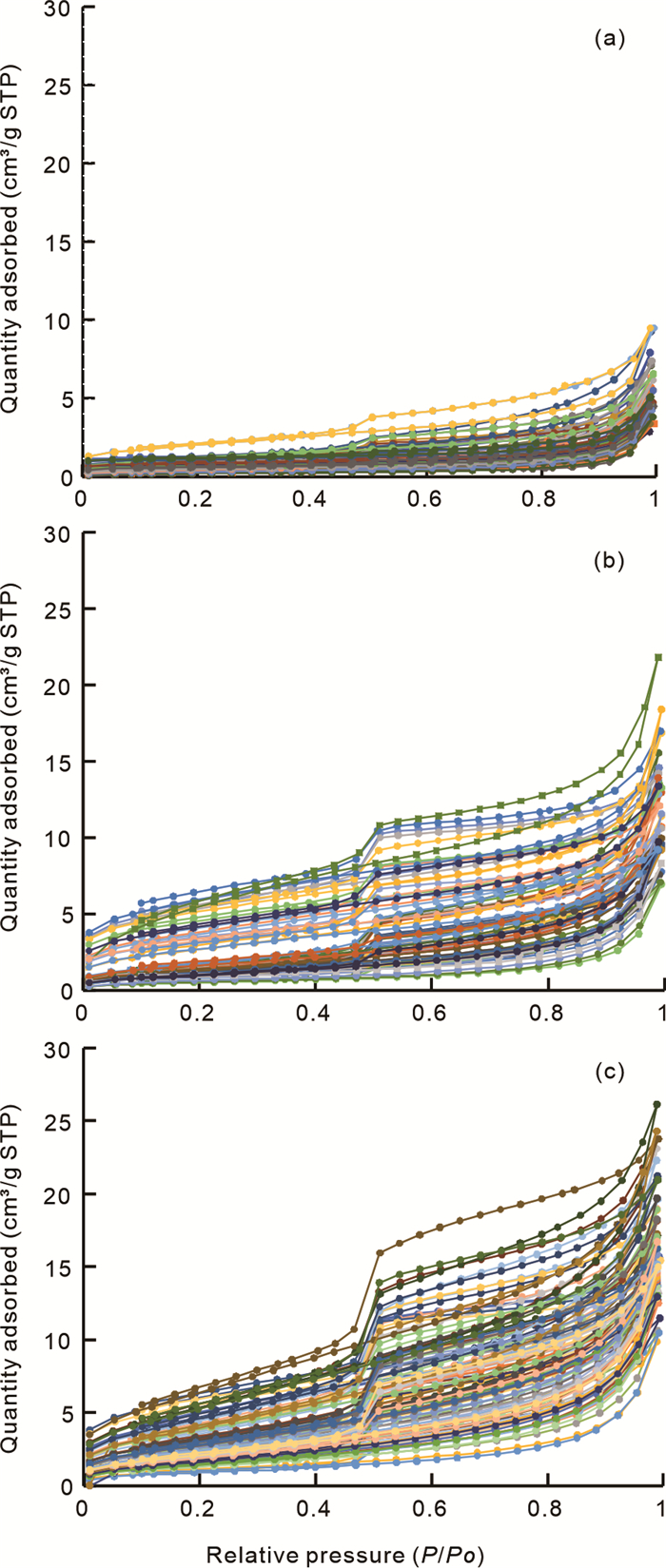
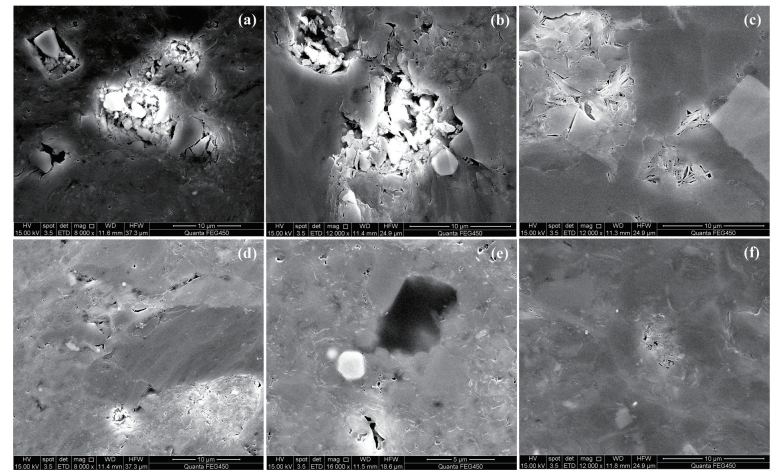
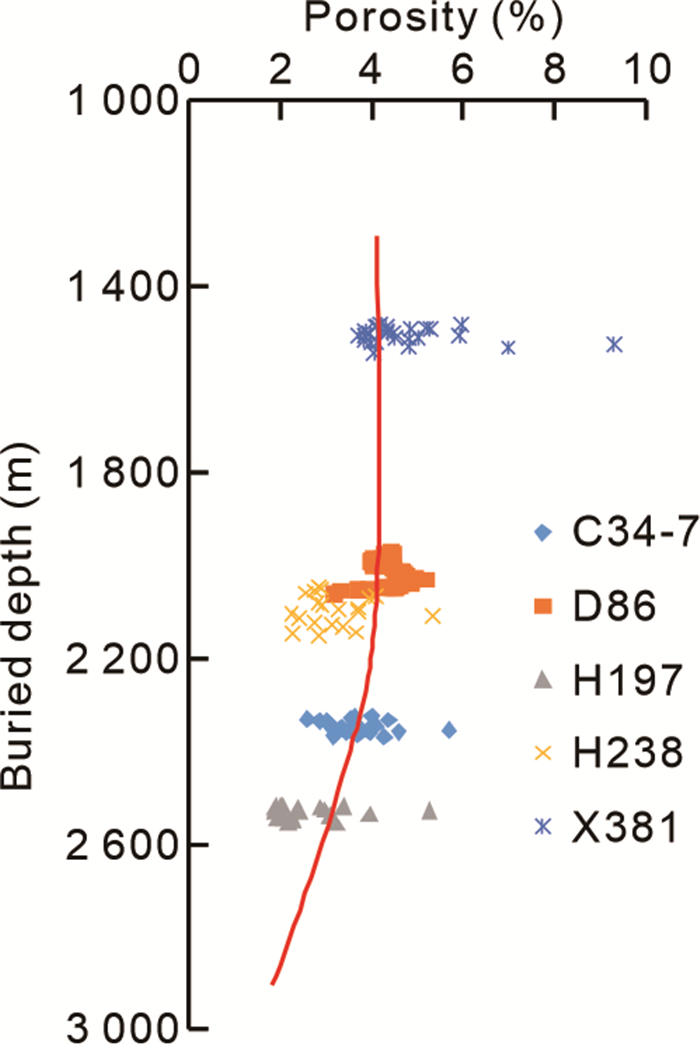
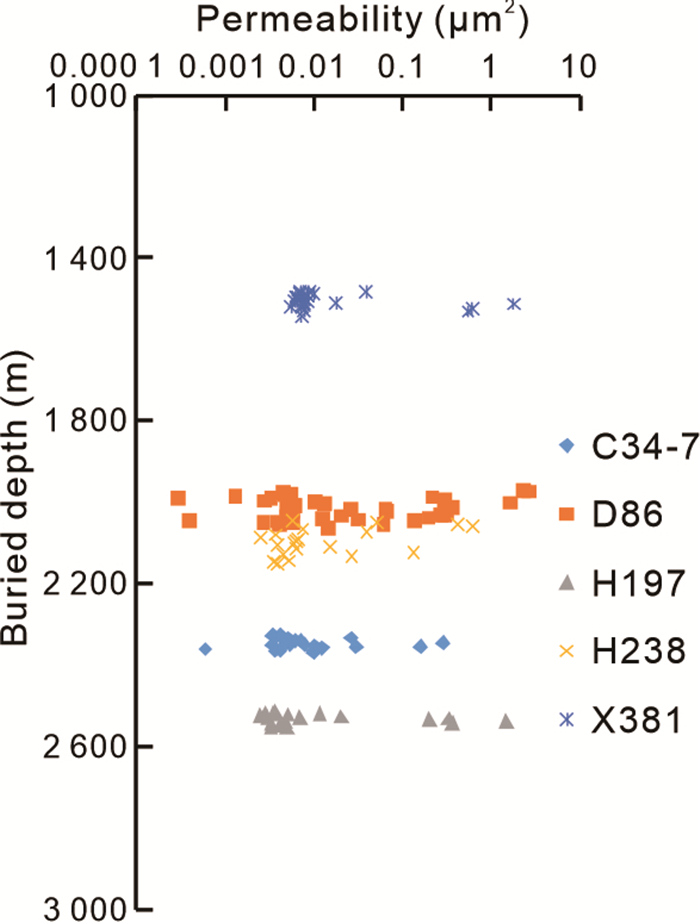
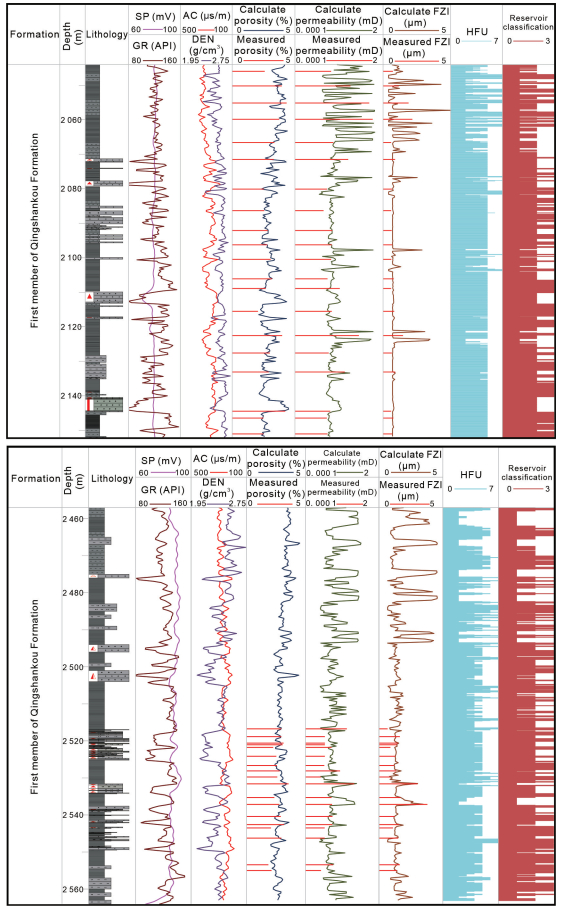
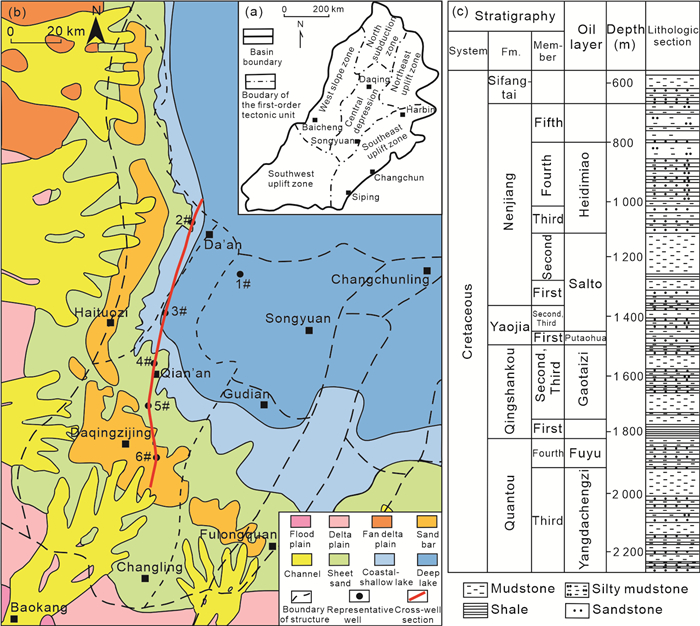
The reservoir's physical properties control the seepage capacity of the shale oil. Developing a method to classify and identify high-quality reservoirs is important to commercial shale oil production. In this study, the Qingshankou Formation shale oil reservoir in the southern Songliao Basin in China was selected. A series of reservoir characterization experiments were conducted to investigate the characteristics of the micropore structure of the reservoir and its influencing factors. A shale reservoir classification evaluation standard was established using fractal theory. It is based on the reservoir micro- and macrocharacteristics. The research results show that the reservoir qualities are controlled by mineral composition, sedimentation, and diagenesis. The larger the pore-throat ratio of the reservoir, the more significant the permeability decrease under compaction. A pore size classification standard based on the shale pore characteristics can be established using fractal theory. There is a coupling relationship between pore size and macroscopic physical properties, which can be used to establish the evaluation standard of the reservoir. Based on the division of hydraulic flow units, the standard can be applied to predict favorable reservoirs.

|
Amaefule, J. O., Altunbay, M., Tiab, D., et al., 1993. Enhanced Reservoir Description: Using Core and Log Data to Identify Hydraulic (Flow) Units and Predict Permeability in Uncored Intervals/Wells. SPE Annual Technical Conference and Exhibition. October 3–6, 1993. Houston, Texas. Richardson: Society of Petroleum Engineers, SPE 26436-MS. |
| Aziz, T., Li, X. Q., Xie, X. N., et al., 2025. A Large-Scale T2 (Late Cretaceous Turonian) Polygonal-Fault System Influenced by Regional Tectonic Stress in the Songliao Basin, Northeast China. Journal of Earth Science, 36(2): 584–596. https://doi.org/10.1007/s12583-024-0048-6 |
| Barrett, E. P., Joyner, L. G., Halenda, P. P., 1951. The Determination of Pore Volume and Area Distributions in Porous Substances. Ⅰ. Computations from Nitrogen Isotherms. Journal of the American Chemical Society, 73(1): 373–380. https://doi.org/10.1021/ja01145a126 |
| Brunauer, S., Emmett, P. H., Teller, E., 1938. Adsorption of Gases in Multimolecular Layers. Journal of the American Chemical Society, 60(2): 309–319. https://doi.org/10.1021/ja01269a023 |
| Bu, H. L., Ju, Y. W., Tan, J. Q., et al., 2015. Fractal Characteristics of Pores in Non-Marine Shales from the Huainan Coalfield, Eastern China. Journal of Natural Gas Science and Engineering, 24: 166–177. https://doi.org/10.1016/j.jngse.2015.03.021 |
|
Bustin, R. M., Bustin, A. M. M., Cui, X., et al., 2008. Impact of Shale Properties on Pore Structure and Storage Characteristics. SPE Shale Gas Production Conference. November 16–18, 2008. Fort Worth, Texas, USA. Richardson: Society of Petroleum Engineers, SPE 119892-MS. |
| Cai, J. C., Lin, D. L., Singh, H., et al., 2018. Shale Gas Transport Model in 3D Fractal Porous Media with Variable Pore Sizes. Marine and Petroleum Geology, 98: 437–447. https://doi.org/10.1016/j.marpetgeo.2018.08.040 |
| Carman, P. C., 1956. Flow of Gases Through Porous Media, London |
| Carman, P. C., 1997. Fluid Flow through Granular Beds. Chemical Engineering Research and Design, 75: S32–S48. https://doi.org/10.1016/s0263-8762(97)80003-2 |
| Chandra, D., Vishal, V., 2020. A Comparison of Nano-Scale Pore Attributes of Barakar Formation Gas Shales from Raniganj and Wardha Basin, India Using Low Pressure Sorption and FEG-SEM Analysis. Journal of Natural Gas Science and Engineering, 81: 103453. https://doi.org/10.1016/j.jngse.2020.103453 |
| Choma, J., Jagiello, J., Jaroniec, M., 2021. Assessing the Contribution of Micropores and Mesopores from Nitrogen Adsorption on Nanoporous Carbons: Application to Pore Size Analysis. Carbon, 183: 150–157. https://doi.org/10.1016/j.carbon.2021.07.020 |
| Clarkson, C. R., Solano, N., Bustin, R. M., et al., 2013. Pore Structure Characterization of North American Shale Gas Reservoirs Using USANS/SANS, Gas Adsorption, and Mercury Intrusion. Fuel, 103: 606–616. https://doi.org/10.1016/j.fuel.2012.06.119 |
| Curtis, M. E., Cardott, B. J., Sondergeld, C. H., et al., 2012. Development of Organic Porosity in the Woodford Shale with Increasing Thermal Maturity. International Journal of Coal Geology, 103: 26–31. https://doi.org/10.1016/j.coal.2012.08.004 |
| Curtis, M. E., Sondergeld, C. H., Ambrose, R. J., et al., 2012. Microstructural Investigation of Gas Shales in Two and Three Dimensions Using Nanometer-Scale Resolution Imaging. AAPG Bulletin, 96(4): 665–677. https://doi.org/10.1306/08151110188 |
| Ding, B., Liu, H. X., Xu, D. R., et al., 2024. Uranium Metallogenic Effect of Hydrothermal Fluid Transformation in Sandstone-Type Uranium Deposits in Northern Ordos Basin: Constraints from the Study of Biotite Chloritization Process. Earth Science, 49(2): 625–638 (in Chinese with English Abstract) |
| Groen, J. C., Peffer, L. A. A., Pérez-Ramírez, J., 2003. Pore Size Determination in Modified Micro- and Mesoporous Materials. Pitfalls and Limitations in Gas Adsorption Data Analysis. Microporous and Mesoporous Materials, 60(1/2/3): 1–17. https://doi.org/10.1016/s1387-1811(03)00339-1 |
| Iqbal, M. A., Rezaee, R., Smith, G., et al., 2021. Shale Lithofacies Controls on Porosity and Pore Structure: An Example from Ordovician Goldwyer Formation, Canning Basin, Western Australia. Journal of Natural Gas Science and Engineering, 89: 103888. https://doi.org/10.1016/j.jngse.2021.103888 |
| Jarvie, D. M., Hill, R. J., Ruble, T. E., et al., 2007. Unconventional Shale-Gas Systems: The Mississippian Barnett Shale of North-Central Texas as One Model for Thermogenic Shale-Gas Assessment. AAPG Bulletin, 91(4): 475–499. https://doi.org/10.1306/12190606068 |
| Jiang, F. J., Chen, D., Wang, Z. F., et al., 2016. Pore Characteristic Analysis of a Lacustrine Shale: A Case Study in the Ordos Basin, NW China. Marine and Petroleum Geology, 73: 554–571. https://doi.org/10.1016/j.marpetgeo.2016.03.026 |
| Kate, J. M., Gokhale, C. S., 2006. A Simple Method to Estimate Complete Pore Size Distribution of Rocks. Engineering Geology, 84(1/2): 48–69. https://doi.org/10.1016/j.enggeo.2005.11.009 |
| Kozeny, J., 1927. Uber Kapillare Leitung des Wasser im Boden. Wien Akad. Wiss, 136: 271–306 |
| Kong, X. Y., Wang, X. J., Li, Z. W., et al., 2025. Formation Mechanisms and Distribution Patterns of Fractures in Shale Reservoirs: A Case Study of the Lucaogou Formation, Jimsar Sag, Junggar Basin. Journal of Earth Science, 36(5): 2373–2379. https://doi.org/10.1007/s12583-025-0188-3 |
| Li, A., Ding, W. L., He, J. H., et al., 2016. Investigation of Pore Structure and Fractal Characteristics of Organic-Rich Shale Reservoirs: A Case Study of Lower Cambrian Qiongzhusi Formation in Malong Block of Eastern Yunnan Province, South China. Marine and Petroleum Geology, 70: 46–57. https://doi.org/10.1016/j.marpetgeo.2015.11.004 |
| Li, J. J., Yin, J. X., Zhang, Y. N., et al., 2015. A Comparison of Experimental Methods for Describing Shale Pore Features—A Case Study in the Bohai Bay Basin of Eastern China. International Journal of Coal Geology, 152: 39–49. https://doi.org/10.1016/j.coal.2015.10.009 |
| Li, J. Q., Liu, D. M., Yao, Y. B., et al., 2013. Physical Characterization of the Pore-Fracture System in Coals, Northeastern China. Energy Exploration & Exploitation, 31(2): 267–285. https://doi.org/10.1260/0144-5987.31.2.267 |
| Liu, B., Lü, Y. F., Meng, Y. L., et al., 2015. Petrologic Characteristics and Genetic Model of Lacustrine Lamellar Fine-Grained Rock and Its Significance for Shale Oil Exploration: A Case Study of Permian Lucaogou Formation in Malang Sag, Santanghu Basin, NW China. Petroleum Exploration and Development, 42(5): 656–666. https://doi.org/10.1016/s1876-3804(15)30060-4 |
| Liu, B., Shi, J. X., Fu, X. F., et al., 2018. Petrological Characteristics and Shale Oil Enrichment of Lacustrine Fine-Grained Sedimentary System: A Case Study of Organic-Rich Shale in First Member of Cretaceous Qingshankou Formation in Gulong Sag, Songliao Basin, NE China. Petroleum Exploration and Development, 45(5): 884–894. https://doi.org/10.1016/s1876-3804(18)30091-0 |
| Liu, B., Sun, J. H., Zhang, Y. Q., et al., 2021. Reservoir Space and Enrichment Model of Shale Oil in the First Member of Cretaceous Qingshankou Formation in the Changling Sag, Southern Songliao Basin, NE China. Petroleum Exploration and Development, 48(3): 608–624. https://doi.org/10.1016/s1876-3804(21)60049-6 |
| Liu, H. J., Xu, Z. L., Tang, C., et al., 2024. Provenance Characteristics of Uranium-Bearing Sediments of Upper Saihan Formation and Its Implications for Sandstone-Type Uranium Mineralization in Manite Depression, Erlian Basin. Earth Science, 49(10): 3589–3609 (in Chinese with English Abstract) |
| Liu, K. Q., Ostadhassan, M., Zhou, J., et al., 2017. Nanoscale Pore Structure Characterization of the Bakken Shale in the USA. Fuel, 209: 567–578. https://doi.org/10.1016/j.fuel.2017.08.034 |
| Liu, Y. K., Wang, H. J., Zhang, J. Y., et al., 2025. Uncover the Diagenetic Water Condition and Dolomite Formation in the Songliao Basin 91 Ma. Journal of Earth Science, 36(3): 1109–1128. https://doi.org/10.1007/s12583-024-0079-z |
| Loucks, R. G., Reed, R. M., Ruppel, S. C., et al., 2009. Morphology, Genesis, and Distribution of Nanometer-Scale Pores in Siliceous Mudstones of the Mississippian Barnett Shale. Journal of Sedimentary Research, 79(12): 848–861. https://doi.org/10.2110/jsr.2009.092 |
| Mastalerz, M., Wei, L., Drobniak, A., et al., 2018. Responses of Specific Surface Area and Micro- and Mesopore Characteristics of Shale and Coal to Heating at Elevated Hydrostatic and Lithostatic Pressures. International Journal of Coal Geology, 197: 20–30. https://doi.org/10.1016/j.coal.2018.06.026 |
| Okolo, G. N., Everson, R. C., Neomagus, H. W. J. P., et al., 2015. Comparing the Porosity and Surface Areas of Coal as Measured by Gas Adsorption, Mercury Intrusion and SAXS Techniques. Fuel, 141: 293–304. https://doi.org/10.1016/j.fuel.2014.10.046 |
| Peng, H., Jiao, Y. Q., Rong, H., et al., 2024. Spatial-Temporal Coupling of Key Ore-Controlling Factors for Sandstone-Type Uranium Deposits in Tiefa Area, Songliao Basin. Earth Science, 49(9): 3182–3198 (in Chinese with English Abstract) |
| Ross, D. J. K., Marc Bustin, R., 2009. The Importance of Shale Composition and Pore Structure Upon Gas Storage Potential of Shale Gas Reservoirs. Marine and Petroleum Geology, 26(6): 916–927. https://doi.org/10.1016/j.marpetgeo.2008.06.004 |
| Wang, T., Yang, C. C., Qin, K., et al., 2021. Life Time Enhanced Fenton-Like Catalyst by Dispersing Iron Oxides in Activated Carbon: Preparation and Reactivation through Carbothermal Reaction. Journal of Hazardous Materials, 406: 124791. https://doi.org/10.1016/j.jhazmat.2020.124791 |
| Wang, X. M., Zhang, S. C., Wang, H. J., et al., 2017. Significance of Source Rock Heterogeneities: A Case Study of Mesoproterozoic Xiamaling Formation Shale in North China. Petroleum Exploration and Development, 44(1): 32–39. https://doi.org/10.1016/s1876-3804(17)30005-8 |
| Xiong, J., Liu, X. J., Liang, L. X., 2015. Experimental Study on the Pore Structure Characteristics of the Upper Ordovician Wufeng Formation Shale in the Southwest Portion of the Sichuan Basin, China. Journal of Natural Gas Science and Engineering, 22: 530–539. https://doi.org/10.1016/j.jngse.2015.01.004 |
| Yang, Y. F., Wang, K., Zhang, L., et al., 2019. Pore-Scale Simulation of Shale Oil Flow Based on Pore Network Model. Fuel, 251: 683–692. https://doi.org/10.1016/j.fuel.2019.03.083 |
| Zhang, J. F., Xu, X. Y., Bai, J., et al., 2020. Enrichment and Exploration of Deep Lacustrine Shale Oil in the First Member of Cretaceous Qingshankou Formation, Southern Songliao Basin, NE China. Petroleum Exploration and Development, 47(4): 683–698. https://doi.org/10.1016/s1876-3804(20)60085-4 |
| Zhang, P. F., Lu, S. F., Li, J. Q., et al., 2017. Characterization of Shale Pore System: A Case Study of Paleogene Xin'gouzui Formation in the Jianghan Basin, China. Marine and Petroleum Geology, 79: 321–334. https://doi.org/10.1016/j.marpetgeo.2016.10.014 |
| Zhao, N., Huang, J. Q., Li, D. M., et al., 2013. Sedimentary Laws of Thin-Layer, Fine-Grain Turbidites of Distant-Gentle Slope: A Case from the 1st Member of Qingshankou Formation in Dabusu Area of West Slope, South Songliao Basin. Acta Sedimentologica Sinica, 31(2): 291–301 (in Chinese with English Abstract) |
Figures(18) / Tables(1)
Copyright © 2013-2020 Journal of Earth Science 鄂ICP备15021562号-2
Tel: +86-27-67885075 Fax: +86-27-67885075 E-mail: xbb@cug.edu.cn
Address: Editorial Office of Journal, China University of Geosciences, Yujiashan, Wuhan, Hubei 430074, P. R. China
Supported by:
Beijing Renhe Information Technology Co. Ltd
E-mail:
info@rhhz.net


 DownLoad: