| Citation: | Yangyang Ren, Youpu Dong, Wenchang Li. Uplift of the Central Part of the Jinsha River, Southeastern Tibetan Plateau: Evidence from Apatite Fission Track Dating and Bedrock Channel Longitudinal Profiles. Journal of Earth Science, 2026, 37(2): 396-411. doi: 10.1007/s12583-024-0039-7

|
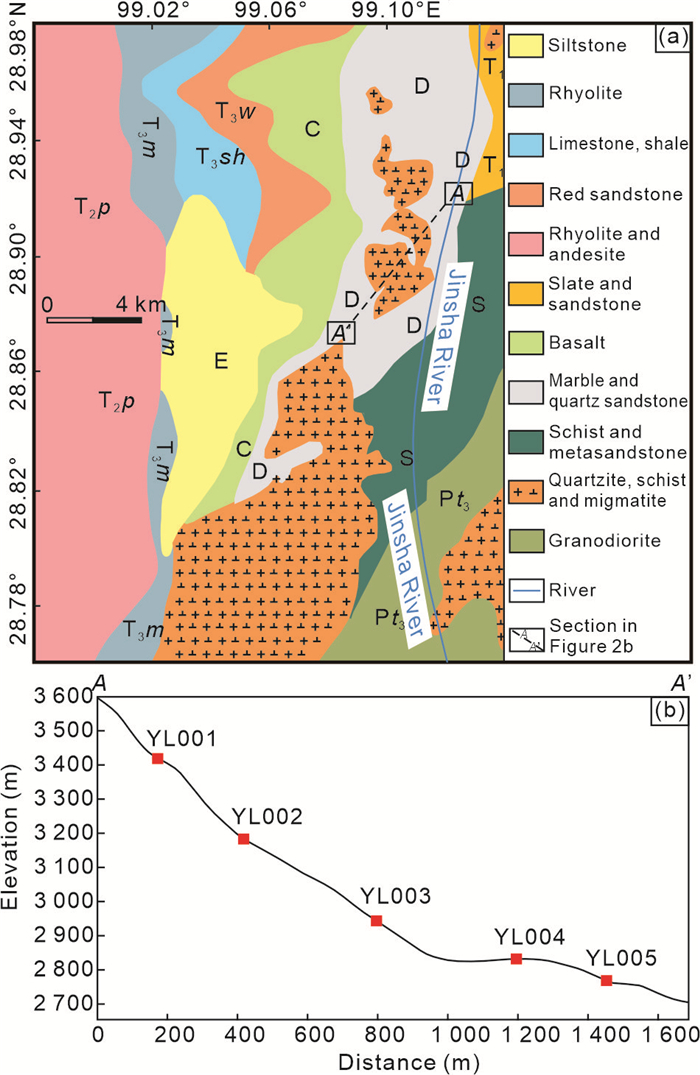
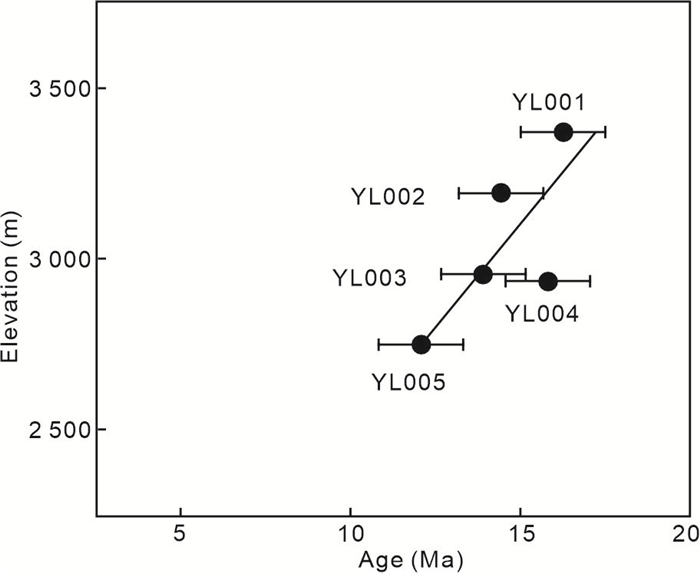
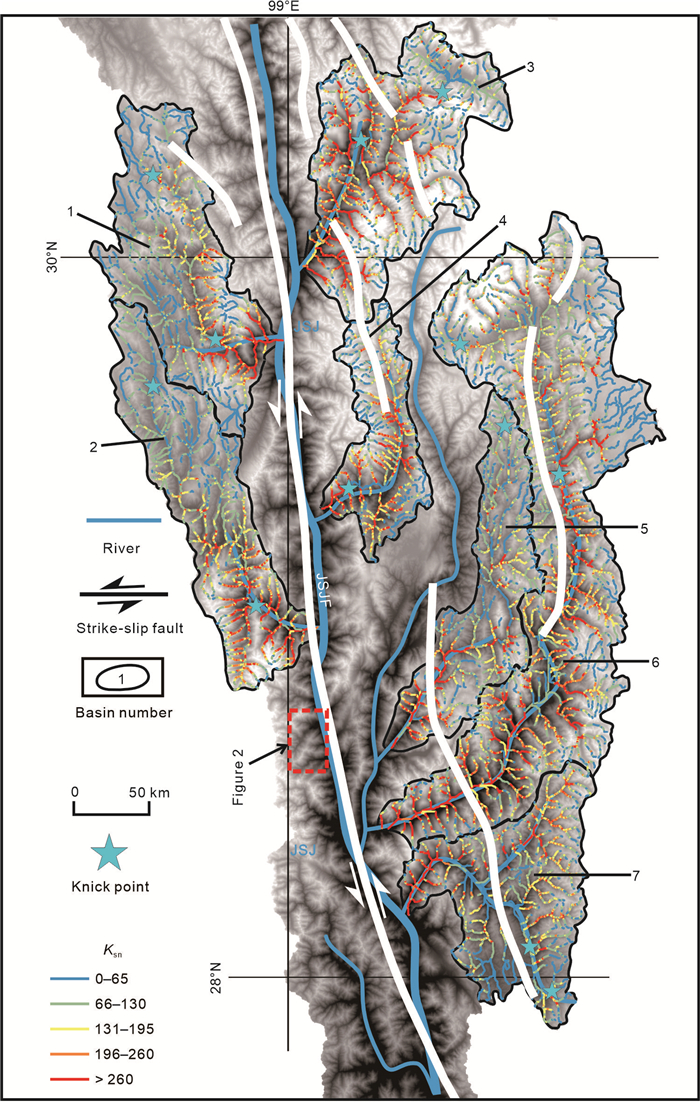
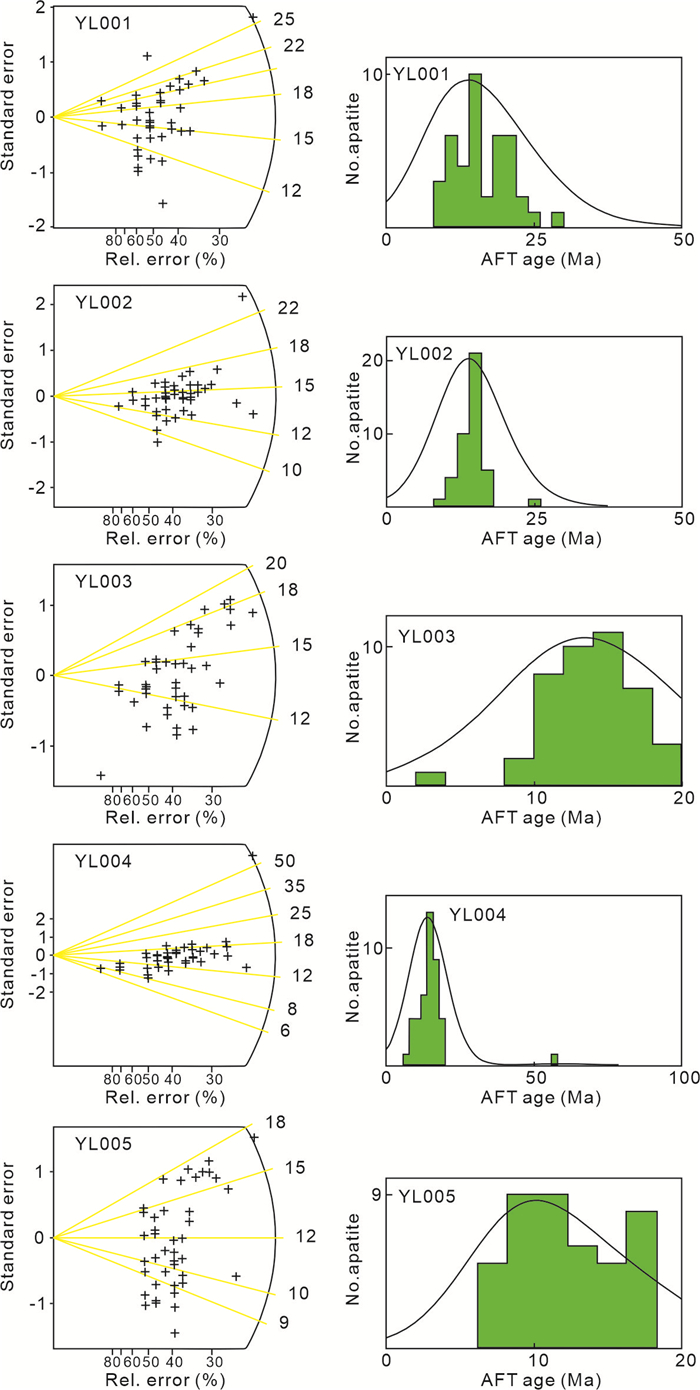
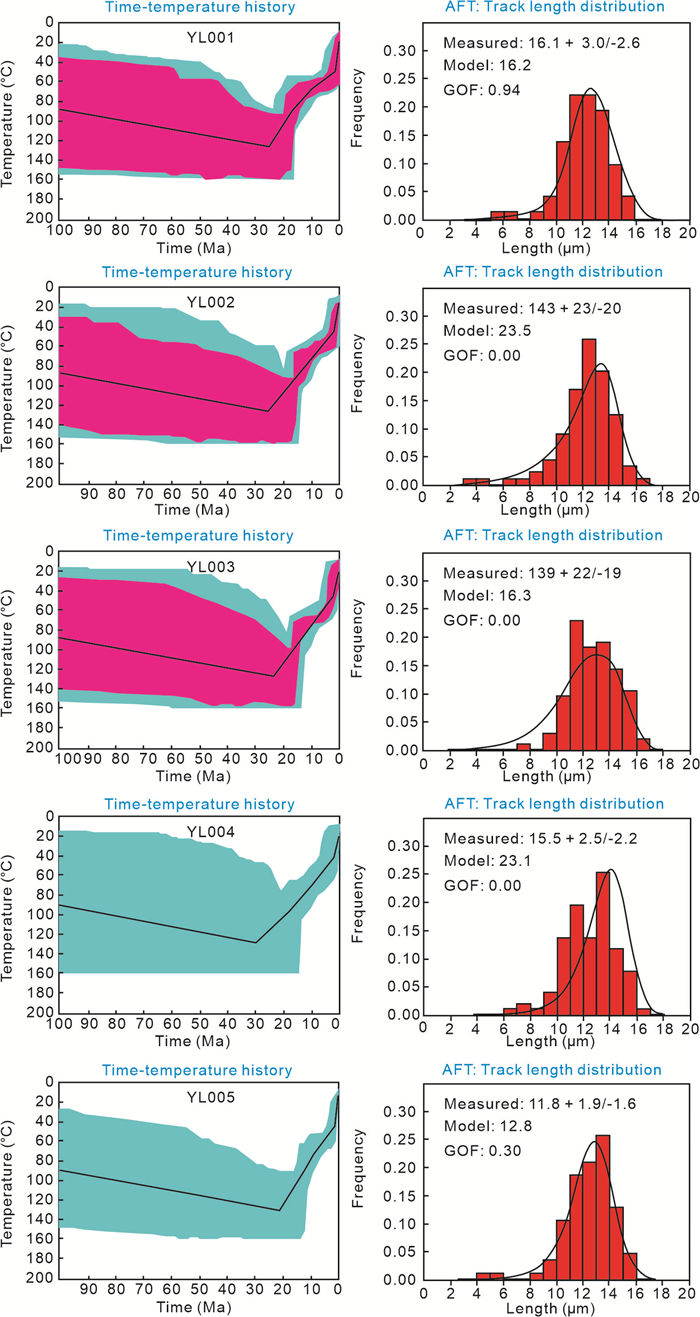
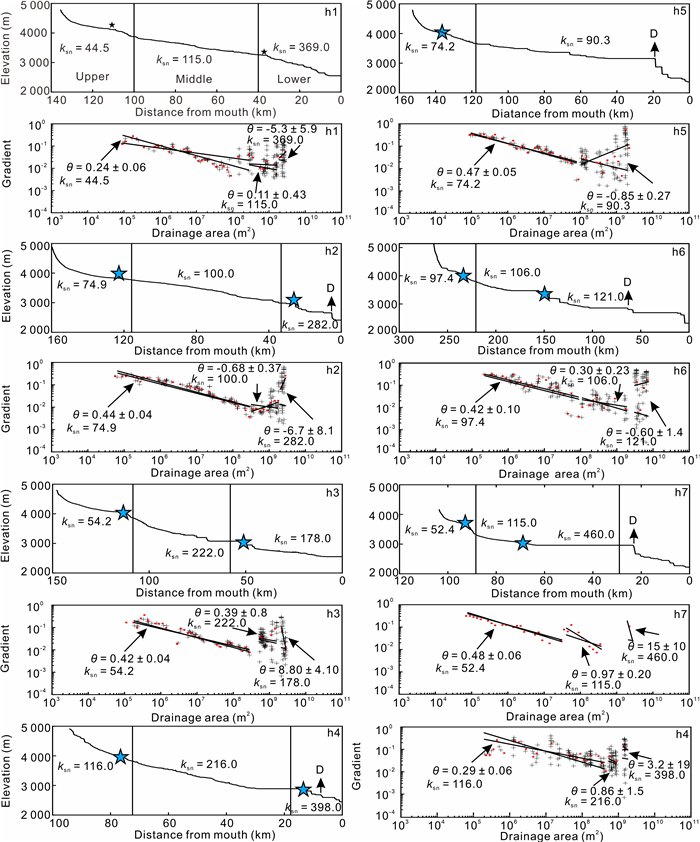
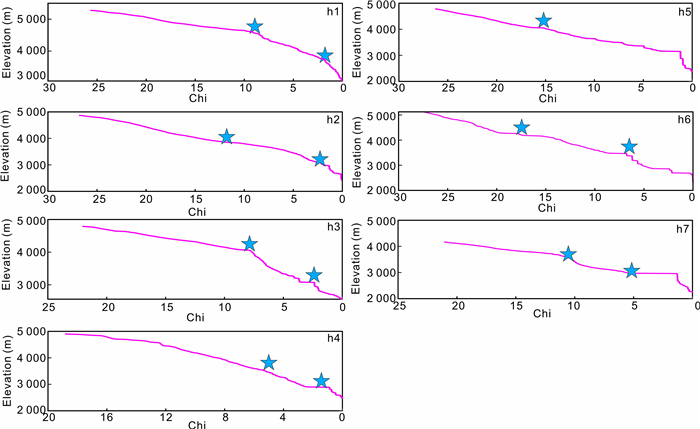
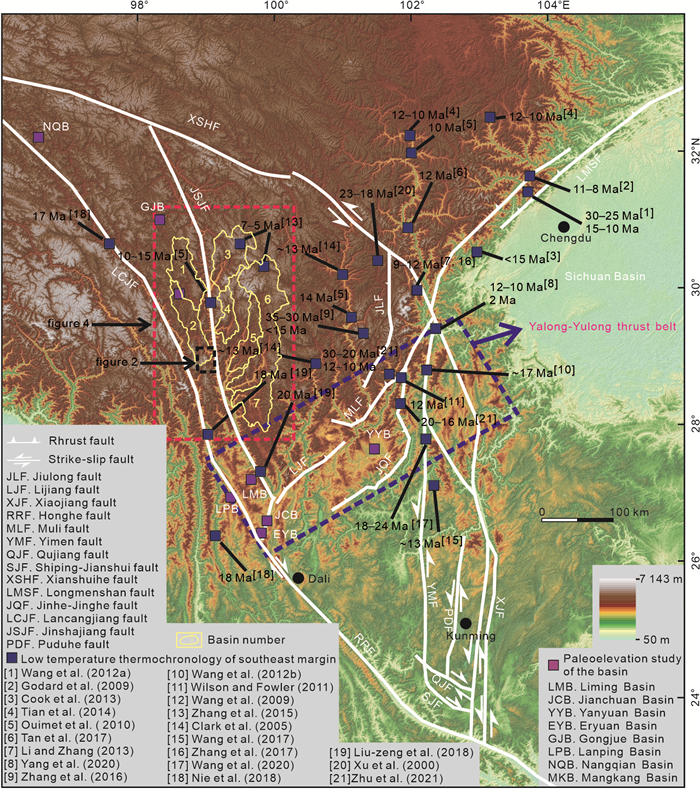
The initial timing of uplift at the southeastern margin of the Tibetan Plateau (SMTP) remains under debate, with estimates ranging from the Eocene, to the Oligocene. The Jinsha River was formed before the Miocene, therefore, it is likely to record the uplift information of the Tibetan Plateau, which is important for understanding the tectonic uplift of the SMTP. Here, we collected granite samples from the Yangla area in the middle part of the Jinsha River, and analyzed the uplift characteristics of the Cenozoic in the middle part of the Jinsha River by using the apatite fission tracks and the river longitudinal profiles. We show that the uplift time of the first phase is about 25–20 Ma, and the uplift time of the second phase is about 5 Ma. From the channel profile, seven tributaries of the Jinsha Rivers also have developed two phases of knickpoints. The tributaries consist of three sections with distinct geomorphological parameters, each separated by knickpoints. We argue that large-scale uplift occurred in the Late Cenozoic on the SMTP, with different locations having different uplift times, and the interior may have undergone significant uplift in the early Oligocene, but significant uplift of the SMTP occurred by the Late Oligocene to Early Miocene. The Jinsha River flowing from the interior of the plateau has developed multiple knick points during the uplift process, recording information about the uplift of the Tibetan Plateau.

| Bai, M. K., Chevalier, M. L., Pan, J. W., et al., 2018. Southeastward Increase of the Late Quaternary Slip-Rate of the Xianshuihe Fault, Eastern Tibet. Geodynamic and Seismic Hazard Implications. Earth and Planetary Science Letters, 485: 19–31. https://doi.org/10.1016/j.epsl.2017.12.045 |
| Cao, K., Leloup, P. H., Wang, G. C., et al., 2021. Thrusting, Exhumation, and Basin Fill on the Western Margin of the South China Block during the India-Asia Collision. GSA Bulletin, 133(1/2): 74–90. https://doi.org/10.1130/b35349.1 |
| Cao, K., Wang, G. C., Leloup, P. H., et al., 2019. Oligocene–Early Miocene Topographic Relief Generation of Southeastern Tibet Triggered by Thrusting. Tectonics, 38(1): 374–391. https://doi.org/10.1029/2017tc004832 |
| Chan, L. S., Shen, W. L., Pubellier, M., 2010. Polyphase Rifting of Greater Pearl River Delta Region (South China): Evidence for Possible Rapid Changes in Regional Stress Configuration. Journal of Structural Geology, 32(6): 746–754. https://doi.org/10.1016/j.jsg.2010.04.015 |
| Chang, Z. F., Zhang, Y. F., Li, J. L., et al., 2014. The Geological and Geomorphic Characteristic of Late Quaternary Activity of the Deqin-Zhongdian-Daju Fault. Journal of Seismological Research, 37(1): 46–52 (in Chinese with English Abstract) |
| Chen, J. L., Zhu, P. M., Yuan, Y. F., et al., 2024. Formation of the Tibetan Plateau during the India-Eurasia Convergence: Insight from 3-D Multi-Terrane Thermomechanical Modeling. Journal of Earth Science, 35(1): 112–130. https://doi. org/10.1007/s12583-023-1931-0 doi: 10.1007/s12583-023-1931-0 |
| Clark, M. K., House, M. A., Royden, L. H., et al., 2005. Late Cenozoic Uplift of Southeastern Tibet. Geology, 33(6): 525. https://doi.org/10.1130/g21265.1 |
| Clark, M. K., Schoenbohm, L. M., Royden, L. H., et al., 2004. Surface Uplift, Tectonics, and Erosion of Eastern Tibet from Large-Scale Drainage Patterns. Tectonics, 23: 2002TC001402. https://doi.org/10.1029/2002tc001402 |
| Clift, P. D., Wan, S. M., Blusztajn, J., 2014. Reconstructing Chemical Weathering, Physical Erosion and Monsoon Intensity since 25 Ma in the Northern South China Sea: A Review of Competing Proxies. Earth-Science Reviews, 130: 86–102. https://doi.org/10.1016/j.earscirev.2014.01.002 |
| Cook, K. L., Royden, L. H., Burchfiel, B. C., et al., 2013. Constraints on Cenozoic Tectonics in the Southwestern Longmen Shan from Low-Temperature Thermochronology. Lithosphere, 5(4): 393–406. https://doi.org/10.1130/l263.1 |
| Deng, B., Liu, S. G., Enkelmann, E., et al., 2015. Late Miocene Accelerated Exhumation of the Daliang Mountains, Southeastern Margin of the Tibetan Plateau. International Journal of Earth Sciences, 104(4): 1061–1081. https://doi.org/10.1007/s00531-014-1129-z |
| Deng, B., Liu, S. G., Li, Z. W., et al., 2013. Differential Exhumation at Eastern Margin of the Tibetan Plateau, from Apatite Fission-Track Thermochronology. Tectonophysics, 591: 98–115. https://doi.org/10.1016/j.tecto.2012.11.012 |
| Deng, Y. F., Levandowski, W., 2018. Lithospheric Alteration, Intraplate Crustal Deformation, and Topography in Eastern China. Tectonics, 37(11): 4120–4134. https://doi.org/10.1029/20 18TC005079 doi: 10.1029/2018TC005079 |
| Ding, L., Kapp, P., Cai, F. L., et al., 2022. Timing and Mechanisms of Tibetan Plateau Uplift. Nature Reviews Earth Environment, 3(10): 652–667. https://doi.org/10.1038/s43017-022-00318-4 |
| Duvall, A. R., Clark, M. K., Avdeev, B., et al., 2012. Widespread Late Cenozoic Increase in Erosion Rates across the Interior of Eastern Tibet Constrained by Detrital Low-Temperature Thermochronometry. Tectonics, 31(3): 2011TC002969. https://doi.org/10.1029/2011tc002969 |
|
Enkelmann, E., Ratschbacher, L., Jonckheere, R., et al., 2006. Cenozoic Exhumation and Deformation of Northeastern Tibet and the Qinling: Is Tibetan Lower Crustal Flow Diverging around the Sichuan Basin? Geological Society of America Bulletin, 118(5/6): 651–671. |
| Flint, J. J., 1974. Stream Gradient as a Function of Order, Magnitude, and Discharge. Water Resources Research, 10(5): 969–973. https://doi.org/10.1029/WR010i005p00969 |
| Galbraith, R. F., 1981. On Statistical Models for Fission Track Counts. Journal of the International Association for Mathematical Geology, 13(6): 471–478. https://doi.org/10.1007/bf01034498 |
| Gallen, S. F., Wegmann, K. W., 2017. River Profile Response to Normal Fault Growth and Linkage: An Example from the Hellenic Forearc of South-Central Crete, Greece. Earth Surface Dynamics, 5(1): 161–186. https://doi.org/10.5194/esurf-5-161-2017 |
| Gao, M. X., Zeilinger, G., Xu, X. W., et al., 2016. Active Tectonics Evaluation from Geomorphic Indices for the Central and the Southern Longmenshan Range on the Eastern Tibetan Plateau, China. Tectonics, 35(8): 1812–1826. https://doi.org/10.1002/201 5tc004080 doi: 10.1002/2015tc004080 |
| Gleadow, A. J. W., Duddy, I. R., Green, P. F., et al., 1986. Confined Fission Track Lengths in Apatite: A Diagnostic Tool for Thermal History Analysis. Contributions to Mineralogy and Petrology, 94(4): 405–415. https://doi.org/10.1007/bf00376334 |
| Godard, V., Cattin, R., Lavé, J., 2009. Erosional Control on the Dynamics of Low-Convergence Rate Continental Plateau Margins. Geophysical Journal International, 179(2): 763–777. https://doi.org/10.1111/j.1365-246X.2009.04324.x |
| Goren, L., Fox, M., Willett, S. D., 2014. Tectonics from Fluvial Topography Using Formal Linear Inversion: Theory and Applications to the Inyo Mountains, California. Journal of Geophysical Research: Earth Surface, 119(8): 1651–1681. https://doi.org/10.1002/2014jf003079 |
| Green, P. F., 1981. A New Look at Statistics in Fission-Track Dating. Nuclear Tracks, 5(1/2): 77–86. https://doi.org/10.1016/0191-278x(81)90029-9 |
| Green, P. F., 1986. On the Thermo-Tectonic Evolution of Northern England: Evidence from Fission Track Analysis. Geological Magazine, 123(5): 493–506. https://doi.org/10.1017/s00167568 00035081 doi: 10.1017/s0016756800035081 |
| Hack, J. T., 1973. Stream-Profile Analysis and Stream-Gradient Index. Journal Research US Geological Survey, 1: 421–429 |
| Hallet, B., Hunter, L., Bogen, J., 1996. Rates of Erosion and Sediment Evacuation by Glaciers: A Review of Field Data and Their Implications. Global and Planetary Change, 12(1/2/3/4): 213–235. https://doi.org/10.1016/0921-8181(95)00021-6 |
| Harkins, N., Kirby, E., Heimsath, A., et al., 2007. Transient Fluvial Incision in the Headwaters of the Yellow River, Northeastern Tibet, China. Journal of Geophysical Research: Earth Surface, 112(F3): 2006JF000570. https://doi.org/10.1029/2006jf000570 |
| He, Y. L., Zhang, Y. P., 2007. Influences of Corridor-Barrier Function on the Spatial Characteristics of Temperature and Precipitation in the Longitudinal Range-Gorge Region (LRGR). Journal of Mountain Science, 25(2): 169–176 (in Chinese with English Abstract) |
| Hoke, G. D., Jing, L. Z., Hren, M. T., et al., 2014. Stable Isotopes Reveal High Southeast Tibetan Plateau Margin since the Paleogene. Earth and Planetary Science Letters, 394: 270–278. https://doi.org/10.1016/j.epsl.2014.03.007 |
| Hu, X. F., Pan, B. T., Kirby, E., et al., 2010. Spatial Differences in Rock Uplift Rates Inferred from Channel Steepness Indices along the Northern Flank of the Qilian Mountain, Northeast Tibetan Plateau. Chinese Science Bulletin, 55(27): 3205–3214. https://doi.org/10.1007/s11434-010-4024-4 |
| Huang, H. Y., Lu, R. Q., He, D. F., et al., 2025. Intricate Fault Systems in Longmenshan Structural Belt's Northern End: Exploring Structural Evolution and Seismic Rupture Behavior in the Eastern Tibetan Plateau. Journal of Earth Science, 36(1): 250–265. https://doi.org/10.1007/s12583-024-0049-5 |
| Hurford, A. J., Green, P. F., 1982. A Users' Guide to Fission Track Dating Calibration. Earth and Planetary Science Letters, 59(2): 343–354. https://doi.org/10.1016/0012-821x(82)90136-4 |
|
Jansen, J. D., Fabel, D., Bishop, P., et al., 2011. Does Decreasing Paraglacial Sediment Supply Slow Knickpoint Retreat? Geology, 39(6): 543–546. |
| Jian, P., Liu, D., Sun, X., 2003a. SHRIMP Dating of Baimaxueshan and Ludian Granitoid Batholiths Northwestern Yunnan Province, and Its Geological Implications. Acta Geoscience Sinica, 24(4): 337–342 (in Chinese with English Abstract) |
| Jian, P., Liu, D., Sun, X., 2003b. SHRIMP Dating of Carboniferous Jinshajiang Ophiolite in Western Yunnan and Sichuan: Geochronological Constraints on the Evolution of the Paleo-Tethys Oceanic Crust. Acta Geologica Sinica, 77(2): 217–230 (in Chinese with English Abstract) |
| Jing, L. Z., Zhang, J. Y., McPhillips, D., et al., 2018. Multiple Episodes of Fast Exhumation since Cretaceous in Southeast Tibet, Revealed by Low-Temperature Thermochronology. Earth and Planetary Science Letters, 490: 62–76. https://doi.org/10.1 016/j.epsl.2018.03.011 doi: 10.1016/j.epsl.2018.03.011 |
| Ketcham, R. A., Carter, A., Donelick, R. A., et al., 2007. Improved Modeling of Fission-Track Annealing in Apatite. American Mineralogist, 92(5/6): 799–810. https://doi.org/10.2138/am.200 7.2281 doi: 10.2138/am.2007.2281 |
|
Kirby, E., Reiners, P. W., Krol, M. A., et al., 2002. Late Cenozoic Evolution of the Eastern Margin of the Tibetan Plateau: Inferences from 40Ar/39Ar and (U-Th)/He Thermochronology. Tectonics, 21(1): 1-1–1-20. |
| Kirby, E., Whipple, K. X., 2012. Expression of Active Tectonics in Erosional Landscapes. Journal of Structural Geology, 44: 54–75. https://doi.org/10.1016/j.jsg.2012.07.009 |
| Kirby, E., Whipple, K., 2001. Quantifying Differential Rock-Uplift Rates via Stream Profile Analysis. Geology, 29(5): 415. https://doi.org/10.1130/0091-7613(2001)029lt;0415:qdrurvgt;2.0.co;2 |
|
Lan, Q., Yan, Y., Huang, C. Y., et al., 2014. Tectonics, Topography, and River System Transition in East Tibet: Insights from the Sedimentary Record in Taiwan. Geochemistry, Geophysics, Geosystems, 15(9): 3658–3674. |
| Li, H. L., Zhang, Y. Q., 2013. Zircon U-Pb Geochronology of the Konggar Granitoid and Migmatite: Constraints on the Oligo-Miocene Tectono-Thermal Evolution of the Xianshuihe Fault Zone, East Tibet. Tectonophysics, 606: 127–139. https://doi.org/10.1016/j.tecto.2013.07.007 |
| Li, J. H., Cawood, P. A., Ratschbacher, L., et al., 2020. Building Southeast China in the Late Mesozoic: Insights from Alternating Episodes of Shortening and Extension along the Lianhuashan Fault Zone. Earth-Science Reviews, 201: 103056. https://doi.org/10.1016/j.earscirev.2019.103056 |
| Li, J. H., Zhang, Y. Q., Dong, S. W., et al., 2013. The Hengshan Low-Angle Normal Fault Zone: Structural and Geochronological Constraints on the Late Mesozoic Crustal Extension in South China. Tectonophysics, 606: 97–115. https://doi.org/10.1016/j.te cto.2013.05.013 doi: 10.1016/j.tecto.2013.05.013 |
| Li, L., Garzione, C. N., Pullen, A., et al., 2018. Late Cretaceous–Cenozoic Basin Evolution and Topographic Growth of the Hoh Xil Basin, Central Tibetan Plateau. GSA Bulletin, 130(3/4): 499–521. https://doi.org/10.1130/b31769.1 |
| Li, S. Y., Currie, B. S., Rowley, D. B., et al., 2015. Cenozoic Paleoaltimetry of the SE Margin of the Tibetan Plateau: Constraints on the Tectonic Evolution of the Region. Earth and Planetary Science Letters, 432: 415–424. https://doi.org/10.10 16/j.epsl.2015.09.044 doi: 10.1016/j.epsl.2015.09.044 |
| Li, X. M., Zou, H. P., 2017. Late Cretaceous-Cenozoic Exhumation of the Southeastern Margin of Coastal Mountains, SE China, Revealed by Fission-Track Thermochronology: Implications for the Topographic Evolution. Solid Earth Sciences, 2(3): 79–88. https://doi.org/10.1016/j.sesci.2017.02.001 |
| Liang, S. M., Gan, W. J., Shen, C. Z., et al., 2013. Three-Dimensional Velocity Field of Present-Day Crustal Motion of the Tibetan Plateau Derived from GPS Measurements. Journal of Geophysical Research: Solid Earth, 118(10): 5722–5732. https://doi.org/10.1002/2013jb010503 |
| Ma, W. W., Zhang, B., Cai, F. L., et al., 2024. Microstructures, Deformation Mechanisms and Seismic Properties of Synkinematic Migmatite from Southeastern Tibet: Insights from the Migmatitic Core of the Ailao Shan-Red River Shear Zone, Western Yunnan, China. Journal of Earth Science, 35(4): 1149–1169. https://doi.org/10.1007/s12583-022-1678-1 |
| Ma, Z. F., Zhang, H. P., Wang, Y. Z., et al., 2020. Inversion of Dadu River Bedrock Channels for the Late Cenozoic Uplift History of the Eastern Tibetan Plateau. Geophysical Research Letters, 47(4): e2019GL086882. https://doi.org/10.1029/2019gl0 86882 doi: 10.1029/2019gl086882 |
| Mo, X. X., Pan, G. T., 2006. From the Tethys to the Formation of the Qinghai-Tibet Plateau: Constrained by Tectono-Magmatic Events. Earth Science Frontiers, 13(6): 43–51 (in Chinese with English Abstract) |
| Nie, J. S., Ruetenik, G., Gallagher, K., et al., 2018. Rapid Incision of the Mekong River in the Middle Miocene Linked to Monsoonal Precipitation. Nature Geoscience, 11(12): 944–948. https://doi.org/10.1038/s41561-018-0244-z |
| Ouimet, W., Whipple, K., Royden, L., et al., 2010. Regional Incision of the Eastern Margin of the Tibetan Plateau. Lithosphere, 2(1): 50–63. https://doi.org/10.1130/l57.1 |
| Pan, B. T., Geng, H. P., Hu, X. F., et al., 2010. The Topographic Controls on the Decadal-Scale Erosion Rates in Qilian Shan Mountains, N. W. China. Earth and Planetary Science Letters, 292(1/2): 148–157. https://doi.org/10.1016/j.epsl.2010.01.030 |
| Pan, B. T., Li, Q., Hu, X. F., et al., 2015. Bedrock Channels Response to Differential Rock Uplift in Eastern Qilian Mountain along the Northeastern Margin of the Tibetan Plateau. Journal of Asian Earth Sciences, 100: 1–19. https://doi.org/10.1016/j.jsea es.2014.12.009 doi: 10.1016/j.jseaes.2014.12.009 |
| Perron, J. T., Royden, L., 2013. An Integral Approach to Bedrock River Profile Analysis. Earth Surface Processes and Landforms, 38(6): 570–576. https://doi.org/10.1002/esp.3302 |
| Qi, B. S., Hu, D. G., Yang, X. X., et al., 2016. Apatite Fission Track Evidence for the Cretaceous–Cenozoic Cooling History of the Qilian Shan (NW China) and for Stepwise Northeastward Growth of the Northeastern Tibetan Plateau since Early Eocene. Journal of Asian Earth Sciences, 124: 28–41. https://doi.org/10.1016/j.jseaes.2016.04.009 |
| Qiu, N. S., Liu, S., 2018. Uplift and Denudation in the Continental Area of China Linked to Climatic Effects: Evidence from Apatite and Zircon Fission Track Data. Scientific Reports, 8: 9546. https://doi.org/10.1038/s41598-018-27801-7 |
| Royden, L. H., Burchfiel, B. C., King, R. W., et al., 1997. Surface Deformation and Lower Crustal Flow in Eastern Tibet. Science, 276(5313): 788–790. https://doi.org/10.1126/science.276.5313.788 |
| Schwanghart, W., Scherler, D., 2014. Short Communication: TopoToolbox 2-MATLAB-Based Software for Topographic Analysis and Modeling in Earth Surface Sciences. Earth Surface Dynamics, 2(1): 1–7. https://doi.org/10.5194/esurf-2-1-2014 |
| Schwanghart, W., Scherler, D., 2020. Divide Mobility Controls Knickpoint Migration on the Roan Plateau (Colorado, USA). Geology, 48(7): 698–702. https://doi.org/10.1130/g47054.1 |
| Shu, L. S., Zhou, X. M., Deng, P., et al., 2009. Mesozoic Tectonic Evolution of the Southeast China Block: New Insights from Basin Analysis. Journal of Asian Earth Sciences, 34(3): 376–391. https://doi.org/10.1016/j.jseaes.2008.06.004 |
| Snyder, N. P., Whipple, K. X., Tucker, G. E., et al., 2003. Channel Response to Tectonic Forcing: Field Analysis of Stream Morphology and Hydrology in the Mendocino Triple Junction Region, Northern California. Geomorphology, 53(1/2): 97–127. https://doi.org/10.1016/s0169-555x(02)00349-5 |
| Struth, L., Garcia-Castellanos, D., Viaplana-Muzas, M., et al., 2019. Drainage Network Dynamics and Knickpoint Evolution in the Ebro and Duero Basins: From Endorheism to Exorheism. Geomorphology, 327: 554–571. https://doi.org/10.1016/j.geomo rph.2018.11.033 doi: 10.1016/j.geomorph.2018.11.033 |
| Su, T., Spicer, R. A., Li, S. H., et al., 2019. Uplift, Climate and Biotic Changes at the Eocene–Oligocene Transition in South-Eastern Tibet. National Science Review, 6(3): 495–504. https://doi.org/10.1093/nsr/nwy062 |
| Tan, X.-B., Lee, Y. H., Xu, X.-W., et al., 2017. Cenozoic Exhumation of the Danba Antiform, Eastern Tibet: Evidence from Low-Temperature Thermochronology. Lithosphere, 9(4): 534–544. https://doi.org/10.1130/l613.1 |
| Tang, M. Y., Jing, L. Z., Hoke, G. D., et al., 2017. Paleoelevation Reconstruction of the Paleocene–Eocene Gonjo Basin, SE-Central Tibet. Tectonophysics, 712: 170–181. https://doi.org/10. 1016/j.tecto.2017.05.018 doi: 10.1016/j.tecto.2017.05.018 |
| Tang, M. Y., Liu, J., Li, C. P., et al., 2021. Progress and Research of Paleoaltitude Reconstruction of Cenozoic Basins in the Southeastern Tibet Plateau. Seismology and Geology, 43(3): 576–599 (in Chinese with English Abstract) |
| Tapponnier, P., Peltzer, G., Le Dain, A. Y., et al., 1982. Propagating Extrusion Tectonics in Asia: New Insights from Simple Experiments with Plasticine. Geology, 10(12): 611. https://doi.org/10.1130/0091-7613(1982)10lt;611:petiangt;2.0.co;2 |
| Tapponnier, P., Xu, Z. Q., Roger, F., et al., 2001. Oblique Stepwise Rise and Growth of the Tibet Plateau. Science, 294(5547): 1671–1677. https://doi.org/10.1126/science.105978 |
| Tian, Y. T., Kohn, B. P., Gleadow, A. J. W., et al., 2014. A Thermochronological Perspective on the Morphotectonic Evolution of the Southeastern Tibetan Plateau. Journal of Geophysical Research: Solid Earth, 119(1): 676–698. https://doi.org/10.1002/2013jb010429 |
| Vermeesch, P., 2009. RadialPlotter: A Java Application for Fission Track, Luminescence and Other Radial Plots. Radiation Measurements, 44(4): 409–410. https://doi.org/10.1016/j.radme as.2009.05.003 doi: 10.1016/j.radmeas.2009.05.003 |
| Wang, E. Q., 2013. Evolution of the Tibetan Plateau: As Constrained by Major Tectonic-Thermo Events and a Discussion on Their Origin. Chinese Journal of Geology (Scientia Geologica Sinica), 48(2): 334–353 (in Chinese with English Abstract) |
| Wang, G. C., Cao, K., Wang, A., et al., 2014. On the Geodynamic Mechanism of Episodic Uplift of the Tibetan Plateau during the Cenozoic Era. Acta Geologica Sinica-English Edition, 88(2): 699–716. https://doi.org/10.1111/1755-6724.12223 |
| Wang, H., Li, K. J., Tian, Y. T., et al., 2022. Oligocene–Early Miocene Exhumation and Shortening along the Anninghe Fault in the Southeastern Tibetan Plateau: Insights from Zircon and Apatite (U-Th)/He Thermochronology. International Geology Review, 64(3): 390–404. https://doi.org/10.1080/00206814.2020.1858354 |
| Wang, H., Tian, Y. T., Liang, M. J., 2017. Late Cenozoic Exhumation History of the Luoji Shan in the Southeastern Tibetan Plateau: Insights from Apatite Fission-Track Thermochronology. Journal of the Geological Society, 174(5): 883–891. https://doi.org/10.1 144/jgs2017-005 doi: 10.1144/jgs2017-005 |
| Wang, L., Pan, G., Li, D., et al., 2000. The Evolution and Mineralization of the Jomda-Weixi Continental Marginal Volcanic Arc, Southwestern China. Tethyan Geology, 20(2): 1–17 (in Chinese with English Abstract) |
| Wang, Q., Zhang, P. Z., Freymueller, J. T., et al., 2001. Present-Day Crustal Deformation in China Constrained by Global Positioning System Measurements. Science, 294(5542): 574–577 (in Chinese with English Abstract) |
| Wang, S. F., Fang, X. M., Zheng, D. W., et al., 2009. Initiation of Slip along the Xianshuihe Fault Zone, Eastern Tibet, Constrained by K/Ar and Fission-Track Ages. International Geology Review, 51(12): 1121–1131. https://doi.org/10.1080/00206810902945132 |
| Wang, S. F., Jiang, G. G., Xu, T. D., et al., 2012. The Jinhe-Qinghe Fault—An Inactive Branch of the Xianshuihe-Xiaojiang Fault Zone, Eastern Tibet. Tectonophysics, 544: 93–102. https://doi.org/10.1016/j.tecto.2012.04.004 |
| Wang, X. F., Metcalfe, I., Jian, P., et al., 2000. The Jinshajiang-Ailaoshan Suture Zone, China: Tectonostratigraphy, Age and Evolution. Journal of Asian Earth Sciences, 18(6): 675–690. https://doi.org/10.1016/s1367-9120(00)00039-0 |
| Wang, Y. Z., Liu, C. R., Zheng, D. W., et al., 2021. Multistage Exhumation in the Catchment of the Anninghe River in the SE Tibetan Plateau: Insights from both Detrital Thermochronology and Topographic Analysis. Geophysical Research Letters, 48(11): e2021GL092587. https://doi.org/10.1 029/2021gl092587 doi: 10.1029/2021gl092587 |
| Wang, Y. Z., Zhang, H. P., Zheng, D. W., et al., 2014. Controls on Decadal Erosion Rates in Qilian Shan: Re-Evaluation and New Insights into Landscape Evolution in North-East Tibet. Geomorphology, 223: 117–128. https://doi.org/10.1016/j.geomor ph.2014.07.002 doi: 10.1016/j.geomorph.2014.07.002 |
| Wang, Y. Z., Zhang, H. P., Zheng, D. W., et al., 2017. Coupling Slope-Area Analysis, Integral Approach and Statistic Tests to Steady-State Bedrock River Profile Analysis. Earth Surface Dynamics, 5(1): 145–160. https://doi.org/10.5194/esurf-5-145-2017 |
| Wang, Y. Z., Zheng, D. W., Pang, J. Z., et al., 2018. Using Slope-Area and Apatite Fission Track Analysis to Decipher the Rock Uplift Pattern of the Yumu Shan: New Insights into the Growth of the NE Tibetan Plateau. Geomorphology, 308: 118–128. https://doi.org/10.1016/j.geomorph.2018.02.006 |
| Wang, Y. Z., Zheng, D. W., Zhang, H. P., et al., 2019. The Distribution of Active Rock Uplift in the Interior of the Western Qilian Shan, NE Tibetan Plateau: Inference from Bedrock Channel Profiles. Tectonophysics, 759: 15–29. https://doi.org/10.1016/j.tecto.2019.04.001 |
| Wang, Y., Schoenbohm, L. M., Zhang, B., et al., 2017. Late Cenozoic Landscape Evolution along the Ailao Shan Shear Zone, SE Tibetan Plateau: Evidence from Fluvial Longitudinal Profiles and Cosmogenic Erosion Rates. Earth and Planetary Science Letters, 472: 323–333. https://doi.org/10.1016/j.epsl.2017.05.030 |
| Wang, Y., Zuo, R. G., Cao, K., et al., 2022. Late Mesozoic to Cenozoic Exhumation of the SE South China Block: Constraints from Zircon and Apatite Fission-Track Thermochronology. Tectonophysics, 838: 229518. https://doi.org/10.1016/j.tecto.202 2.229518 doi: 10.1016/j.tecto.2022.229518 |
| Whipple, K. X., 2004. Bedrock Rivers and the Geomorphology of Active Orogens. Annual Review of Earth and Planetary Sciences, 32: 151–185. https://doi.org/10.1146/annurev.earth.3 2.101802.120356 doi: 10.1146/annurev.earth.32.101802.120356 |
| Whittaker, A. C., Boulton, S. J., 2012. Tectonic and Climatic Controls on Knickpoint Retreat Rates and Landscape Response Times. Journal of Geophysical Research: Earth Surface, 117(F2): 2011JF002157. https://doi.org/10.1029/2011jf002157 |
| Wilson, C. J. L., Fowler, A. P., 2011. Denudational Response to Surface Uplift in East Tibet: Evidence from Apatite Fission-Track Thermochronology. Geological Society of America Bulletin, 123(9/10): 1966–1987. https://doi.org/10.1130/b30331.1 |
| Wu, J. B., Pi, Q. H., Zhu, B., et al., 2020. Late Cretaceous-Cenozoic Exhumation of Northwestern Guangxi (China) and Tectonic Implications: Evidence from Apatite Fission Track Dating. Geochemistry, 80(4): 125662. https://doi.org/10.1016/j.chemer.2 020.125662 doi: 10.1016/j.chemer.2020.125662 |
| Xiong, Z. Y., Ding, L., Spicer, R. A., et al., 2020. The Early Eocene Rise of the Gonjo Basin, SE Tibet: From Low Desert to High Forest. Earth and Planetary Science Letters, 543: 116312. https://doi.org/10.1016/j.epsl.2020.116312 |
| Xiong, Z. Y., Liu, X. H., Ding, L., et al., 2022. The Rise and Demise of the Paleogene Central Tibetan Valley. Science Advances, 8(6): eabj0944. https://doi.org/10.1126/sciadv.abj0944 |
| Xu, G., Kamp, P., 2000. Tectonics and Denudation Adjacent to the Xianshuihe Fault. Journal of Geophysical Research, 105(B8): 19231–19251 (in Chinese with English Abstract) |
| Xu, X. X., Ji, L. Y., Jiang, F. Y., et al., 2020. Study on Current Activity Features of Jinshajiang Fault Zone Based on GPS and Small Earthquakes. Journal of Geodesy and Geodynamics, 40(10): 1062–1067 (in Chinese with English Abstract) |
| Yang, R., Suhail, H. A., Gourbet, L., et al., 2020. Early Pleistocene Drainage Pattern Changes in Eastern Tibet: Constraints from Provenance Analysis, Thermochronometry, and Numerical Modeling. Earth and Planetary Science Letters, 531: 115955. https://doi.org/10.1016/j.epsl.2019.115955 |
| Yang, X., Liu, J. J., Li, D. P., et al., 2013. Zircon U-Pb Dating and Geochemistry of the Linong Granitoid and Its Relationship to Cu Mineralization in the Yangla Copper Deposit, Yunnan, China. Resource Geology, 63(2): 224–238. https://doi.org/10.1111/rge.1 2006 doi: 10.1111/rge.12006 |
| Yuan, D. Y., Ge, W. P., Chen, Z. W., et al., 2013. The Growth of Northeastern Tibet and Its Relevance to Large-Scale Continental Geodynamics: A Review of Recent Studies. Tectonics, 32(5): 1358–1370. https://doi.org/10.1002/tect.20081 |
| Yuan, W. M., Carter, A., Dong, J. Q., et al., 2006. Mesozoic–Tertiary Exhumation History of the Altai Mountains, Northern Xinjiang, China: New Constraints from Apatite Fission Track Data. Tectonophysics, 412(3/4): 183–193. https://doi.org/10.1016/j.tect o.2005.09.007 doi: 10.1016/j.tecto.2005.09.007 |
| Zhang, D. Y., Dong, Y. P., Jiao, Q. Q., et al., 2023. Three Periods of Cenozoic Tectonic Uplift in the Southeastern Margin of the Tibetan Plateau—Evidence from Fluvial Longitudinal Profile Analysis. Geotectonica et Metallogenia, 47(2): 308–326 (in Chinese with English Abstract) |
| Zhang, D., 2022. Rock Uplift of the Northwest Sichuan Subblock, SE Tibetan Plateau: Based on the Structural Geomorphology: [Dissertation]. Kunming University of Science and Technology, Kunming (in Chinese with English Abstract) |
| Zhang, D., Li, C. A., Zhang, S. T., et al., 2024. Discovery of the Miocene Yuanmou Conglomerate and Its Significance for the Drainage Evolution in the Southeastern Tibetan Plateau. Journal of Earth Science, 35(6): 2067–2080. https://doi.org/10.1007/s12583-023-1937-7 |
| Zhang, G. H., Tian, Y. T., Li, R., et al., 2022. Progressive Tectonic Evolution from Crustal Shortening to Mid-Lower Crustal Expansion in the Southeast Tibetan Plateau: A Synthesis of Structural and Thermochronological Insights. Earth-Science Reviews, 226: 103951. https://doi.org/10.1016/j.earscirev.202 2. 103951 doi: 10.1016/j.earscirev.2022.103951 |
| Zhang, H. P., Oskin, M. E., Jing, L. Z., et al., 2016. Pulsed Exhumation of Interior Eastern Tibet: Implications for Relief Generation Mechanisms and the Origin of High-Elevation Planation Surfaces. Earth and Planetary Science Letters, 449: 176–185. https://doi.org/10.1016/j.epsl.2016.05.048 |
| Zhang, H. P., Zhang, P. Z., Prush, V., et al., 2017. Tectonic Geomorphology of the Qilian Shan in the Northeastern Tibetan Plateau: Insights into the Plateau Formation Processes. Tectonophysics, 706/707: 103–115. https://doi.org/10.1016/j.tect o.2017.04.016 doi: 10.1016/j.tecto.2017.04.016 |
| Zhang, J. J., Ji, J. Q., Zhong, D. L., et al., 2004. Structural Pattern of Eastern Himalayan Syntaxis in Namjagbarwa and Its Formation Process. Science in China Series D: Earth Sciences, 47(2): 138–150. https://doi.org/10.1360/02yd0042 |
| Zhang, P., Shen, Z., Wang, M., et al., 2004. Continuous Deformation of the Tibetan Plateau from Global Positioning System Data. Geological Society of America Bulletin, 116(9–10): S809 (in Chinese with English Abstract) |
| Zhang, Y.-Z., Replumaz, A., Wang, G.-C., et al., 2015. Timing and Rate of Exhumation along the Litang Fault System, Implication for Fault Reorganization in Southeast Tibet: Litang Fault System Exhumation History. Tectonics, 34(6): 1219–1243. https://doi.org/10.1002/2014tc003671 |
| Zheng, D. W., Zhang, P. Z., Wan, J. L., et al., 2006. Rapid Exhumation at ~8 Ma on the Liupan Shan Thrust Fault from Apatite Fission-Track Thermochronology: Implications for Growth of the Northeastern Tibetan Plateau Margin. Earth and Planetary Science Letters, 248(1/2): 198–208. https://doi.org/10.1016/j.epsl.2006.05.023 |
| Zheng, D., Zhao, D., 2017. Characteristics of Natural Environment of the Tibetan Plateau. Science and Technology Review, 35(6): 13–22 (in Chinese with English Abstract) |
| Zheng, H. B., Clift, P. D., He, M. Y., et al., 2021. Formation of the First Bend in the Late Eocene Gave Birth to the Modern Yangtze River, China. Geology, 49(1): 35–39. https://doi.org/10.1130/g48149.1 |
| Zheng, H. B., Clift, P. D., Wang, P., et al., 2013. Pre-Miocene Birth of the Yangtze River. Proceedings of the National Academy of Sciences of the United States of America, 110(19): 7556–7561. https://doi.org/10.1073/pnas.1216241110 |
| Zheng, H. B., Wei, X. C., Tada, R., et al., 2015. Late Oligocene–Early Miocene Birth of the Taklimakan Desert. Proceedings of the National Academy of Sciences of the United States of America, 112(25): 7662–7667. https://doi.org/10.1073/pnas.1424487112 |
| Zhu, C. Y., Wang, G. C., Leloup, P. H., et al., 2021. Role of the Early Miocene Jinhe-Qinghe Thrust Belt in the Building of the Southeastern Tibetan Plateau Topography. Tectonophysics, 811: 228871. https://doi.org/10.1016/j.tecto.2021.228871 |
| Zhu, J. J., Hu, R., Richards, J. P., et al., 2015. Genesis and Magmatic-Hydrothermal Evolution of the Yangla Skarn Cu Deposit, Southwest China. Economic Geology, 110(3): 631–652. https://doi.org/10.2113/econgeo.110.3.631 |
Figures(8) / Tables(1)
Copyright © 2013-2020 Journal of Earth Science 鄂ICP备15021562号-2
Tel: +86-27-67885075 Fax: +86-27-67885075 E-mail: xbb@cug.edu.cn
Address: Editorial Office of Journal, China University of Geosciences, Yujiashan, Wuhan, Hubei 430074, P. R. China
Supported by:
Beijing Renhe Information Technology Co. Ltd
E-mail:
info@rhhz.net


 DownLoad: