| Citation: | Nardthida Kananithikorn, Thitirat Siriborvornratanakul. Investigating Downhole Drilling Temperature Prediction: A Data-Driven Trial of Machine Learning and Deep Learning Methods. Journal of Earth Science, 2026, 37(2): 828-842. doi: 10.1007/s12583-025-0263-9

|
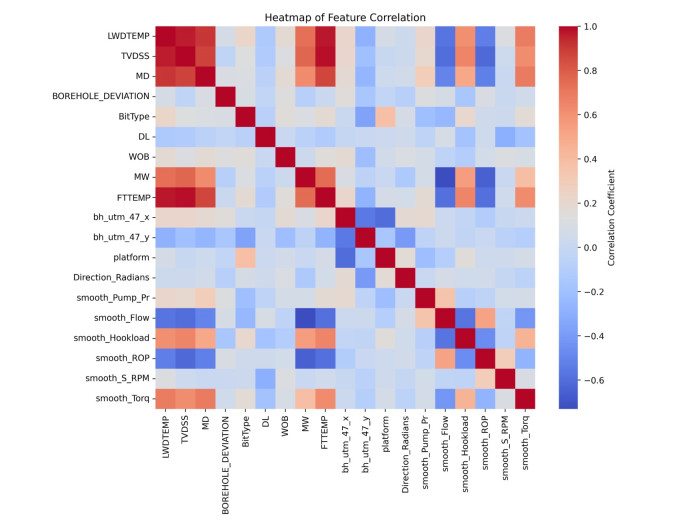
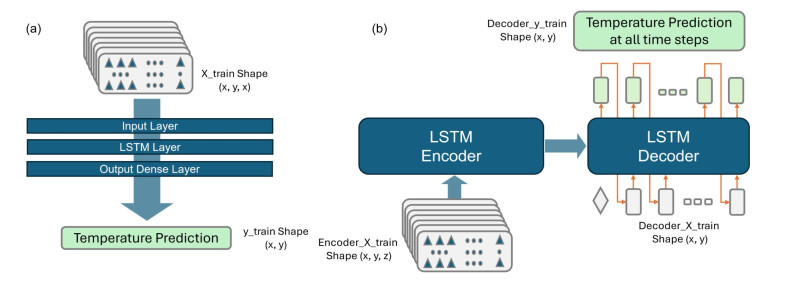
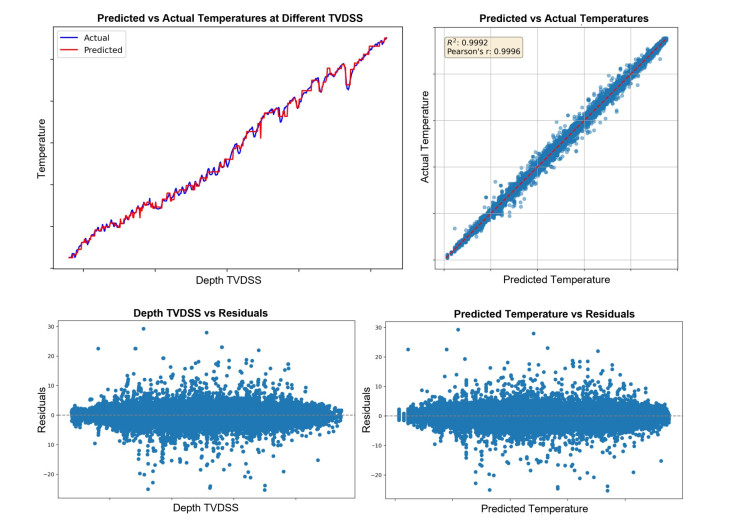
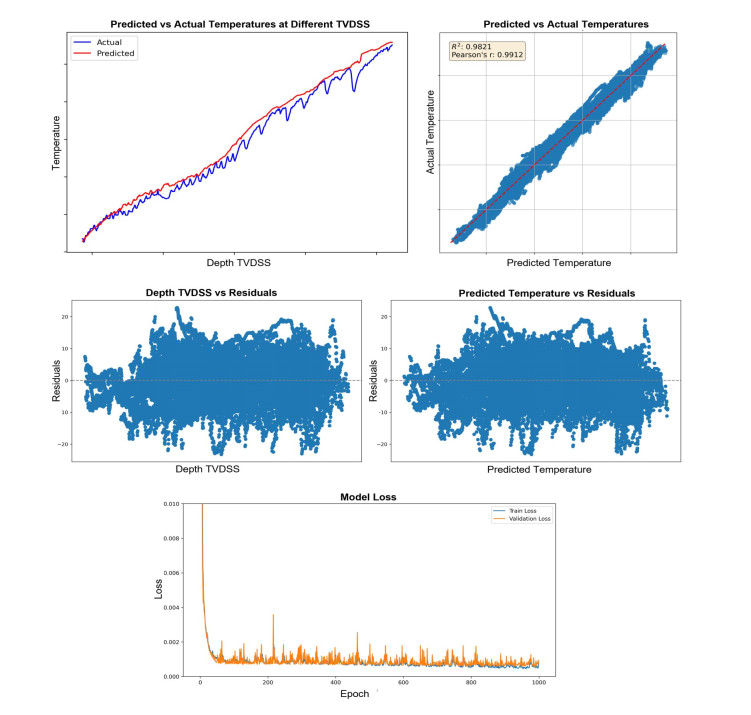
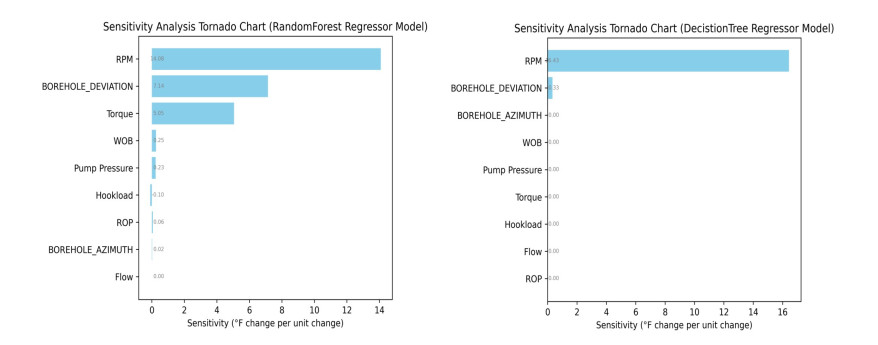
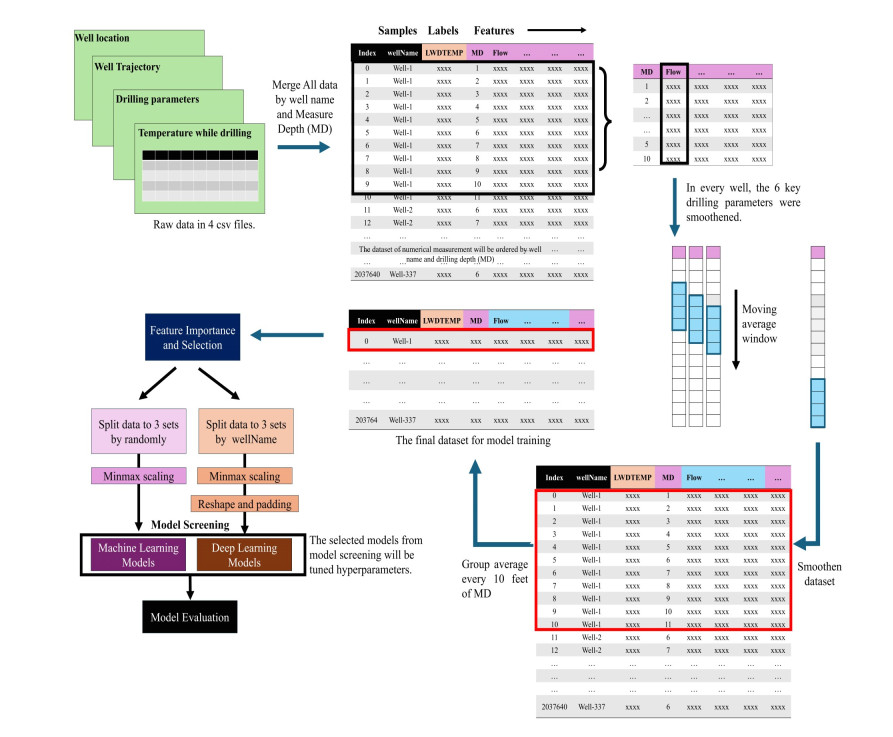
Understanding the dynamic behavior of downhole temperature during drilling operations is crucial for optimizing tool configuration and maximizing the acquisition of logging data, thereby eliminating the need for additional tripping or wireline logging runs. This paper presents a comprehensive study on the application of machine learning and deep learning techniques for predicting downhole temperatures in drilling operations. Following an extensive preprocessing stage that included smoothing and normalizing drilling parameters and related well data, the study compares several machine learning algorithms and long short-term memory (LSTM) architectures. Notable models such as random forest, k-nearest neighbors, decision tree regressors, and LSTM (both sequential and encoder-decoder) were found to be effective for temperature prediction. The LSTM Encoder-Decoder model demonstrated the highest accuracy, with a root mean squared error (RMSE) of 0.892, though it requires higher computational resources. Sensitivity analysis of the model identified revolutions per minute (RPM) and borehole deviation as key factors, providing valuable insights for model refinement and improved thermal management.

| Abadi, M., Agarwal, A., Barham, P., et al., 2015. TensorFlow: Large-Scale Machine Learning on Heterogeneous Systems. Software available from tensorflow. org |
| Abdelhafiz, M. M., Hegele, L. A., Oppelt, J. F., 2021. Temperature Modeling for Wellbore Circulation and Shut-in with Application in Vertical Geothermal Wells. Journal of Petroleum Science and Engineering, 204: 108660. https://doi.org/10.1016/j.petrol.2021.108660 |
| Abdelhafiz, M. M., Oppelt, J., Mahmoud, O., et al., 2023. Effect of Drilling and Wellbore Geometry Parameters on Wellbore Temperature Profile: Implications for Geothermal Production. Advances in Geo-Energy Research, 8(3): 170–180. https://doi.org/10.46690/ager.2023.06.04 |
| Al-Fakih, A., Li, K. W., 2022. Estimation of Bottom-Hole Temperature Based on Machine/Deep Learning. Proceedings of the 2021 International Petroleum and Petrochemical Technology Conference. Springer, Singapore |
|
Ali, M., 2020. PyCaret: An Open Source, Low-Code Machine Learning Library in Python. Pycaret Version 1.0 (2020). Retrieved from |
|
Al-Qahtani, A. S., Momtan, B. A., 2023. Generating Synthetic Temperature Surveys for Wells through Subsurface Spatial Machine Learning Modeling and Time Series Forecasting. ADIPEC. October 2–5, 2023. Abu Dhabi, UAE. Richardson: Society of Petroleum Engineers, SPE 216137-MS. |
| Cheraghian, G., 2021. Nanoparticles in Drilling Fluid: A Review of the State-of-the-Art. Journal of Materials Research and Technology, 13: 737–753. https://doi.org/10.1016/j.jmrt.2021.04.089 |
|
Cho, K., van Merrienboer, B., Gulcehre, C., et al., 2014. Learning Phrase Representations Using RNN Encoder-Decoder for Statistical Machine Translation. Proceedings of the 2014 Conference on Empirical Methods in Natural Language Processing (EMNLP). Doha, Qatar. Stroudsburg, PA, USA: ACL, 1724–1734. |
|
Dursun, S., Kumar, A., Samuel, R., 2014. Using Data-Driven Predictive Analytics to Estimate Downhole Temperatures while Drilling. SPE Annual Technical Conference and Exhibition. October 27–29, 2014. Amsterdam, The Netherlands. Richardson: Society of Petroleum Engineers, SPE 170982-MS. |
| Gautam, S., Guria, C., Gope, L., 2021. Prediction of High-Pressure/High-Temperature Rheological Properties of Drilling Fluids from the Viscosity Data Measured on a Coaxial Cylinder Viscometer. SPE Journal, 26(5): 2527–2548. https://doi.org/10.2118/206714-pa |
| Gul, S., Aslanoglu, V., Tuzen, M. K., et al., 2019. Estimation of Bottom Hole and Formation Temperature by Drilling Fluid Data: A Machine Learning Approach. Proceedings of the 44th Workshop on Geothermal Reservoir Engineering, Stanford University, Stanford |
| Hochreiter, S., Schmidhuber, J., 1997. Long Short-Term Memory. Neural Computation, 9(8): 1735–1780. https://doi.org/10.1162/neco.1997.9.8.1735 |
| Khaled, M. S., Wang, N. Y., Ashok, P., et al., 2023. Strategies for Prevention of Downhole Tool Failure Caused by High Bottomhole Temperature in Geothermal and High-Pressure/High-Temperature Oil and Gas Wells. SPE Drilling & Completion, 38(2): 243–260. https://doi.org/10.2118/212550-pa |
| Kumar, A., Samuel, R., 2013. Analytical Model to Predict the Effect of Pipe Friction on Downhole Fluid Temperatures. SPE Drilling & Completion, 28(3): 270–277. https://doi.org/10.2118/165934-pa |
|
Liu, C., Phan, D. T., Abousleiman, Y. N., 2023. Effects of Temperature and Rate-Dependent Mud Cake Buildup on Wellbore Stability in Multi-Permeability Formations. Middle East Oil, Gas and Geosciences Show. February 19–21, 2023. Manama, Bahrain. Richardson: Society of Petroleum Engineers, SPE 213374-MS. |
| Mao, L. J., Wei, C. J., Jia, H., et al., 2023. Prediction Model of Drilling Wellbore Temperature Considering Bit Heat Generation and Variation of Mud Thermophysical Parameters. Energy, 284: 129341. https://doi.org/10.1016/j.energy.2023.129341 |
| Olukoga, T. A., Feng, Y., 2021. Practical Machine-Learning Applications in Well-Drilling Operations. SPE Drilling & Completion, 36(4): 849–867. https://doi.org/10.2118/205480-pa |
| Pedregosa, F., Varoquaux, G., Gramfort, A., et al., 2011. Scikit-Learn: Machine Learning in Python. Journal of Machine Learning Research, 12: 2825–2830 |
| Piccialli, V., Sciandrone, M., 2022. Nonlinear Optimization and Support Vector Machines. Annals of Operations Research, 314(1): 15–47. https://doi.org/10.1007/s10479-022-04655-x |
| Ramadan, A. M., Osman, A., Mehanna, A., et al., 2024. Simulation of Filter-Cake Formations on Vertical and Inclined Wells under Elevated Temperature and Pressure. SPE Journal, 29(5): 2212–2224. https://doi.org/10.2118/219446-pa |
| Suryadi, H., Bolchover, P., Xin, C., et al., 2017. Application of Dynamic Temperature Modelling for Planning High Temperature Well. Middle East Oil & Gas Show and Conference, Manama, Bahrain |
| Williams, R. J., Zipser, D., 1989. A Learning Algorithm for Continually Running Fully Recurrent Neural Networks. Neural Computation, 1(2): 270–280. https://doi.org/10.1162/neco.1989.1.2.270 |
| Xiao, D., Hu, Y. F., Meng, Y. F., et al., 2022. Research on Wellbore Temperature Control and Heat Extraction Methods while Drilling in High-Temperature Wells. Journal of Petroleum Science and Engineering, 209: 109814. https://doi.org/10.1016/j.petrol.2021.109814 |
| Zhang, Y., Li, Y. A., Kong, X. W., et al., 2024. Temperature Prediction Model in Multiphase Flow Considering Phase Transition in the Drilling Operations. Petroleum Science, 21(3): 1969–1979. https://doi.org/10.1016/j.petsci.2024.01.004 |
Figures(13) / Tables(3)
Copyright © 2013-2020 Journal of Earth Science 鄂ICP备15021562号-2
Tel: +86-27-67885075 Fax: +86-27-67885075 E-mail: xbb@cug.edu.cn
Address: Editorial Office of Journal, China University of Geosciences, Yujiashan, Wuhan, Hubei 430074, P. R. China
Supported by:
Beijing Renhe Information Technology Co. Ltd
E-mail:
info@rhhz.net



 DownLoad: