| Citation: | Dejun Wang, Fenglin Lyu, Xiaoxue Gao, Xiaohuan Hou, Qian Xiong, Hua Zhang. Hydroclimatic Evolution of Saline Lake Lopnur during the Mid to Late Holocene and Its Implications for Paleo-Environmental Complexity. Journal of Earth Science, 2026, 37(1): 251-268. doi: 10.1007/s12583-025-0292-4

|
Exploring hydroclimatic variability and its driving mechanisms during the Holocene is essential for comprehending both historical and prospective responses of water resources to climatic shifts in Arid Central Asia (ACA) region. However, debate persists regarding whether dryland lakes in this region exhibited aridification or humidification during the Holocene. Lopnur serves as the terminal lake of Tarim rivers during the Holocene, which offers an ideal natural laboratory to address the questions. In this study, a high-resolution chronological framework was established through precise radiocarbon dating. Multi-proxy analyses, including geochemical composition, grain size distributions, MS, LOI, and C/N ratios were conducted from a lacustrine profile in the core area of "Great ear" in the southern part of Lopnur catchment. These analyses enabled the reconstruction of hydrological dynamics and facilitated the disentanglement of independent signals linked to climate variability, runoff fluctuations, and lake-level changes. The results demonstrate that the Mid-Holocene (7 800–4 000 cal yr B.P.) was characterized by cold and humid conditions, resulting in elevated surface runoff and lake level. The Late Holocene (4 000–1 300 cal yr B.P.) experienced intensified aridification, characterized by reduced runoff and declining lake level. These evidences suggested a climatic regime of a distinctive alternation between "cold-wet" and "warm-dry" climatic regimes during the Mid-to-Late Holocene. Compared with the previous studies from adjacent regions, we speculate that the hydroclimatic evolution of Lopnur catchment possibly influenced by a complex interplay of large spatial scale forcings, including variations in annual insolation, greenhouse gas concentrations, and ice sheets, as well as the localized controls such as topographic features, vegetation cover, and cloud-radiative feedbacks. Our findings enhance the understanding of past climatic complexity and provide valuable insights for future water resource management strategies in drylands.

| An, C. B., Wang, W., Liu, Y., et al., 2020. The Holocene Environmental Change in Xinjiang and Its Impact on Prehistoric Cultural Exchange. Scientia Sinica Terrae, 50: 677–687 (in Chinese with English Abstract) doi: 10.1360/SSTe-2019-0049 |
| An, C. B., Zhao, Y. T., Shi, C., 2013. Lake Records during the Last Glacial Maximum from Xinjiang, NW China and Their Climatic Implications. Marine Geology & Quaternary Geology, 33(4): 87–91 (in Chinese with English Abstract) |
| An, F. Y., Ma, H. Z., Wei, H. C., et al., 2013. Grain-Size Distribution Patterns of Lacustrine Sediments of Qarhan Area and Its Environmental Significance. Arid Land Geography, 36(2): 212–220 (in Chinese with English Abstract) |
| An, Z. S., Colman, S. M., Zhou, W. J., et al., 2012. Interplay between the Westerlies and Asian Monsoon Recorded in Lake Qinghai Sediments since 32 ka. Scientific Reports, 2: 619. https://doi.org/10.1038/srep00619 |
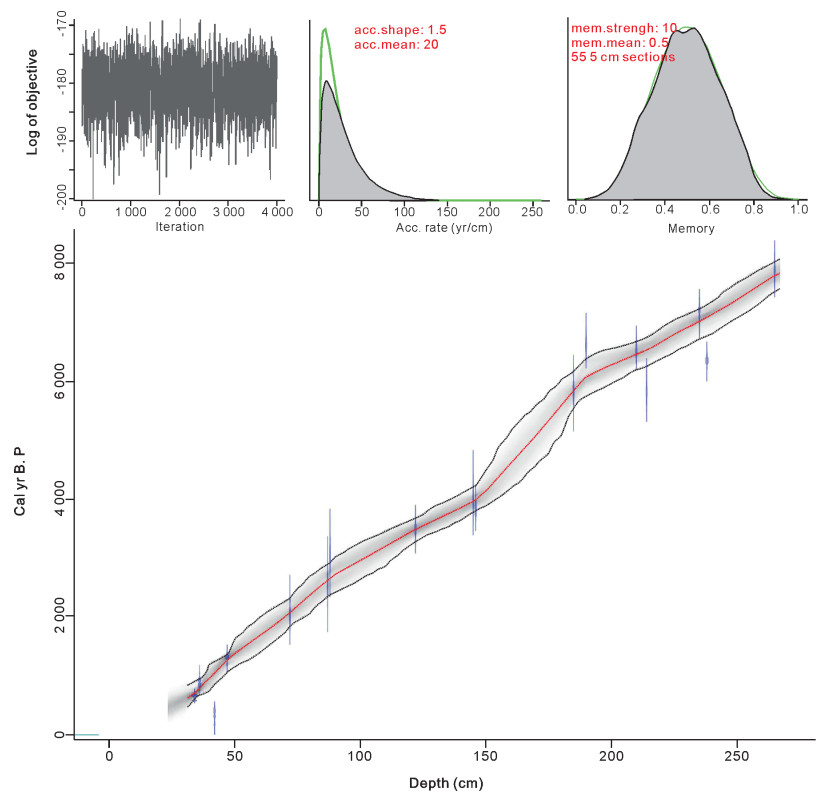
| Blaauw, M., Christen, J. A., 2011. Flexible Paleoclimate Age-Depth Models Using an Autoregressive Gamma Process. Bayesian Analysis, 6(3): 457–474. https://doi.org/10.1214/11-ba618 |
| Brauer, A., Mingram, J., Frank, U., et al., 2000. Abrupt Environmental Oscillations during the Early Weichselian Recorded at Lago Grande Di Monticchio, Southern Italy. Quaternary International, 73: 79–90. https://doi.org/10.1016/S1040-6182(00)00066-5 |
| Chen, C. Z., Tao, S. X., Zhao, W. W., et al., 2021. Holocene Lake Level, Vegetation, and Climate at the East Asian Summer Monsoon Margin: A Record from the Lake Wulanhushao Basin, Southern Inner Mongolia. Palaeogeography, Palaeoclimatology, Palaeoecology, 561: 110051. https://doi.org/10.1016/j.palaeo.2020.110051 |
| Chen, F. H., Chen, J. H., Holmes, J., et al., 2010. Moisture Changes over the Last Millennium in Arid Central Asia: A Review, Synthesis and Comparison with Monsoon Region. Quaternary Science Reviews, 29(7/8): 1055–1068. https://doi.org/10.1016/j.quascirev.2010.01.005 |
| Chen, F. H., Chen, J. H., Huang, W., 2009. A Discussion on the "Westerly-Dominated Climate Model" in Mid-Latitude Asia during the Modern Interglacial Period. Earth Science Frontiers, 16(6): 23–32 (in Chinese with English Abstract) |
| Chen, F. H., Chen, J. H., Huang, W., et al., 2019. Westerlies Asia and Monsoonal Asia: Spatiotemporal Differences in Climate Change and Possible Mechanisms on Decadal to Sub-Orbital Timescales. Earth-Science Reviews, 192: 337–354. https://doi.org/10.1016/j.earscirev.2019.03.005 |
| Chen, F. H., Jia, J., Chen, J. H., et al., 2016. A Persistent Holocene Wetting Trend in Arid Central Asia, with Wettest Conditions in the Late Holocene, Revealed by Multi-Proxy Analyses of Loess-Paleosol Sequences in Xinjiang, China. Quaternary Science Reviews, 146: 134–146. https://doi.org/10.1016/j.quascirev.2016.06.002 |
| Chen, F. H., Yu, Z. C., Yang, M. L., et al., 2008. Holocene Moisture Evolution in Arid Central Asia and Its Out-of-Phase Relationship with Asian Monsoon History. Quaternary Science Reviews, 27(3/4): 351–364. https://doi.org/10.1016/j.quascirev.2007.10.017 |
| Chen, J., Chen, Y., Liu, L. W., et al., 2006. Zr/Rb Ratio in the Chinese Loess Sequences and Its Implication for Changes in the East Asian Winter Monsoon Strength. Geochimica et Cosmochimica Acta, 70(6): 1471–1482. https://doi.org/10.1016/j.gca.2005.11.029 |
| Chui, Y. D., Zhou, W. J., Cheng, P., et al., 2024. Radiocarbon Chronology of Sediments with Implications for Climatic Events in Lop Nur, NW China. Journal of Asian Earth Sciences, 263: 106024. https://doi.org/10.1016/j.jseaes.2024.106024 |
| Dietze, E., Hartmann, K., Diekmann, B., et al., 2012. An End-Member Algorithm for Deciphering Modern Detrital Processes from Lake Sediments of Lake Donggi Cona, NE Tibetan Plateau, China. Sedimentary Geology, 243/244: 169–180. https://doi.org/10.1016/j.sedgeo.2011.09.014 |
| Ding, G. Q., Chen, S. Q., Sun, Y. H., et al., 2024. Holocene Hydroclimatic Variations in the Asian Drylands: Current Understanding and Future Perspectives. Journal of Earth Science, 35(1): 292–295. https://doi.org/10.1007/s12583-023-1958-4 |
| Dong, G. H., Wang, L. B., Zhang, D. D., et al., 2021. Climate-Driven Desertification and Its Implications for the Ancient Silk Road Trade. Climate of the Past, 17(3): 1395–1407. https://doi.org/10.5194/cp-17-1395-2021 |
| Dong, Z. B., Lv, P., Qian, G. Q., et al., 2012. Research Progress in China's Lop Nur. Earth-Science Reviews, 111(1/2): 142–153. https://doi.org/10.1016/j.earscirev.2011.11.003 |
| Duan, H. M., Alishir, K., Zhang, Y., et al., 2013. Review of the Studies about the Latest Dried-up Time of the Lop Nur Lake in Recent 100 Years. Arid Zone Research, 30(3): 541–549. https://doi.org/10.13866/j.azr.2013.03.028 (in Chinese with English Abstract) |
| Duan, Y. W., Sun, Q., Werne, J. P., et al., 2022. General Holocene Warming Trend in Arid Central Asia Indicated by Soil Isoprenoid Tetraethers. Global and Planetary Change, 215: 103879. https://doi.org/10.1016/j.gloplacha.2022.103879 |
| Feng, S., Hu, Q., Huang, W., et al., 2014. Projected Climate Regime Shift under Future Global Warming from Multi-Model, Multi-Scenario CMIP5 Simulations. Global and Planetary Change, 112: 41–52. https://doi.org/10.1016/j.gloplacha.2013.11.002 |
| Fernández, M., Björck, S., Wohlfarth, B., et al., 2013. Diatom Assemblage Changes in Lacustrine Sediments from Isla de Los Estados, Southernmost South America, in Response to Shifts in the Southwesterly Wind Belt during the Last Deglaciation. Journal of Paleolimnology, 50(4): 433–446. https://doi.org/10.1007/s10933-013-9736-4 |
| Gao, X. X., Sun, Z., Hou, X. H., et al., 2024. Integrating Paleolimnological Hydrogen and Oxygen Isotope Records during the Holocene on the Tibetan Plateau. Global and Planetary Change, 236: 104432. https://doi.org/10.1016/j.gloplacha.2024.104432 |
| Geirsdóttir, Á., Miller, G. H., Larsen, D. J., et al., 2013. Abrupt Holocene Climate Transitions in the Northern North Atlantic Region Recorded by Synchronized Lacustrine Records in Iceland. Quaternary Science Reviews, 70: 48–62. https://doi.org/10.1016/j.quascirev.2013.03.010 |
| Guo, Z. J., Zhang, Z. C., 1995. The Geological Interpretation of the Forming and Evolution of Lop Nur, NW China. Geological Journal of University, 1(2): 82–87 (in Chinese with English Abstract) |
| Gyawali, A. R., Wang, J. B., Ma, Q. F., et al., 2019. Paleo-Environmental Change since the Late Glacial Inferred from Lacustrine Sediment in Selin Co, Central Tibet. Palaeogeography, Palaeoclimatology, Palaeoecology, 516: 101–112. https://doi.org/10.1016/j.palaeo.2018.11.033 |
| Heiri, O., Lotter, A. F., Lemcke, G., 2001. Loss on Ignition as a Method for Estimating Organic and Carbonate Content in Sediments: Reproducibility and Comparability of Results. Journal of Paleolimnology, 25(1): 101–110. https://doi.org/10.1023/A:1008119611481 |
| Horng, C. S., Huh, C. A., 2011. Magnetic Properties as Tracers for Source-to-Sink Dispersal of Sediments: A Case Study in the Taiwan Strait. Earth and Planetary Science Letters, 309(1/2): 141–152. https://doi.org/10.1016/j.epsl.2011.07.002 |
| Hou, J. Z., D'Andrea, W. J., Liu, Z. H., 2012. The Influence of 14C Reservoir Age on Interpretation of Paleolimnological Records from the Tibetan Plateau. Quaternary Science Reviews, 48: 67–79. https://doi.org/10.1016/j.quascirev.2012.06.008 |
| Hou, J. Z., Tian, Q., Liang, J., et al., 2017. Climatic Implications of Hydrologic Changes in Two Lake Catchments on the Central Tibetan Plateau since the Last Glacial. Journal of Paleolimnology, 58(2): 257–273. https://doi.org/10.1007/s10933-017-9976-9 |
| Huang, W., Chen, J. H., Zhang, X. J., et al., 2015. Definition of the Core Zone of the "Westerlies-Dominated Climatic Regime", and Its Controlling Factors during the Instrumental Period. Science China Earth Sciences, 58(5): 676–684. https://doi.org/10.1007/s11430-015-5057-y |
| Huang, X. Z., Chen, C. Z., Jia, W. N., et al., 2015. Vegetation and Climate History Reconstructed from an Alpine Lake in Central Tienshan Mountains since 8.5 ka BP. Palaeogeography, Palaeoclimatology, Palaeoecology, 432: 36–48. https://doi.org/10.1016/j.palaeo.2015.04.027 |
| Huang, X. Z., Chen, F. H., Fan, Y. X., et al., 2009. Dry Late-Glacial and Early Holocene Climate in Arid Central Asia Indicated by Lithological and Palynological Evidence from Bosten Lake, China. Quaternary International, 194(1/2): 19–27. https://doi.org/10.1016/j.quaint.2007.10.002 |
| Jia, H. J., Wang, J. Z., Qin, X. G., et al., 2017a. Palynological Implications for Late Glacial to Middle Holocene Vegetation and Environmental History of the Lop Nur Xinjiang Uygur Autonomous Region, Northwestern China. Quaternary International, 436: 162–169. https://doi.org/10.1016/j.quaint.2016.11.024 |
| Jia, H. J., Wang, J. Z., Qin, X. G., et al., 2017b. Climate and Abrupt Events Recorded in the Lop Nur Region from Late Glacial to the Middle Holocene. Quaternary Sciences, 37(3): 510–521 (in Chinese with English Abstract) |
| Jin, X. H., Hu, C. Y., Hu, Z. Y., et al., 2023. Weakening Monsoon Event during 2.8 ka BP in East China Linked to the North Atlantic Cooling. Quaternary Science Reviews, 306: 108037. https://doi.org/10.1016/j.quascirev.2023.108037 |
| Jin, Z. D., Wu, J. L., Cao, J. J., et al., 2004. Holocene Chemical Weathering and Climatic Oscillations in North China. Boreas, 33: 260–266 (in Chinese with English Abstract) doi: 10.1111/j.1502-3885.2004.tb01146.x |
| Ju, J. T., Zhu, L. P., Feng, J. L., et al., 2012. Hydrodynamic Process of Tibetan Plateau Lake Revealed by Grain Size: Case Study of Pumayum Co. Chinese Science Bulletin, 57(19): 2437–2445 (in Chinese with English Abstract) |
| Kasper, T., Haberzettl, T., Doberschütz, S., et al., 2012. Indian Ocean Summer Monsoon (IOSM)-Dynamics within the Past 4 Ka Recorded in the Sediments of Lake Nam Co, Central Tibetan Plateau (China). Quaternary Science Reviews, 39: 73–85. https://doi.org/10.1016/j.quascirev.2012.02.011 |
| Koerner, R. M., Fisher, D. A., 1990. A Record of Holocene Summer Climate from a Canadian High-Arctic Ice Core. Nature, 343(6259): 630–631. https://doi.org/10.1038/343630a0 |
| Kylander, M. E., Lind, E. M., Wastegård, S., et al., 2012. Recommendations for Using XRF Core Scanning as a Tool in Tephrochronology. The Holocene, 22(3): 371–375. https://doi.org/10.1177/0959683611423688 |
| Kylander, M. E., Plikk, A., Rydberg, J., et al., 2018. New Insights from XRF Core Scanning Data into Boreal Lake Ontogeny during the Eemian (Marine Isotope Stage 5e) at Sokli, Northeast Finland. Quaternary Research, 89(1): 352–364. https://doi.org/10.1017/qua.2017.84 |
| Lamb, A. L., Wilson, G. P., Leng, M. J., 2006. A Review of Coastal Palaeoclimate and Relative Sea-Level Reconstructions Using δ13C and C/N Ratios in Organic Material. Earth-Science Reviews, 75(1/2/3/4): 29–57. https://doi.org/10.1016/j.earscirev.2005.10.003 |
| Laskar, J., Robutel, P., Joutel, F., et al., 2004. A Long-Term Numerical Solution for the Insolation Quantities of the Earth. Astronomy & Astrophysics, 428(1): 261–285. https://doi.org/10.1051/0004-6361:20041335 |
| Li, F., Wu, L., Zhu, C., et al., 2012. A High-Resolution Study of Moisture Evolution in the Jianghan Plain since 12.76 Cal. Ka B. P. Scientia Geographica Sinica, 32(7): 878–884. https://doi.org/10.13249/j.cnki.sgs.2012.07.018 (in Chinese with English Abstract) |
| Li, J. F., Liu, X. Q., Mao, X., et al., 2022. Grain-Size End-Members of Anguli-Nuur Lake Core Sediments: Evidence for Moisture Variability in Northern China since the last Deglaciation. Atmosphere, 13(11): 1826. https://doi.org/10.3390/atmos13111826 |
| Li, K. K., Qin, X. G., Plunkett, G., et al., 2024. Multi-Proxy Investigations of Bronze Age Diet and Environment in the Hyper-Arid Eastern Tarim Basin (Lop Nur), Northwest China. Journal of Archaeological Science, 171: 106089. https://doi.org/10.1016/j.jas.2024.106089 |
| Li, K. K., Qin, X. G., Yang, X. Y., et al., 2018. Human Activity during the Late Pleistocene in the Lop Nur Region, Northwest China: Evidence from a Buried Stone Artifact. Science China Earth Sciences, 61(11): 1659–1668. https://doi.org/10.1007/s11430-017-9257-3 |
| Li, W., Mu, G. J., Lin, Y. C., et al., 2021. Abrupt Climatic Shift at ~4000 cal. yr B. P. and Late Holocene Climatic Instability in Arid Central Asia: Evidence from Lop Nur Saline Lake in Xinjiang, China. Science of the Total Environment, 784: 147202. https://doi.org/10.1016/j.scitotenv.2021.147202 |
| Li, W., Mu, G. J., Zhang, W. G., et al., 2019. Formation of Greigite (Fe3S4) in the Sediments of Saline Lake Lop Nur, Northwest China, and Its Implications for Paleo-Environmental Change during the last 8400 Years. Journal of Asian Earth Sciences, 174: 99–108. https://doi.org/10.1016/j.jseaes.2018.11.021 |
| Li, Y., Zuo, R. G., Bai, Y., et al., 2014. The Relationships between Magnetic Susceptibility and Elemental Variations for Mineralized Rocks. Journal of Geochemical Exploration, 146: 17–26. https://doi.org/10.1016/j.gexplo.2014.07.010 |
| Lin, Y. C., 2017. Holocene environmental Change Recorded by Lacustrine Sediments in Lop Nur, Xinjiang: [Dissertation]. University of Chinese Academy of Sciences, Beijing (in Chinese with English Abstract) |
| Liu, C. L., Jiao, P. C., Lyu, F. L., et al., 2015. The Impact of the Linked Factors of Provenance, Tectonics and Climate on Potash Formation: An Example from the Potash Deposits of Lop Nur Depression in Tarim Basin, Xinjiang, Western China. Acta Geologica Sinica: English Edition, 89(6): 2030–2047. https://doi.org/10.1111/1755-6724.12615 |
| Liu, C. L., Wang, M. L., Jiao, P. C., 1999. Hydrogen, Oxygen, Strontium and Sulfur Isotopic Geochemistry and Potash-Forming Material Sources of Lop Salt Lake, Xinjiang. Mineral Deposits, 18(3): 268–275 (in Chinese with English Abstract) |
| Liu, C. L., Wang, M. L., Jiao, P. C., et al., 2006. Features and Formation Mechanism of Faults and Potash-Forming Effect in the Lop Nur Salt Lake, Xinjiang, China. Acta Geologica Sinica: English Edition, 80(6): 936–943. https://doi.org/10.1111/j.1755-6724.2006.tb00314.x |
| Liu, C. L., Zhang, J. F., Jiao, P. C., et al., 2016. The Holocene History of Lop Nur and Its Palaeoclimate Implications. Quaternary Science Reviews, 148: 163–175. https://doi.org/10.1016/j.quascirev.2016.07.016 |
| Liu, J., Wang, R. J., Zhao, Y., et al., 2019. A 40, 000-Year Record of Aridity and Dust Activity at Lop Nur, Tarim Basin, Northwestern China. Quaternary Science Reviews, 211: 208–221. https://doi.org/10.1016/j.quascirev.2019.03.023 |
| Liu, Q. S., Roberts, A. P., Larrasoaña, J. C., et al., 2012. Environmental Magnetism: Principles and Applications. Reviews of Geophysics, 50(4): RG4002. https://doi.org/10.1029/2012RG000393 |
| Lu, H. Y., An, Z. S., 1998. Paleoclimatic Significance of Grain Size of Loess-Palaeosol Deposit in Chinese Loess Plateau. Science in China Series D: Earth Sciences, 41(6): 626–631. https://doi.org/10.1007/BF02878745 |
| Lu, S. L., Wang, Y., Zhou, J. F., et al., 2022. Active Water Management Brings Possibility Restoration to Degraded Lakes in Dryland Regions: A Case Study of Lop Nur, China. Scientific Reports, 12: 18578. https://doi.org/10.1038/s41598-022-23462-9 |
| Luo, C., Peng, Z. C., Liu, W. G., et al., 2008a. Evidence from the Lacustrine Sediments of Lop-Nur Lake, Northwest China for the Younger Dryas Event. Earth Science-Journal of China University of Geosciences, 33(2): 190–196 (in Chinese with English Abstract) doi: 10.3799/dqkx.2008.025 |
| Luo, C., Peng, Z. C., Yang, D., et al., 2009. A Lacustrine Record from Lop Nur, Xinjiang, China: Implications for Paleoclimate Change during Late Pleistocene. Journal of Asian Earth Sciences, 34(1): 38–45. https://doi.org/10.1016/j.jseaes.2008.03.011 |
| Luo, C., Yang, D., Peng, Z. C., et al., 2008b. Multi-Proxy Evidence for Late Pleistocene-Holocene Climatic and Environmental Changes in Lop-Nur, Xinjiang, Northwest China. Chinese Journal of Geochemistry, 27(3): 257–264. https://doi.org/10.1007/s11631-008-0257-1 |
| Lyu, F. L., Zhang, H., Hou, J. Z., et al., 2020. Hydrological Variations and the Ancient Silk Road in the Northern Tarim Basin between Han and Sui Dynasties. Acta Geologica Sinica: English Edition, 94(3): 646–657. https://doi.org/10.1111/1755-6724.14540 |
| Lyu, F. L., Zhang, H., Liu, C. L., et al., 2021. The Finalization of the Modern Drainage Pattern of the Tarim Basin: Insights from Petrology and Detrital Zircon Geochronology of Sediments from Lop Nur. CATENA, 205: 105473. https://doi.org/10.1016/j.catena.2021.105473 |
| Lyu, H. Y., Xia, X. C., Liu, J. Q., et al., 2010. A Preliminary Study of Chronology for a Newly-Discovered Ancient City and Five Archaeological Sites in Lop Nor, China. Chinese Science Bulletin, 55(1): 63–71 (in Chinese with English Abstract) doi: 10.1007/s11434-009-0586-4 |
| Metcalfe, S. E., Jones, M. D., Davies, S. J., et al., 2010. Climate Variability over the last Two Millennia in the North American Monsoon Region, Recorded in Laminated Lake Sediments from Laguna de Juanacatlán, Mexico. The Holocene, 20(8): 1195–1206. https://doi.org/10.1177/0959683610371994 |
| Meyers, P. A., 1994. Preservation of Elemental and Isotopic Source Identification of Sedimentary Organic Matter. Chemical Geology, 114(3/4): 289–302. https://doi.org/10.1016/0009-2541(94)90059-0 |
| Mischke, S., Liu, C. L., Zhang, J. F., et al., 2017. The World's Earliest Aral-Sea Type Disaster: The Decline of the Loulan Kingdom in the Tarim Basin. Scientific Reports, 7: 43102. https://doi.org/10.1038/srep43102 |
| Mischke, S., Zhang, C. J., Liu, C. L., et al., 2019. The Holocene Salinity History of Lake Lop Nur (Tarim Basin, NW China) Inferred from Ostracods, Foraminifera, Ooids and Stable Isotope Data. Global and Planetary Change, 175: 1–12. https://doi.org/10.1016/j.gloplacha.2019.01.017 |
| Mueller, A. D., Islebe, G. A., Hillesheim, M. B., et al., 2009. Climate Drying and Associated Forest Decline in the Lowlands of Northern Guatemala during the Late Holocene. Quaternary Research, 71(2): 133–141. https://doi.org/10.1016/j.yqres.2008.10.002 |
| Müller, A., Voss, M., 1999. The Palaeoenvironments of Coastal Lagoons in the Southern Baltic Sea, Ⅱ. δ13C and δ15N Ratios of Organic Matter—Sources and Sediments. Palaeogeography, Palaeoclimatology, Palaeoecology, 145(1/2/3): 17–32. https://doi.org/10.1016/S0031-0182(98)00095-9 |
| Oldfield, F., Wake, R., Boyle, J., et al., 2003. The Late-Holocene History of Gormire Lake (NE England) and Its Catchment: A Multiproxy Reconstruction of Past Human Impact. The Holocene, 13(5): 677–690. https://doi.org/10.1191/0959683603hl654rp |
| Paterson, G. A., Heslop, D., 2015. New Methods for Unmixing Sediment Grain Size Data. Geochemistry, Geophysics, Geosystems, 16(12): 4494–4506. https://doi.org/10.1002/2015GC006070 |
| Peti, L., Augustinus, P. C., Gadd, P. S., et al., 2019. Towards Characterising Rhyolitic Tephra Layers from New Zealand with Rapid, Non-Destructive Μ-XRF Core Scanning. Quaternary International, 514: 161–172. https://doi.org/10.1016/j.quaint.2018.06.039 |
| Prins, M. A., Vriend, M., Nugteren, G., et al., 2007. Late Quaternary Aeolian Dust Input Variability on the Chinese Loess Plateau: Inferences from Unmixing of Loess Grain-Size Records. Quaternary Science Reviews, 26(1/2): 230–242. https://doi.org/10.1016/j.quascirev.2006.07.002 |
| Qiang, M. R., Chen, F. H., Zhou, A. F., et al., 2006. Preliminary Study on Dust Storm Events Documented by Grain Size Component of Sugan Lake Sediments, North Qaidam Basin. Quaternary Sciences, 26(6): 915–922 (in Chinese with English Abstract) |
| Qin, X. G., Liu, J. Q., Jia, H. J., et al., 2012. New Evidence of Agricultural Activity and Environmental Change Associated with the Ancient Loulan Kingdom, China, around 1500 Years ago. The Holocene, 22(1): 53–61. https://doi.org/10.1177/0959683611405234 |
| Qiu, S. F., Zhu, Z. Y., Yang, T., et al., 2014. Chemical Weathering of Monsoonal Eastern China: Implications from Major Elements of Topsoil. Journal of Asian Earth Sciences, 81: 77–90. https://doi.org/10.1016/j.jseaes.2013.12.004 |
| Ran, M., Zhang, C. J., Feng, Z. D., 2015. Climatic and Hydrological Variations during the Past 8000 Years in Northern Xinjiang of China and the Associated Mechanisms. Quaternary International, 358: 21–34. https://doi.org/10.1016/j.quaint.2014.07.056 |
| Rao, Z. G., Wu, D. D., Shi, F. X., et al., 2019. Reconciling the 'Westerlies' and 'Monsoon' Models: A New Hypothesis for the Holocene Moisture Evolution of the Xinjiang Region, NW China. Earth-Science Reviews, 191: 263–272. https://doi.org/10.1016/j.earscirev.2019.03.002 |
| Reimer, P. J., Austin, W. E. N., Bard, E., et al., 2020. The IntCal20 Northern Hemisphere Radiocarbon Age Calibration Curve (0–55 Cal kBP). Radiocarbon, 62(4): 725–757. https://doi.org/10.1017/rdc.2020.41 |
| Rothwell, R. G., Hoogakker, B., Thomson, J., et al., 2006. Turbidite Emplacement on the Southern Balearic Abyssal Plain (Western Mediterranean Sea) during Marine Isotope Stages 1–3: An Application of ITRAX XRF Scanning of Sediment Cores to Lithostratigraphic Analysis. Geological Society, London, Special Publications, 267(1): 79–98. https://doi.org/10.1144/gsl.sp.2006.267.01.06 |
| Schiemann, R., Lyuthi, D., Schär, C., 2009. Seasonality and Interannual Variability of the Westerly Jet in the Tibetan Plateau Region. Journal of Climate, 22(11): 2940–2957. https://doi.org/10.1175/2008jcli2625.1 |
| Schilt, A., Baumgartner, M., Schwander, J., et al., 2010. Atmospheric Nitrous Oxide during the Last 140000 Years. Earth and Planetary Science Letters, 300(1/2): 33–43. https://doi.org/10.1016/j.epsl.2010.09.027 |
| Snowball, I., Sandgren, P., Petterson, G., 1999. The Mineral Magnetic Properties of an Annually Laminated Holocene Lake-Sediment Sequence in Northern Sweden. The Holocene, 9(3): 353–362. https://doi.org/10.1191/095968399670520633 |
| Stuiver, M., Reimer, P. J., 1993. Extended 14C Data Base and Revised CALIB 3.0 14C Age Calibration Program. Radiocarbon, 35(1): 215–230. https://doi.org/10.1017/s0033822200013904 |
| Su, Y. N., Wang, X., Luo, X. J., et al., 2025. Warming-Induced Increase in Flooding in the Taklimakan Desert. Journal of Earth Science, 36(3): 1351–1354. https://doi.org/10.1007/s12583-025-2033-0 |
| Sun, D. H., Bloemendal, J., Rea, D. K., et al., 2004. Bimodal Grain-Size Distribution of Chinese Loess, and Its Palaeoclimatic Implications. Catena, 55(3): 325–340. https://doi.org/10.1016/S0341-8162(03)00109-7 |
| Sun, M. G., Ma, L. C., 2018. Potassium-Rich Brine Deposit in Lop Nor Basin, Xinjiang, China. Scientific Reports, 8: 7676. https://doi.org/10.1038/s41598-018-25993-6 |
| Sun, Z., Huang, Z. R., Ji, K. J., et al., 2023. Alternating Influences of the Westerlies and Indian Summer Monsoon on the Hydroclimate of the Source Region of the Yarlung Tsangpo over Past 4000 Yr. Frontiers of Earth Science, 17(4): 933–944. https://doi.org/10.1007/s11707-022-1055-5 |
| Tang, L. J., 1994. Evolution and Tectonic Patterns of Tarim Basin. Earth Science: Journal of China University of Geosciences, 19(6): 742–754 (in Chinese with English Abstract) |
| Tian, F., Herzschuh, U., Mischke, S., et al., 2014. What Drives the Recent Intensified Vegetation Degradation in Mongolia—Climate Change or Human Activity? The Holocene, 24(10): 1206–1215. https://doi.org/10.1177/0959683614540958 |
| Tjallingii, R., Röhl, U., Kölling, M., et al., 2007. Influence of the Water Content on X-Ray Fluorescence Core-Scanning Measurements in Soft Marine Sediments. Geochemistry, Geophysics, Geosystems, 8(2): 2006GC001393. https://doi.org/10.1029/2006GC001393 |
| Unkel, I., Fernandez, M., Björck, S., et al., 2010. Records of Environmental Changes during the Holocene from Isla de Los Estados (54.4°S), Southeastern Tierra Del Fuego. Global and Planetary Change, 74(3/4): 99–113. https://doi.org/10.1016/j.gloplacha.2010.07.003 |
| Wang, M. L., Liu, C. L., Jiao, P. C., et al., 2001. Saline Lake Potash Resources in the Lop Nur, Xinjiang. Geological Publishing House, Beijing (in Chinese) |
| Wang, W., Feng, Z. D., 2013. Holocene Moisture Evolution across the Mongolian Plateau and Its Surrounding Areas: A Synthesis of Climatic Records. Earth-Science Reviews, 122: 38–57. https://doi.org/10.1016/j.earscirev.2013.03.005 |
| Wang, Y. B., Liu, X. Q., Yang, X. D., et al., 2008. A 4000-Year Moisture Evolution Recorded by Sediments of Lake Kusai in the Hoh Xil Area, Northern Tibetan Plateau. Journal of Lake Sciences, 20(5): 605–612 (in Chinese with English Abstract) doi: 10.18307/2008.0509 |
| Weltje, G. J., 1997. End-Member Modeling of Compositional Data: Numerical-Statistical Algorithms for Solving the Explicit Mixing Problem. Mathematical Geology, 29(4): 503–549. https://doi.org/10.1007/BF02775085 |
| Wu, D., Zhou, A. F., Chen, X. M., et al., 2015a. Hydrological and Ecosystem Response to Abrupt Changes in the Indian Monsoon during the last Glacial, as Recorded by Sediments from Xingyun Lake, Yunnan, China. Palaeogeography, Palaeoclimatology, Palaeoecology, 421: 15–23. https://doi.org/10.1016/j.palaeo.2015.01.005 |
| Wu, D., Zhou, A. F., Liu, J. B., et al., 2015b. Changing Intensity of Human Activity over the Last 2000 Years Recorded by the Magnetic Characteristics of Sediments from Xingyun Lake, Yunnan, China. Journal of Paleolimnology, 53(1): 47–60. https://doi.org/10.1007/s10933-014-9806-2 |
| Xia, X. C., Wang, F. B., Zhao, Y. J., 2007. Lop Nur of China. Science Press, Beijing (in Chinese) |
| Xiao, J. L., Chang, Z. G., Fan, J. W., et al., 2012. The Link between Grain-Size Components and Depositional Processes in a Modern Clastic Lake. Sedimentology, 59(3): 1050–1062. https://doi.org/10.1111/j.1365-3091.2011.01294.x |
| Yang, X., Liu, Z., Zhang, F., et al., 2006. Hydrological Changes and Land Degradation in the Southern and Eastern Tarim Basin, Xinjiang, China. Land Degradation & Development, 17(4): 381–392. https://doi.org/10.1002/ldr.744 |
| Yao, T. D., Masson-Delmotte, V., Gao, J., et al., 2013. A Review of Climatic Controls on δ18O in Precipitation over the Tibetan Plateau: Observations and Simulations. Reviews of Geophysics, 51(4): 525–548. https://doi.org/10.1002/rog.20023 |
| Yin, Y., Fang, N. Q., Wang, Q., et al., 2002. Magnetic Susceptibility of Lacustrine Sediments and Its Environmental Significance: Evidence from Napahai Lake, Northwestern Yunnan, China. Scientia Geographica Sinica, 22(4): 413–419 (in Chinese with English Abstract) |
| Yin, Z. Q., Wei, G., Qin, X. G., et al., 2019. Study on the Loess Records of the Climate Change Since 26 ka B. P. from Xunhua to Guanting Basin in the Northeastern Boundary of the Tibetan Plateau. Quaternary Sciences, 39(5): 1181–1190 (in Chinese with English Abstract) |
| Zhang, C. Y., Wang, Z. Y., Jiang, A. L., et al., 2023. Source Apportionment of Suspended Sediment Using Grain-Size End-Member Analysis. Marine Environmental Research, 187: 105904. https://doi.org/10.1016/j.marenvres.2023.105904 |
| Zhang, E. L., Shen, J., Wang, S. M., et al., 2002. Climate and Environment Change during the Past 900 Years in Qinghai Lake. Journal of Lake Sciences, 14(1): 32–38 (in Chinese with English Abstract) doi: 10.18307/2002.0105 |
| Zhang, E. L., Sun, W. W., Ji, M., et al., 2015. Late Quaternary Carbon Cycling Responses to Environmental Change Revealed by Multi-Proxy Analyses of a Sediment Core from an Upland Lake in Southwest China. Quaternary Research, 84(3): 415–422. https://doi.org/10.1016/j.yqres.2015.09.004 |
| Zhang, J. F., Liu, C. L., Wu, X. H., et al., 2012. Optically Stimulated Luminescence and Radiocarbon Dating of Sediments from Lop Nur (Lop Nor), China. Quaternary Geochronology, 10: 150–155. https://doi.org/10.1016/j.quageo.2011.12.001 |
| Zhang, Z. Q., Bianchette, T. A., Meng, C. H., et al., 2020. Holocene Vegetation-Hydrology-Climate Interactions of Wetlands on the Heixiazi Island, China. Science of the Total Environment, 743: 140777. https://doi.org/10.1016/j.scitotenv.2020.140777 |
| Zhao, Y. T., An, C. B., Mao, L. M., et al., 2015. Vegetation and Climate History in Arid Western China during MIS2: New Insights from Pollen and Grain-Size Data of the Balikun Lake, Eastern Tien Shan. Quaternary Science Reviews, 126: 112–125. https://doi.org/10.1016/j.quascirev.2015.08.027 |
| Zhou, J. C., Wu, J. L., Ma, L., et al., 2019. Late Quaternary Lake-Level and Climate Changes in Arid Central Asia Inferred from Sediments of Ebinur Lake, Xinjiang, Northwestern China. Quaternary Research, 92(2): 416–429. https://doi.org/10.1017/qua.2019.27 |
| Zhu, L. P., Chen, L., Li, B. Y., et al., 2002. Environmental Changes Reflected by the Lake Sediments of the South Hongshan Lake, Northwest Tibet. Science in China Series D: Earth Sciences, 45(5): 430–439. https://doi.org/10.1360/02yd9045 |
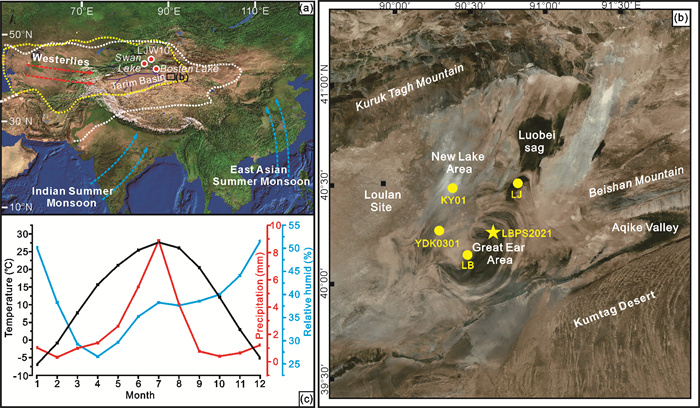
Figures(9) / Tables(1)
Copyright © 2013-2020 Journal of Earth Science 鄂ICP备15021562号-2
Tel: +86-27-67885075 Fax: +86-27-67885075 E-mail: xbb@cug.edu.cn
Address: Editorial Office of Journal, China University of Geosciences, Yujiashan, Wuhan, Hubei 430074, P. R. China
Supported by:
Beijing Renhe Information Technology Co. Ltd
E-mail:
info@rhhz.net


 DownLoad: