| Citation: | Xin Wang, Zulpiya Musa, Liuqin Huang, Geng Wu, Weijun Zhang, Hongchen Jiang. Composition of Microbial Community Involved in the Degradation of Waste Activated Sludge and Its Temperature Response in Hot Springs. Journal of Earth Science, 2026, 37(3): 1425-1439. doi: 10.1007/s12583-025-0312-4

|
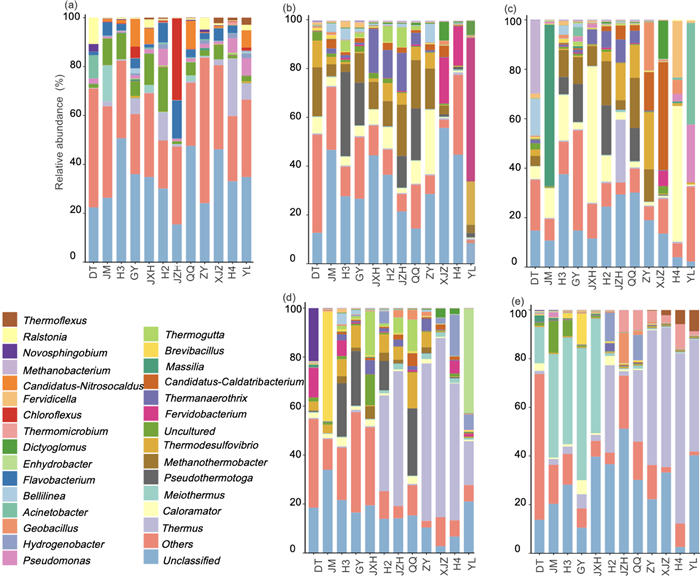
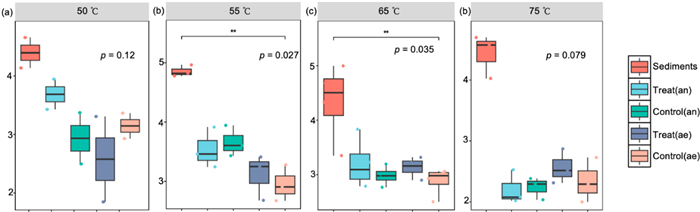
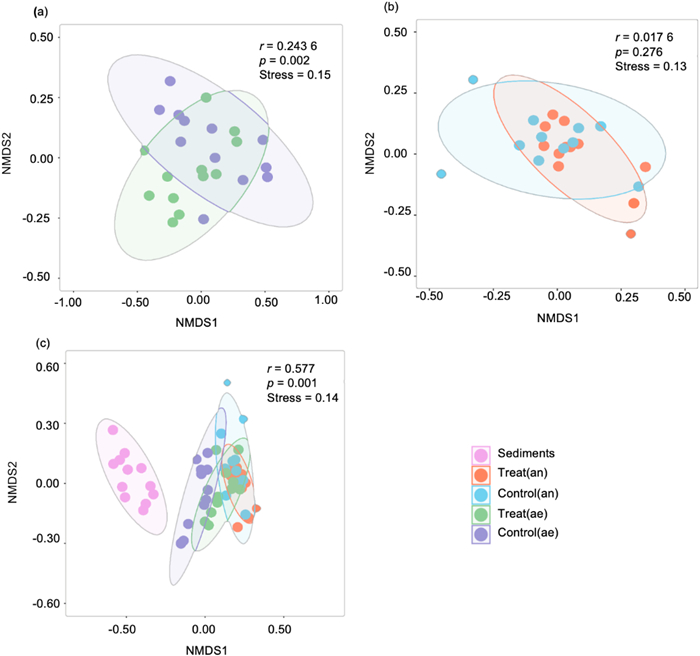
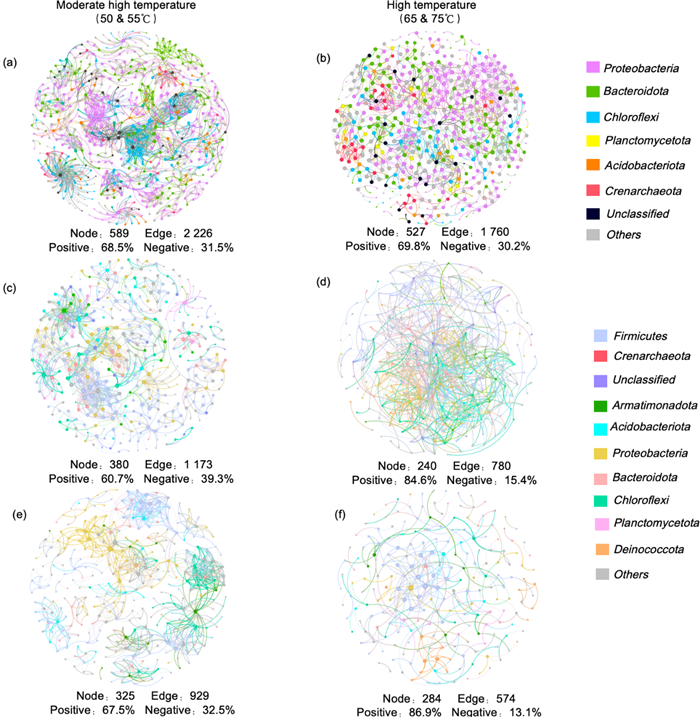
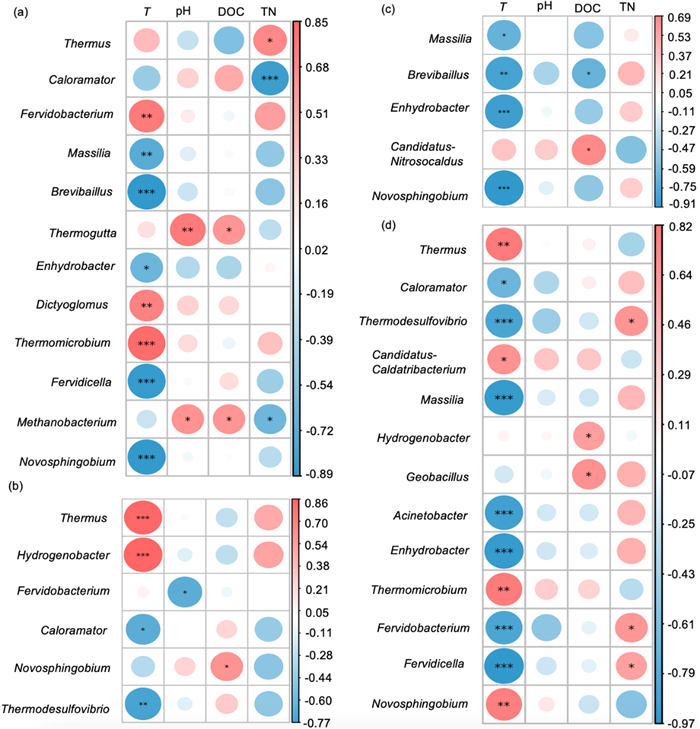
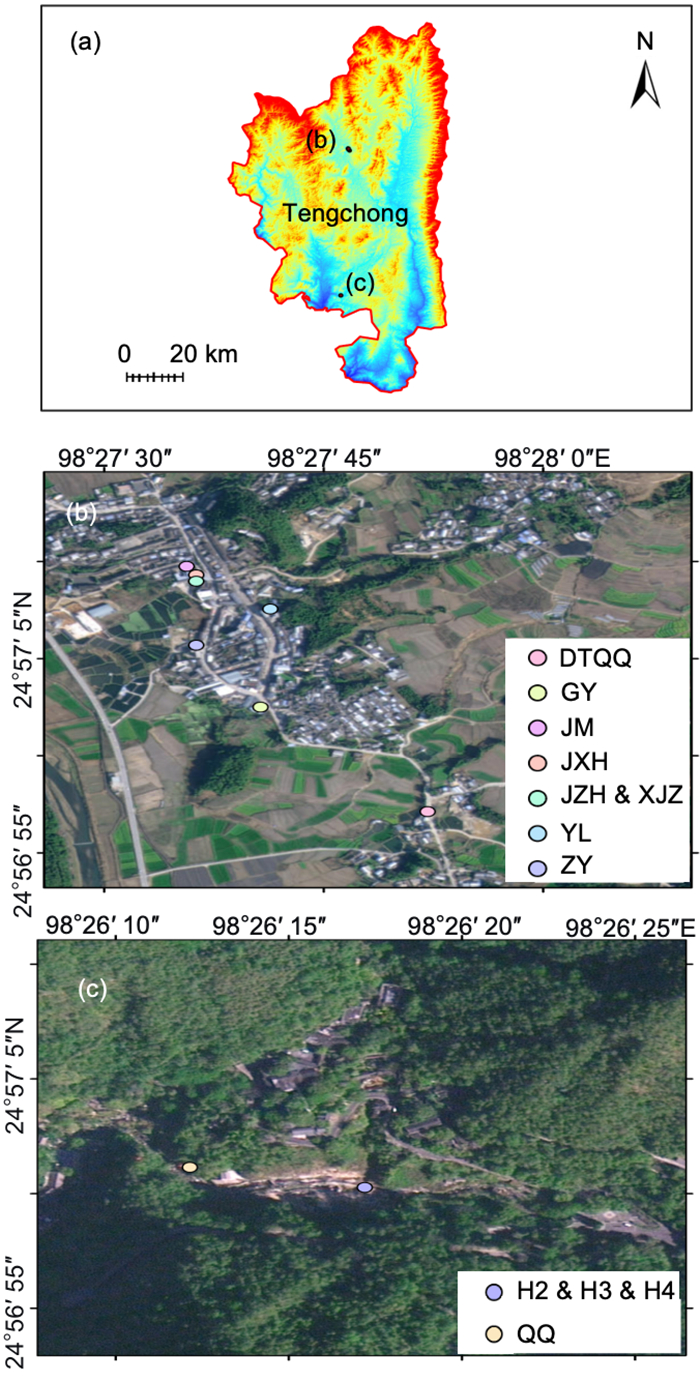
Thermophilic microbial communities in hot springs represent a promising yet underexplored resource for high-temperature sludge degradation. This study investigated the structural dynamics and temperature-adaptive mechanisms of microbial communities in Tengchong hot springs using waste activated sludge (WAS) as the carbon/nitrogen source. Through anaerobic/aerobic enrichments at 50–75 ℃, high-throughput 16S rRNA gene sequencing revealed distinct thermophilic assemblages:

| Alvarez, L., Bricio, C., Blesa, A., et al., 2014. Transferable Denitrification Capability of Thermus thermophilus. Applied and Environmental Microbiology, 80(1): 19–28. https://doi.org/10.1128/AEM.02594-13 |
| Babar, T. K., Glare, T. R., Hampton, J. G., et al., 2022. Isolation, Purification, and Characterisation of a Phage Tail-Like Bacteriocin from the Insect Pathogenic Bacterium Brevibacillus laterosporus. Biomolecules, 12(8): 1154. https://doi.org/10.3390/biom12081154 |
| Bai, X. Y., Li, J. W., Jiang, H. B., et al., 2025. Effects of Multiple Temperature Variations on Nitrogen Removal and Microbial Community Structure in Tidal Flow Constructed Wetlands. Environmental Research, 266: 120616. https://doi.org/10.1016/j.envres.2024.120616 |
| Bartak, D., Bedrníková, E., Kašpar, V., et al., 2023. Survivability and Proliferation of Microorganisms in Bentonite with Implication to Radioactive Waste Geological Disposal: Strong Effect of Temperature and Negligible Effect of Pressure. World Journal of Microbiology and Biotechnology, 40(1): 41. https://doi.org/10.1007/s11274-023-03849-0 |
| Bolyen, E., Rideout, J. R., Dillon, M. R., et al., 2019. Reproducible, Interactive, Scalable and Extensible Microbiome Data Science Using QIIME 2. Nature Biotechnology, 37(8): 852–857. https://doi.org/10.1038/s41587-019-0209-9 |
| Brock, T. D., 1985. Life at High Temperatures. Science, 230(4722): 132–138. https://doi.org/10.1126/science.230.4722.132 |
| Caporaso, J. G., Lauber, C. L., Walters, W. A., et al., 2012. Ultra-High-Throughput Microbial Community Analysis on the Illumina HiSeq and MiSeq Platforms. The ISME Journal, 6(8): 1621–1624. https://doi.org/10.1038/ismej.2012.8 |
| Chan, C. S., Chan, K. G., Tay, Y. L., et al., 2015. Diversity of Thermophiles in a Malaysian Hot Spring Determined Using 16S rRNA and Shotgun Metagenome Sequencing. Frontiers in Microbiology, 6: 177. https://doi.org/10.3389/fmicb.2015.00177 |
| Chen, J. K., Qin, H., You, C. Q., et al., 2023. Improved Secretory Expression and Characterization of Thermostable Xylanase and β-Xylosidase from Pseudothermotoga thermarum and Their Application in Synergistic Degradation of Lignocellulose. Frontiers in Bioengineering and Biotechnology, 11: 1270805. https://doi.org/10.3389/fbioe.2023.1270805 |
| Chen, Y. C., Destouches, L., Cook, A., et al., 2024. Synthetic Microbial Ecology: Engineering Habitats for Modular Consortia. Journal of Applied Microbiology, 135(7): 158. https://doi.org/10.1093/jambio/lxae158 |
| Chiu, I., Yang, T. X., 2024. Biopolymer-Based Intelligent Packaging Integrated with Natural Colourimetric Sensors for Food Safety and Sustainability. Analytical Science Advances, 5(5/6): e2300065. https://doi.org/10.1002/ansa.202300065 |
| Counts, J. A., Zeldes, B. M., Lee, L. L., et al., 2017. Physiological, Metabolic and Biotechnological Features of Extremely Thermophilic Microorganisms. Wiley Interdisciplinary Reviews Systems Biology and Medicine, 9(3). https://doi.org/10.1002/wsbm.1377 |
| Ding, Y., Zhou, A., Li, X., et al., 2025. Vertical Distribution and Functional Differences of Microbial Community Structure in the Soil-Groundwater System Media Field of a Petroleum Contaminated Site. Earth Science, 50(5): 2011–2022. https://doi.org/10.3799/dqkx.2023.156 (in Chinese with English Abstract) |
| Edgar, R. C., 2010. Search and Clustering Orders of Magnitude Faster than BLAST. Bioinformatics, 26(19): 2460–2461. https://doi.org/10.1093/bioinformatics/btq461 |
| Elcheninov, A. G., Menzel, P., Gudbergsdottir, S. R., et al., 2017. Sugar Metabolism of the First Thermophilic Planctomycete Thermogutta terrifontis: Comparative Genomic and Transcriptomic Approaches. Frontiers in Microbiology, 8: 2140. https://doi.org/10.3389/fmicb.2017.02140 |
| Fenouil, R., Pradel, N., Belahbib, H., et al., 2023. Adaptation Strategies to High Hydrostatic Pressures in Pseudothermotoga Species Revealed by Transcriptional Analyses. Microorganisms, 11(3): 773. https://doi.org/10.3390/microorganisms11030773 |
| George, C., Lim, C. X. Q., Tong, Y., et al., 2023. Community Structure of Thermophilic Photosynthetic Microbial Mats and Flocs at Sembawang Hot Spring, Singapore. Frontiers in Microbiology, 14: 1189468. https://doi.org/10.3389/fmicb.2023.1189468 |
| González, A. G., Terrón, R. P. Y., 2021. Importance of Extremophilic Microorganisms in Biogeochemical Cycles. GSC Advanced Research and Reviews, 9(1): 82–93. https://doi.org/10.30574/gscarr.2021.9.1.0229 |
| Han, W. J., Chen, S. N., Tan, X., et al., 2022. Microbial Community Succession in Response to Sludge Composting Efficiency and Heavy Metal Detoxification during Municipal Sludge Composting. Frontiers in Microbiology, 13: 1015949. https://doi.org/10.3389/fmicb.2022.1015949 |
| Ji, M. D., Hu, Z., Hou, C. L., et al., 2020. New Insights for Enhancing the Performance of Constructed Wetlands at Low Temperatures. Bioresource Technology, 301: 122722. https://doi.org/10.1016/j.biortech.2019.122722 |
| Kang, F., Sui, H., Zheng, T., et al., 2024. Formation Mechanism of Cold Springs and Hot Springs in Karst Groundwater Systems in North China: A Study of Baotu Spring. Earth Science, 49(8): 2862–2878. https://doi.org/10.3799/dqkx.2023.051 (in Chinese with English Abstract) |
| Kaster, A. K., Goenrich, M., Seedorf, H., et al., 2011. More than 200 Genes Required for Methane Formation from H2 and CO2 and Energy Conservation are Present in Methanothermobacter marburgensis and Methanothermobacter thermautotrophicus. Archaea, 2011: 973848. https://doi.org/10.1155/2011/973848 |
| Khan, M. I. U., Huang, L. Q., Wu, G., et al., 2025. GeoChip-Based Microbial Functions in Biogeochemical Cycles and Their Responses to Environmental Factors in Tengchong Hot Springs. Journal of Earth Science, 36(2): 382–394. https://doi.org/10.1007/s12583-024-0009-0 |
| Levy-Booth, D. J., Hashimi, A., Roccor, R., et al., 2021. Genomics and Metatranscriptomics of Biogeochemical Cycling and Degradation of Lignin-Derived Aromatic Compounds in Thermal Swamp Sediment. The ISME Journal, 15(3): 879–893. https://doi.org/10.1038/s41396-020-00820-x |
| Li, B. C., Yang, G. Y., Wu, L., et al., 2012. Role of the NC-Loop in Catalytic Activity and Stability in Lipase from Fervidobacterium Changbaicum. PLoS One, 7(10): e46881. https://doi.org/10.1371/journal.pone.0046881 |
| Li, J. W., Wang, G. S., Mayes, M. A., et al., 2019. Reduced Carbon Use Efficiency and Increased Microbial Turnover with Soil Warming. Global Change Biology, 25(3): 900–910. https://doi.org/10.1111/gcb.14517 |
| Ma, L., Huang, L. Q., Xie, Y. G., et al., 2025. Temperature-Dependent Regulation of Denitrification Intermediates in High-Temperature Ecosystems. Environmental Science & Technology, 59(25): 12630–12641. https://doi.org/10.1021/acs.est.5c00174 |
| Mahler, L., Tovar, M., Weber, T., et al., 2015. Enhanced and Homogeneous Oxygen Availability during Incubation of Microfluidic Droplets. RSC Advances, 5(123): 101871–101878. https://doi.org/10.1039/c5ra20118g |
| Marfil-Santana, M. D., Martínez-Cárdenas, A., Ruíz-Hernández, A., et al., 2021. A Meta-Omics Analysis Unveils the Shift in Microbial Community Structures and Metabolomics Profiles in Mangrove Sediments Treated with a Selective Actinobacterial Isolation Procedure. Molecules, 26(23): 7332. https://doi.org/10.3390/molecules26237332 |
| Mentges, A., Feenders, C., Deutsch, C., et al., 2019. Long-Term Stability of Marine Dissolved Organic Carbon Emerges from a Neutral Network of Compounds and Microbes. Scientific Reports, 9: 17780. https://doi.org/10.1038/s41598-019-54290-z |
| Min, X. X., Xiao, L., Li, Z. B., et al., 2024. Effects of Incubation Temperature and Sludge Addition on Soil Organic Carbon and Nitrogen Mineralization Characteristics in Degraded Grassland Soil. Agronomy, 14(7): 1590. https://doi.org/10.3390/agronomy14071590 |
| Nagakura, T., Morono, Y., Ito, M., et al., 2024. Microbial Anabolic and Catabolic Utilization of Hydrocarbons in Deep Subseafloor Sediments of Guaymas Basin. FEMS Microbiology Ecology, 100(8): fiae093. https://doi.org/10.1093/femsec/fiae093 |
| Ostojski, A., 2018. Elementary Analysis and Energetic Potential of the Municipal Sewage Sludges from the Gdańsk and Kościerzyna WWTPS. E3S Web of Conferences, 26: 00004. https://doi.org/10.1051/e3sconf/20182600004 |
| Premalatha, N., Gopal, N. O., Jose, P. A., et al., 2015. Optimization of Cellulase Production by Enhydrobacter sp. ACCA2 and Its Application in Biomass Saccharification. Frontiers in Microbiology, 6: 1046. https://doi.org/10.3389/fmicb.2015.01046 |
| Quast, C., Pruesse, E., Yilmaz, P., et al., 2013. The SILVA Ribosomal RNA Gene Database Project: Improved Data Processing and Web-Based Tools. Nucleic Acids Research, 41(Database Issue): D590–D596. https://doi.org/10.1093/nar/gks1219 |
| Raheem, A., Sikarwar, V. S., He, J., et al., 2018. Opportunities and Challenges in Sustainable Treatment and Resource Reuse of Sewage Sludge: A Review. Chemical Engineering Journal, 337: 616–641. https://doi.org/10.1016/j.cej.2017.12.149 |
| Reichart, N. J., Bowers, R. M., Woyke, T., et al., 2021. High Potential for Biomass-Degrading Enzymes Revealed by Hot Spring Metagenomics. Frontiers in Microbiology, 12: 668238. https://doi.org/10.3389/fmicb.2021.668238 |
| Sahm, K., John, P., Nacke, H., et al., 2013. High Abundance of Heterotrophic Prokaryotes in Hydrothermal Springs of the Azores as Revealed by a Network of 16S rRNA Gene-Based Methods. Extremophiles, 17(4): 649–662. https://doi.org/10.1007/s00792-013-0548-2 |
| Shakya, B. M., Nakamura, T., Kamei, T., et al., 2019. Seasonal Groundwater Quality Status and Nitrogen Contamination in the Shallow Aquifer System of the Kathmandu Valley, Nepal. Water, 11(10): 2184. https://doi.org/10.3390/w11102184 |
| Shivlata, L., Satyanarayana, T., 2015. Thermophilic and Alkaliphilic Actinobacteria: Biology and Potential Applications. Frontiers in Microbiology, 6: 1014. https://doi.org/10.3389/fmicb.2015.01014 |
| Song, Z. Q., Wang, L., Ma, Y. R., et al., 2025. Hydrochemistry Predominantly Shapes the Unique Nitrogen-Fixing Bacterial Communities in Tibetan Hot Springs. Journal of Earth Science, 36(1): 134–145. https://doi.org/10.1007/s12583-024-0147-4 |
| Székely, A. J., Berga, M., Langenheder, S., 2013. Mechanisms Determining the Fate of Dispersed Bacterial Communities in New Environments. The ISME Journal, 7(1): 61–71. https://doi.org/10.1038/ismej.2012.80 |
| Tamaki, H., Wright, C. L., Li, X. Z., et al., 2011. Analysis of 16S rRNA Amplicon Sequencing Options on the Roche/454 Next-Generation Titanium Sequencing Platform. PLoS One, 6(9): e25263. https://doi.org/10.1371/journal.pone.0025263 |
| Tang, J., Liang, Y. M., Jiang, D., et al., 2018. Temperature-Controlled Thermophilic Bacterial Communities in Hot Springs of Western Sichuan, China. BMC Microbiology, 18(1): 134. https://doi.org/10.1186/s12866-018-1271-z |
| Tian, Z. J., Xiong, Y., Li, G. W., et al., 2024. Food Wastewater Treatment Using a Hybrid Biofilm Reactor: Nutrient Removal Performance and Functional Microorganisms on Filler Biofilm and Suspended Sludge. RSC Advances, 14(31): 22470–22479. https://doi.org/10.1039/d4ra01631a |
| Voća, N., Leto, J., Karažija, T., et al., 2021. Energy Properties and Biomass Yield of Miscanthus x Giganteus Fertilized by Municipal Sewage Sludge. Molecules, 26(14): 4371. https://doi.org/10.3390/molecules26144371 |
| Wang, B. C., Sun, X. X., Yang, Z., et al., 2025. Substrate Chemistry Trumps Mineral Protection in Governing Temperature Sensitivity of Organic Carbon Mineralization in Saline Lake Sediments. Geochimica et Cosmochimica Acta, 407: 81–90. https://doi.org/10.1016/j.gca.2025.08.040 |
| Wang, F., Huang, W. X., Chen, J. L., et al., 2025. Non-Antibiotic Disinfectant Synchronously Interferes Methane Production and Antibiotic Resistance Genes Propagation during Sludge Anaerobic Digestion: Activation of Microbial Adaptation and Reconfiguration of Bacteria-Archaea Synergies. Water Research, 268: 122773. https://doi.org/10.1016/j.watres.2024.122773 |
| Wang, H. J., Su, Z. W., Ren, S. N., et al., 2024. Combined Use of Biochar and Microbial Agents can Promote Lignocellulosic Degradation Microbial Community Optimization during Composting of Submerged Plants. Fermentation, 10(1): 70. https://doi.org/10.3390/fermentation10010070 |
| Wang, Y. Y., Ma, L. B., He, J., et al., 2021. Whole Genome Sequencing and Comparative Genomic Analyses of Planococcus alpniumensis MSAK28401T, a New Species Isolated from Antarctic Krill. BMC Microbiology, 21(1): 288. https://doi.org/10.1186/s12866-021-02347-3 |
| Xiang, X., Wang, H. M., Tian, W., et al., 2023. Composition and Function of Bacterial Communities of Bryophytes and Their Underlying Sediments in the Dajiuhu Peatland, Central China. Journal of Earth Science, 34(1): 133–144. https://doi.org/10.1007/s12583-020-1391-x |
| Xiao, H., Amir, Z., Mohd Junaidi, M. U., 2023. Development of Microbial Consortium and Its Influencing Factors for Enhanced Oil Recovery after Polymer Flooding: A Review. Processes, 11(10): 2853. https://doi.org/10.3390/pr11102853 |
| Xiong, J., Sun, Z., Hu, Y., et al., 2024. Characteristics of Dissolved Organic Matter in Alpine Mountain Soils and Its Effect on Riverine Dissolved Organic Matter Export. Earth Science, 49(11): 4169–4138. https://doi.org/10.3799/dqkx.2024.043 (in Chinese with English Abstract) |
| Yang, J., Jiang, H. C., Sun, X. X., et al., 2020. Minerals Play Key Roles in Driving Prokaryotic and Fungal Communities in the Surface Sediments of the Qinghai-Tibetan Lakes. FEMS Microbiology Ecology, 96(4): fiaa035. https://doi.org/10.1093/femsec/fiaa035 |
| Yuan, D. D., Liu, Q., Xu, H. J., et al., 2024. High-Temperature Geothermal Source in the Northeastern Datong Basin, North China: Evidence from the Drilled Rhyolite. Journal of Earth Science, 35(5): 1776–1780. https://doi.org/10.1007/s12583-024-0035-y |
| Zawieja, I., 2019. Effect of Thermal and Alkaline Disintegration of Excess Sludge on Biodegradation. Journal of Ecological Engineering, 20(10): 172–182. https://doi.org/10.12911/22998993/113151 |
| Zhao, Q., Wang, L., Li, Y., et al., 2025. Characteristics of Microbial Communities and Controlling Environmental Factor Identification in Magma-Heated High-Temperature Hot Springs. Earth Science, 50(4): 1638–1650. https://doi.org/10.3799/dqkx.2024.049 (in Chinese with English Abstract) |
Figures(6) / Tables(1)
Copyright © 2013-2020 Journal of Earth Science 鄂ICP备15021562号-2
Tel: +86-27-67885075 Fax: +86-27-67885075 E-mail: xbb@cug.edu.cn
Address: Editorial Office of Journal, China University of Geosciences, Yujiashan, Wuhan, Hubei 430074, P. R. China
Supported by:
Beijing Renhe Information Technology Co. Ltd
E-mail:
info@rhhz.net


 DownLoad: