| Citation: | Rujiao Cheng, Feiyu Wang, Yan Chen, Jing Zhang, Jianya Liang, Chong Jiang. Hydrocarbon Migration and Accumulation in Unconventional Shale Play from the Upper Paleogene Xiaganchaigou Formation in Ganchaigou Area, Western Qaidam Basin, China. Journal of Earth Science, 2026, 37(3): 1285-1303. doi: 10.1007/s12583-025-0356-5

|
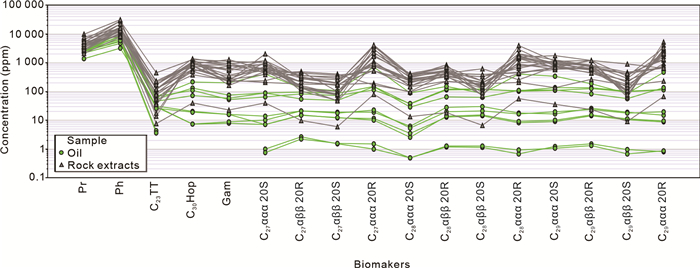
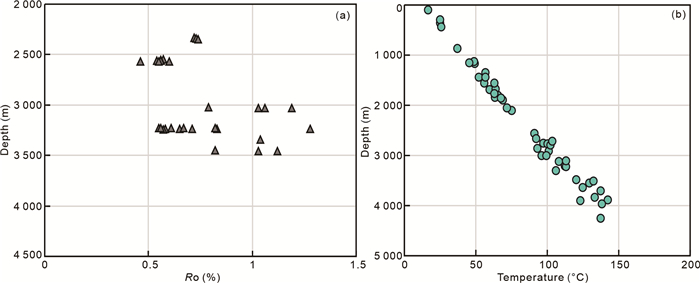
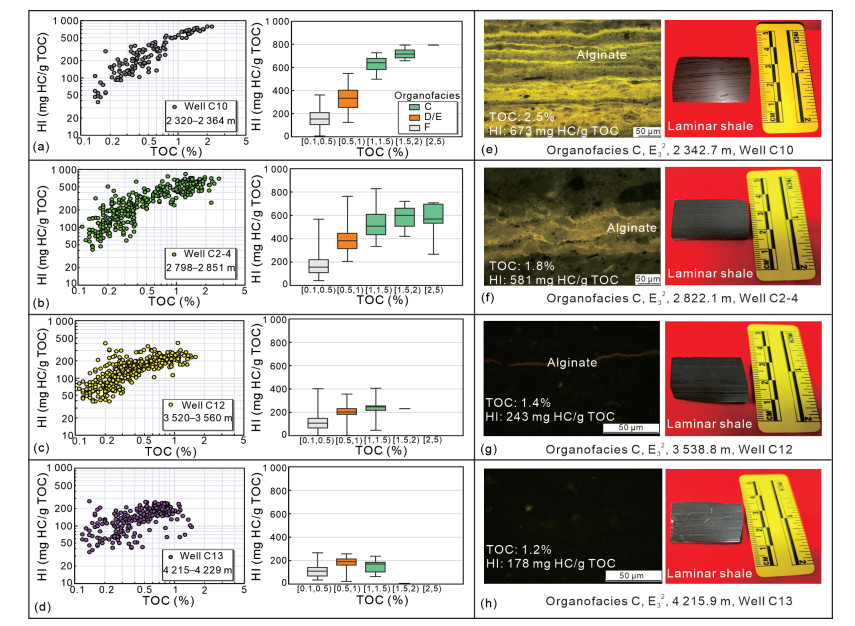
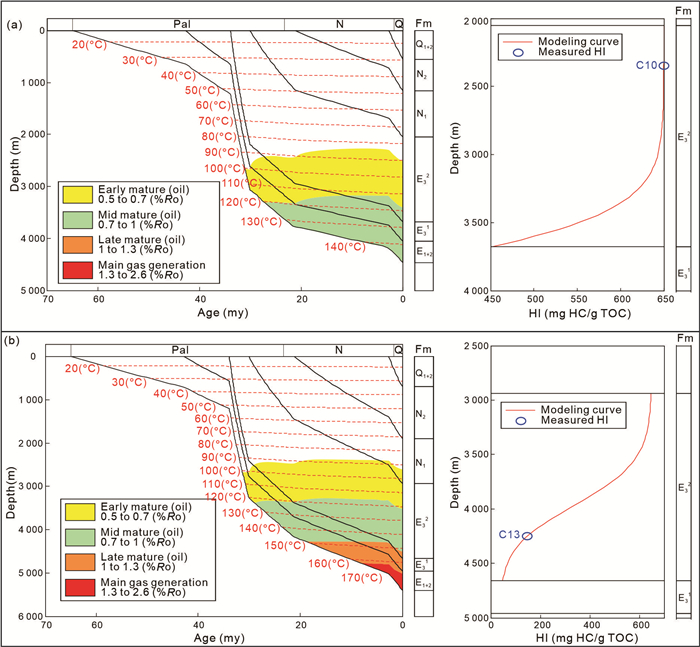
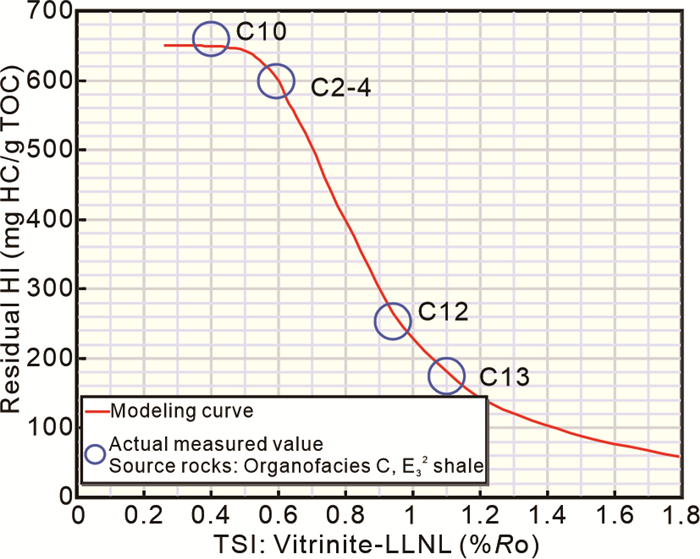
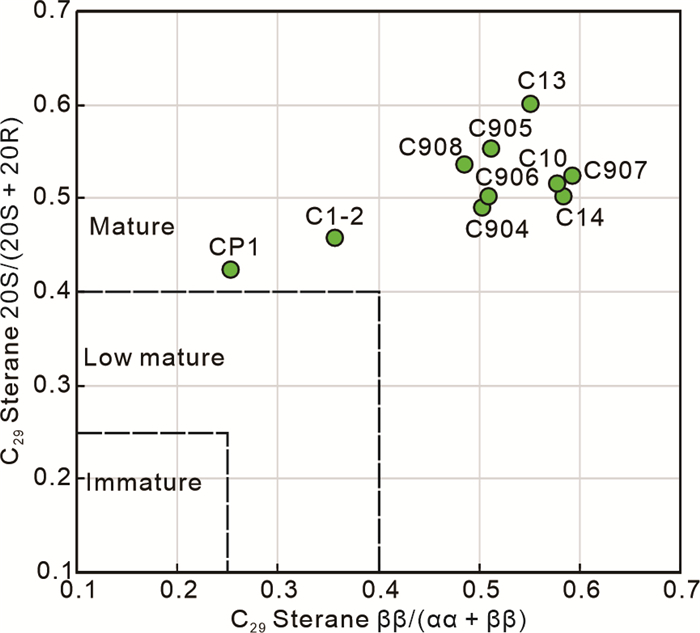
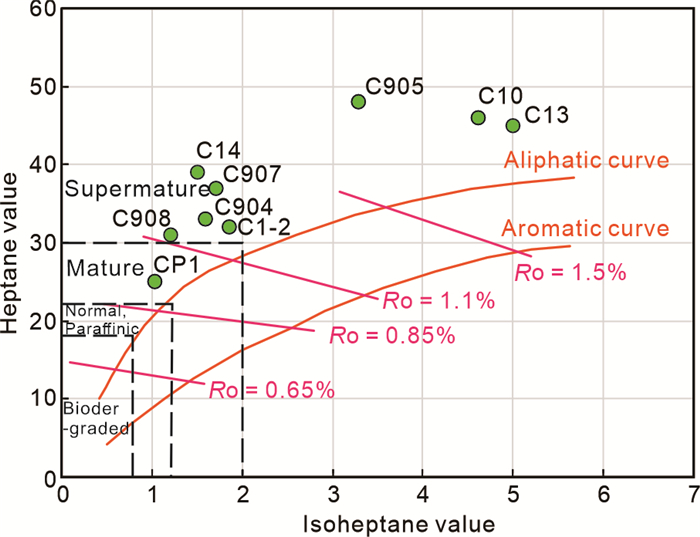
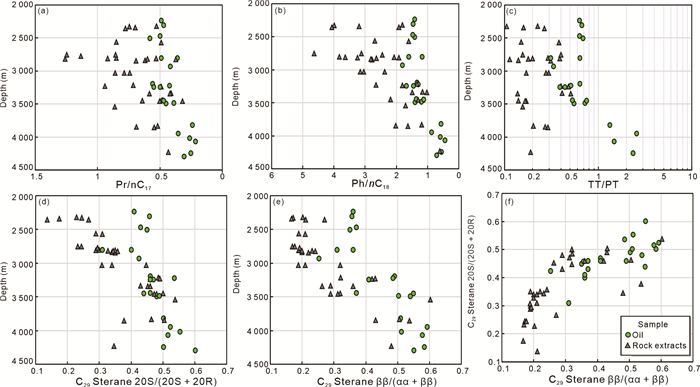
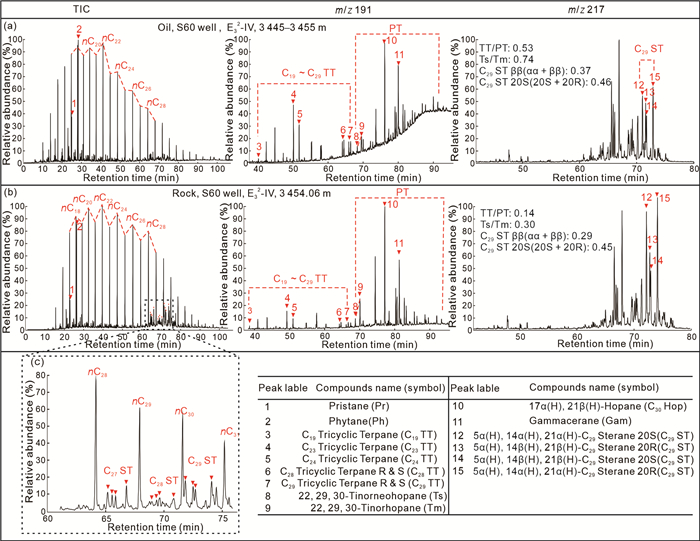
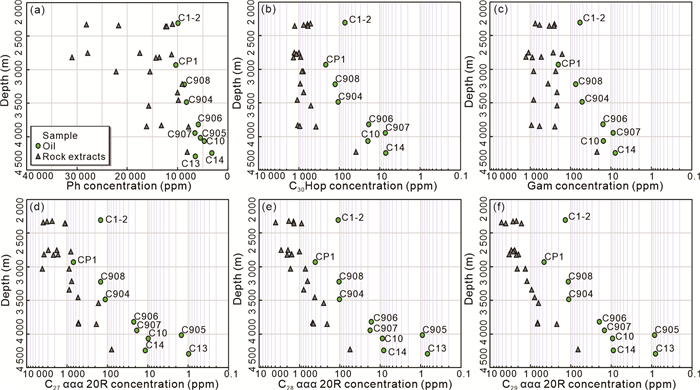
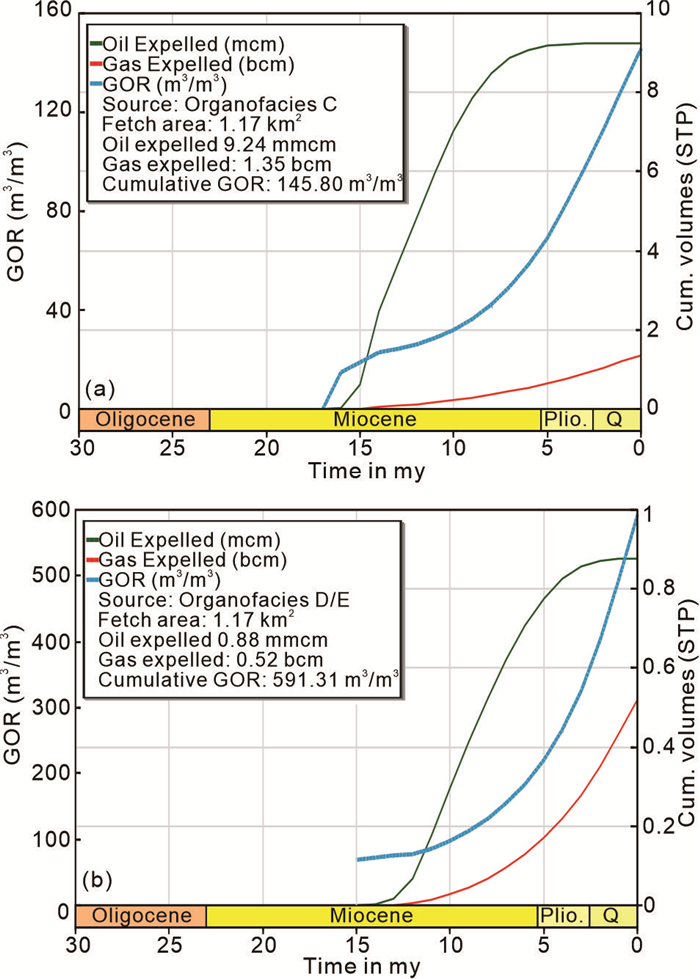
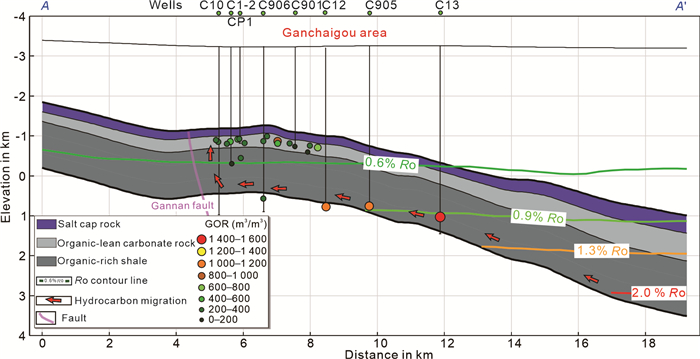
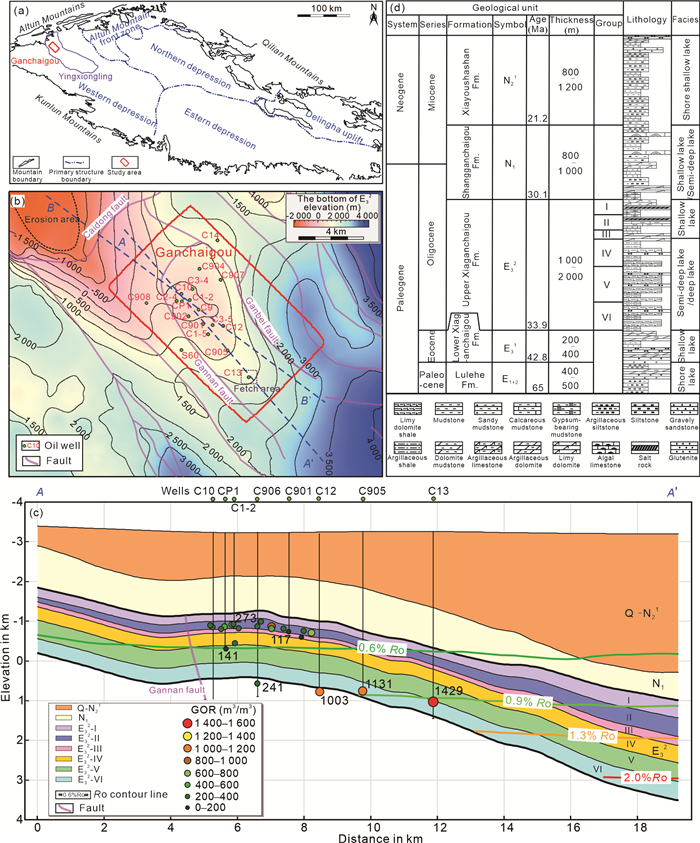
Shale oil is generally considered to be petroleum generated from organic-rich mudstones and retained in place, or having migrated over a short distance and stored in adjacent organic-lean interbeds. However, in our study on the origin of petroleum in the Upper Xiaganchaigou Formation (E32), Ganchaigou area, western Qaidam Basin, China, we found that the E32 shale reservoirs have experienced large-scale and long-distance hydrocarbon migration and accumulation. This study utilizes organic geochemistry and basin modeling to characterize the maturity of crude oil and source rocks within the E32 shale reservoir. The results indicate that crude oil found in the immature to low-mature zone exhibits mature to overmature characteristics in organic geochemical and physical properties. In the strata within the oil window, the biomarker parameters and their absolute concentrations in crude oil still show significant differences from those of

|
Abrams, M. A., 2014. Petroleum System Charge Analysis for Liquid-Rich Unconventional Plays. Proceedings of the 2nd Unconventional Resources Technology Conference. August 25-27, 2014. Denver, Colorado, USA. American Association of Petroleum Geologists. |
| Abrams, M. A., Thomas, D., 2020. Geochemical Evaluation of Oil and Gas Samples from the Upper Devonian and Mississippian Reservoirs Southern Anadarko Basin Oklahoma and Its Implication for the Woodford Shale Unconventional Play. Marine and Petroleum Geology, 112: 104043. https://doi.org/10.1016/j.marpetgeo.2019.104043 |
| Abrams, M. A., 2023. Understanding Multiple Factors that Impact Unconventional Production: Guidelines to Evaluate Liquid-Rich Unconventional Resource Plays. Interpretation, 11(4): SC1–SC10. https://doi.org/10.1190/int-2022-0120.1 |
| Donovan, A., Evenick, J., Banfield, L., et al., 2017. An Organofacies-Based Mudstone Classification for Unconventional Tight Rock and Source Rock Plays. SPE/AAPG/SEG Unconventional Resources Technology Conference, Austin, URTEC-2715154-MS. https://doi.org/10.15530/urtec-2017-2715154 |
| Guo, R. T., Ma, D. D., Zhang, Y. S., et al., 2019. Characteristics and Formation Mechanism of Overpressure Pore-Fracture Reservoirs for Upper Member of Xiaganchaigou Formation in the West of Yingxiong Ridge, Qaidam Basin. Acta Petrolei Sinica, 40(4): 411–422 (in Chinese with English Abstract) |
| He, Z. Y., Xia, D., 2017. Hydrocarbon Migration and Trapping in Unconventional Plays. AAPG Annual Convention & Exhibition, Houston |
| Huc, A. Y., 1997. Petroleum Geochemistry and Geology. Chemical Geology, 137(3/4): 313–314. https://doi.org/10.1016/s0009-2541(96)00131-3 |
| Huang, D. F., Li, J. C., Zhang, D. J., 1990. Maturation Sequence of Continental Crude Oils in Hydrocarbon Basins in China and Its Significance. Organic Geochemistry, 16(1/2/3): 521–529. https://doi.org/10.1016/0146-6380(90)90067-a |
|
Jarvie, D. M., 1991. Total Organic Carbon (TOC) Analysis. In: Merrill, R. K., ed., Treatise of Petroleum Geology: Handbook of Petroleum Geology, Source and Migration Processes and Evaluation Techniques. AAPG, Tulsa. |
|
Jarvie, D. M., 2012. Shale Resource Systems for Oil and Gas: Part 2-Shale-Oil Resource Systems. Shale Reservoirs—Giant Resources for the 21st Century. Tulsa: American Association of Petroleum Geologists, |
| Jin, Z. J., Zhu, R. K., Liang, X. P., et al., 2021. Several Issues Worthy of Attention in Current Lacustrine Shale Oil Exploration and Development. Petroleum Exploration and Development, 48(6): 1471–1484. https://doi.org/10.1016/s1876-3804(21)60303-8 |
| Li, G. X., Shi, Y. J., Zhang, Y. S., et al., 2022a. New Progress and Enlightenment of Oil and Gas Exploration and Geological Understanding in Qaidam Basin. Lithologic Reservoirs, 34(6): 1–18 (in Chinese with English Abstract) |
| Li, G. X., Zhu, R. K., Zhang, Y. S., et al., 2022b. Geological Characteristics, Evaluation Criteria and Discovery Significance of Paleogene Yingxiongling Shale Oil in Qaidam Basin, NW China. Petroleum Exploration and Development, 49(1): 21–36. https://doi.org/10.1016/s1876-3804(22)60002-8 |
| Li, H. Y., Liu, Z., Dang, Y. Q., et al., 2006. Characteristics of Geotemperature-Geopressure System in Western Qaidam Basin and Their Relationship with Oil and Gas Distribution. Oil & Gas Geology, 1: 37–43 (in Chinese with English Abstract) |
| Li, Z. X., Gao, J., Li, W. F., et al., 2016. The Characteristics of Geothermal Field and Controlling Factors in Qaidam Basin, Northwest China. Earth Science Frontiers, 23(05): 23–32 (in Chinese with English Abstract) |
| Li, Z. X., Gao, J., Zheng, C., et al., 2015. Present-Day Heat Flow and Tectonic-Thermal Evolution Since the Late Paleozoic Time of the Qaidam Basin. Chinese Journal of Geophysics, 58(10): 3687–3705 (in Chinese with English Abstract) |
| Pang, Y. M., Zou, K. Z., Guo, X. W., et al., 2022. Geothermal Regime and Implications for Basin Resource Exploration in the Qaidam Basin, Northern Tibetan Plateau. Journal of Asian Earth Sciences, 239: 105400. https://doi.org/10.1016/j.jseaes.2022. 105400 doi: 10.1016/j.jseaes.2022.105400 |
|
Panja, P., Sorkhabi, R., 2022. Geomechanical Controls on Production Performance of Austin Chalk and Eagle Ford Oil Wells in Southern Texas. 56th U. S. Rock Mechanics/Geomechanics Symposium. June 26–29, 2022. Santa Fe. |
| Pepper, A. S., Corvi, P. J., 1995. Simple Kinetic Models of Petroleum Formation. Part I: Oil and Gas Generation from Kerogen. Marine and Petroleum Geology, 12(3): 291–319. https://doi.org/10.1016/0264-8172(95)98381-e |
| Peters, K. E., Walters, C. C., Moldowan, J. M., 2007. The Biomarker Guide: Volume 2, Biomarkers and Isotopes in Petroleum Systems and Earth History. Cambridge University Press, New York |
| Price, L. C., Baker, C. E., 1985. Suppression of Vtrinite Reflectance in Amorphous Rich Kerogen—A Major Unrecognized Problem. Journal of Petroleum Geology, 8(1): 59–84. https://doi.org/10.1111/j.1747-5457.1985.tb00191.x |
|
Sorkhabi, R., Panja, P., 2020. Data Analysis of the Permian Basin Wolfcamp and Bone Spring Leads to Better Understanding of Production Sweetspots. SPE Annual Technical Conference and Exhibition. October 26–29, 2020. Virtual. Richardson: Society of Petroleum Engineers, SPE 201730-MS. |
| Sweeney, J. J., Burnham, A. K., 1990. Evaluation of a Simple Model of Vitrinite Reflectance Based on Chemical Kinetics. AAPG Bulletin, 74(10): 1559–1570. https://doi.org/10.1306/0c9b251f-1710-11d7-8645000102c1865d |
| Thompson, K. F. M., 1979. Light Hydrocarbons in Subsurface Sediments. Geochimica et Cosmochimica Acta, 43(5): 657–672. https://doi.org/10.1016/0016-7037(79)90251-5 |
| Thompson, K. F. M., 1983. Classification and Thermal History of Petroleum Based on Light Hydrocarbons. Geochimica et Cosmochimica Acta, 47(2): 303–316. https://doi.org/10.1016/0016-7037(83)90143-6 |
| Thompson, K. F. M., 1987. Fractionated Aromatic Petroleums and the Generation of Gas-Condensates. Organic Geochemistry, 11(6): 573–590. https://doi.org/10.1016/0146-6380(87)90011-8 |
| van Graas, G. W., 1990. Biomarker Maturity Parameters for High Maturities: Calibration of the Working Range up to the Oil/Condensate Threshold. Organic Geochemistry, 16(4/5/6): 1025–1032. https://doi.org/10.1016/0146-6380(90)90139-q |
| van Koeverden, J. H., Karlsen, D. A., Backer-Owe, K., 2011. Carboniferous non-Marine Source Rocks from Spitsbergen and Bjørnøya: Comparison with the Western Arctic. Journal of Petroleum Geology, 34(1): 53–66. https://doi.org/10.1111/j.1747-5457.2011.00493.x |
|
Walters, C. C., Isaksen, G. H., Peters, K. E., 2003. Applications of Light Hydrocarbon Molecular and Isotopic Compositions in Oil and Gas Exploration. Analytical Advances for Hydrocarbon Research. Springer US, Boston. |
| Wang, F. Y., Feng, W. P., Pang, X. Q., et al., 2023. Key Problems and Solutions in Quantitative Analysis of Hydrocarbon Generation, Expulsion, Migration and Accumulation in Whole Petroleum System. Acta Petrolei Sinica, 44(9): 1434–1444 (in Chinese with English Abstract) |
| Wang, T., Philp, R. P., 2019. Oil Families and Inferred Source Rocks of the Woodford–Mississippian Tight Oil Play in Northcentral Oklahoma. AAPG Bulletin, 103(4): 871–903. https://doi.org/10.1306/09181818049 |
| Yang, Z., Zou, C. N., Wu, S. T., et al., 2019. Formation, Distribution and Resource Potential of the "Sweet Areas (Sections)"of Continental Shale Oil in China. Marine and Petroleum Geology, 102: 48–60. https://doi.org/10.1016/j.marpetgeo.2018.11.049 |
| Zou, C. N., Yang, Z., Cui, J. W., et al., 2013. Formation Mechanism, Geological Characteristics and Development Strategy of Nonmarine Shale Oil in China. Petroleum Exploration and Development, 40(1): 15–27. https://doi.org/10.1016/s1876-3804(13)60002-6 |
| Zou, C. N., Zhu, R. K., Bai, B., et al., 2015. Significance, Geologic Characteristics, Resource Potential and Future Challenges of Tight Oil and Shale Oil. Bulletin of Mineralogy. Petrology and Geochemistry, 34(1): 3–17 (in Chinese with English Abstract) |
|
Zumberge, J. E., Curtis, J. B., Reed, J. D., et al., 2016. Migration Happens: Geochemical Evidence for Movement of Hydrocarbons in Unconventional Petroleum Systems. Proceedings of the 4th Unconventional Resources Technology Conference, August 1–3, 2016. San Antonio. American Association of Petroleum Geologists. |
Figures(18) / Tables(6)
Copyright © 2013-2020 Journal of Earth Science 鄂ICP备15021562号-2
Tel: +86-27-67885075 Fax: +86-27-67885075 E-mail: xbb@cug.edu.cn
Address: Editorial Office of Journal, China University of Geosciences, Yujiashan, Wuhan, Hubei 430074, P. R. China
Supported by:
Beijing Renhe Information Technology Co. Ltd
E-mail:
info@rhhz.net


 DownLoad: