| Citation: | Ling Zhu, Shenghua Cui, Zicheng Lu, Xiangjun Pei, Han Cao, Shuang He, Hui Wang, Hailong Yang. New Understanding of the Progressive Failure Process of the 2018 Baige Landslide, Tibet, China: A Role of Intermittent Rainfall. Journal of Earth Science, 2026, 37(4): 1885-1902. doi: 10.1007/s12583-026-0507-3

|
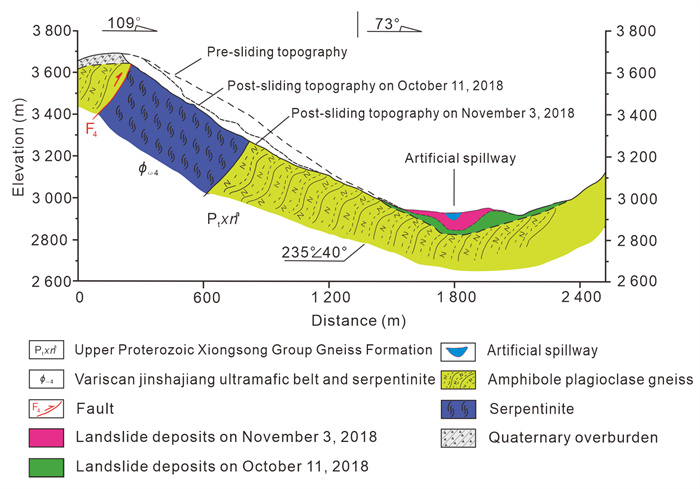
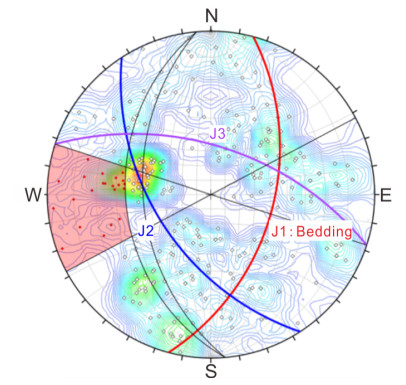
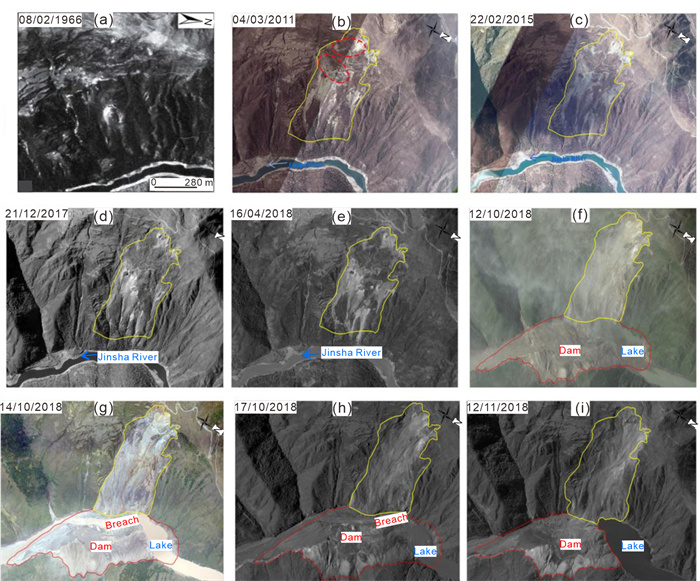
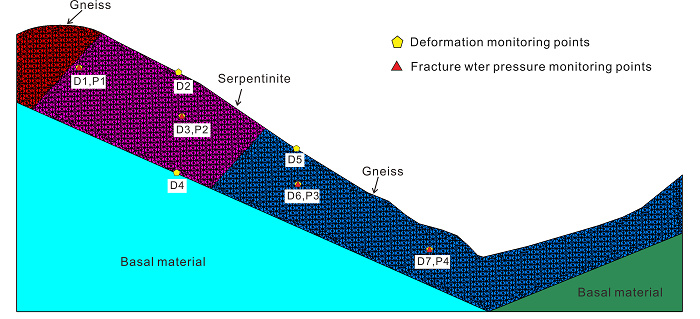
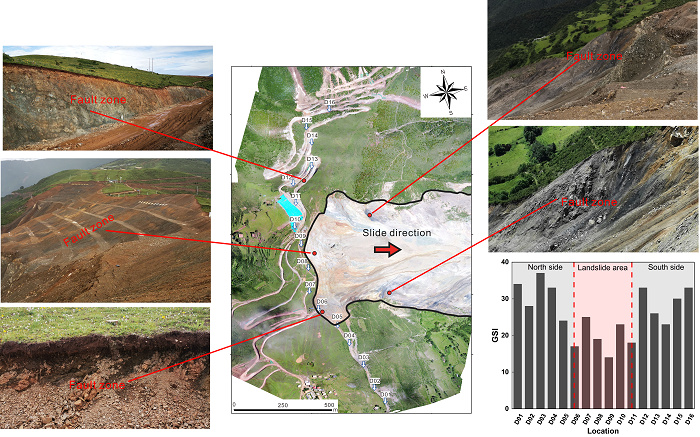
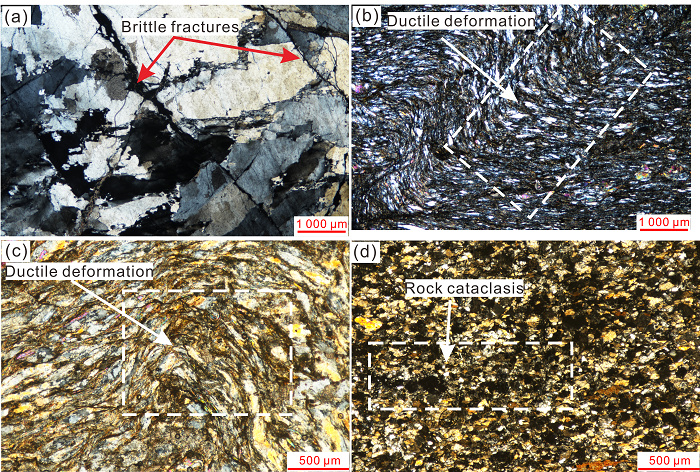
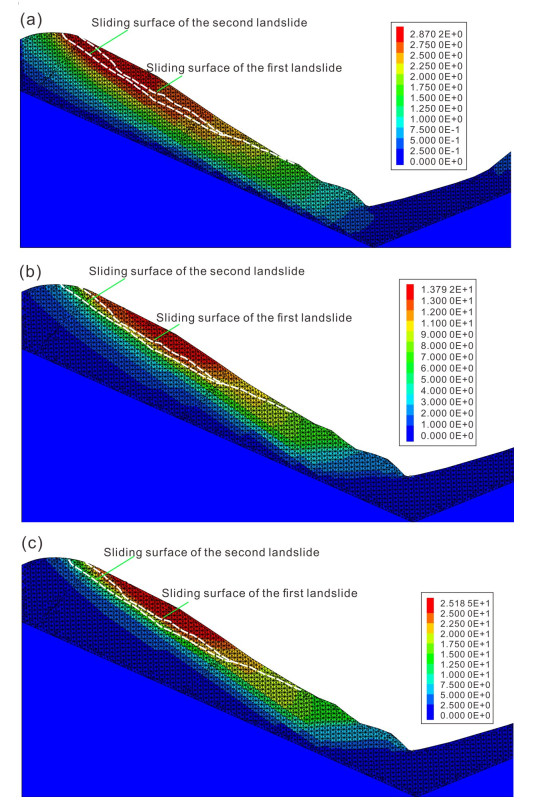
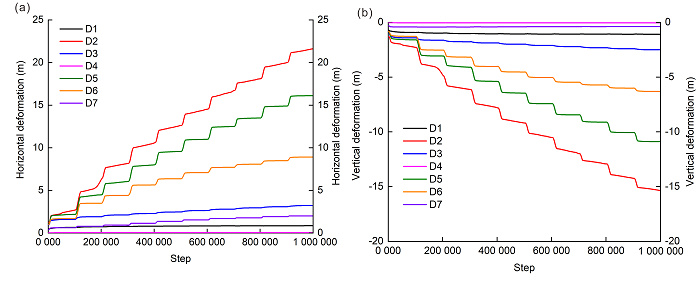
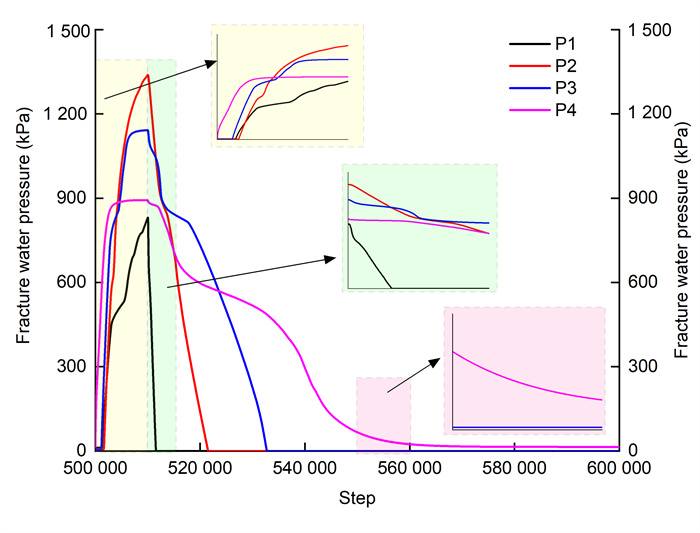
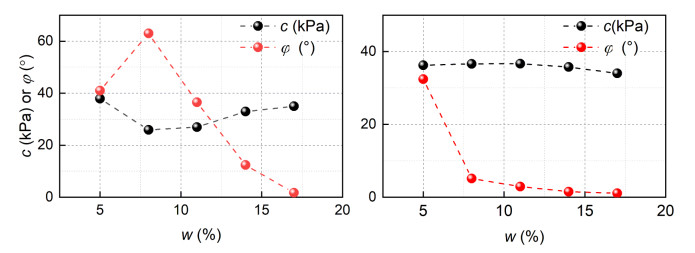
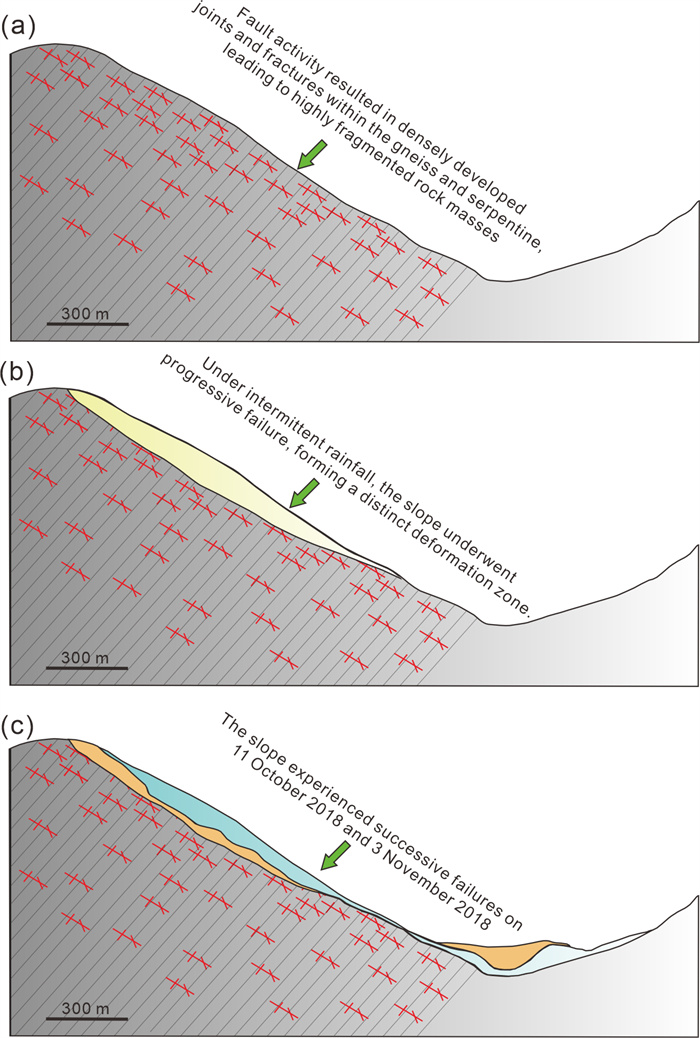
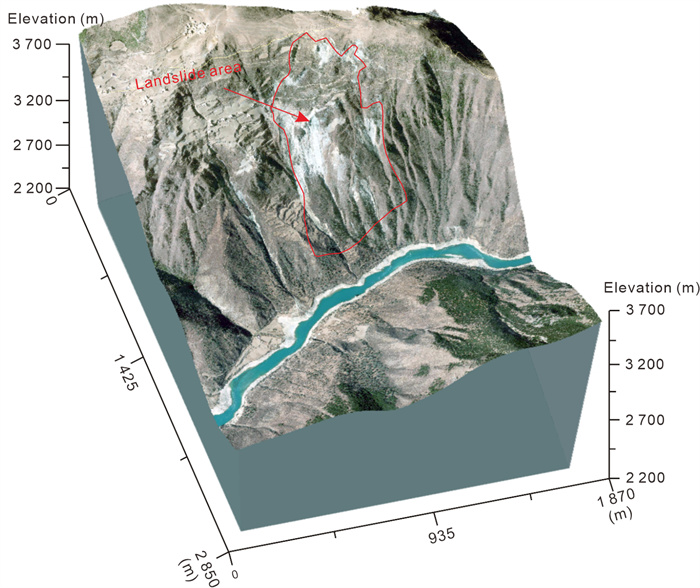
On October 11 and November 3 2018, two successive large-scale landslides occurred at Baige Village, eastern Tibet, China, damming the Jinsha River and causing severe downstream hazards. Despite their catastrophic impact, the progressive failure process of the Baige Landslide has remained poorly understood. In this study, we integrate field investigations, rainfall-step creep experiments, and numerical simulations to clarify the role of intermittent rainfall in slope weakening and failure. Structural mapping shows that faults traversing the northern, rear, and southern margins of the slope promoted dense jointing and fracturing in gneiss and serpentine, providing the fundamental geological basis for long-term instability. Laboratory results demonstrate that intermittent rainfall drives a stepwise deformation process, alternating between episodic acceleration during rainfall and creep stabilization afterward. Rainfall influences slope behavior through both short-term triggering—via increased water content and fracture water pressure—and long-term degradation, expressed as water-rock interactions that progressively reduce frictional resistance and strength. Numerical modeling further reveals that the progressive failure of the Baige Landslide was controlled by the interplay of structural predisposition, intermittent rainfall triggering, and long-term weakening, ultimately leading to large-scale collapse. These findings highlight the critical importance of incorporating historical damage and rainfall-induced degradation into slope stability assessments, particularly in tectonically active and rainfall-prone regions.

| Agliardi, F., Scuderi, M. M., Fusi, N., et al., 2020. Slow-to-Fast Transition of Giant Creeping Rockslides Modulated by Undrained Loading in Basal Shear Zones. Nature Communications, 11(1): 1352. https://doi.org/10.1038/s41467-020-15093-3 |
| Bekaert, D. P. S., Handwerger, A. L., Agram, P., et al., 2020. InSAR-Based Detection Method for Mapping and Monitoring Slow-Moving Landslides in Remote Regions with Steep and Mountainous Terrain: An Application to Nepal. Remote Sensing of Environment, 249: 111983. https://doi.org/10.1016/j.rse.2020. 111983 doi: 10.1016/j.rse.2020.111983 |
| Bontemps, N., Lacroix, P., Larose, E., et al., 2020. Rain and Small Earthquakes Maintain a Slow-Moving Landslide in a Persistent Critical State. Nature Communications, 11(1): 780. https://doi.org/10.1038/s41467-020-14445-3 |
| Chen, C. W., Yang, H. Q., Song, K. L., et al., 2023. Dissolution Feature Differences of Carbonate Rock within Hydro-Fluctuation Belt Located in the Three Gorges Reservoir Area. Engineering Geology, 327: 107362. https://doi.org/10.1016/j.enggeo.2023. 107362 doi: 10.1016/j.enggeo.2023.107362 |
| Chen, Z., Zhou, H. F., Ye, F., et al., 2021. The Characteristics, Induced Factors, and Formation Mechanism of the 2018 Baige Landslide in Jinsha River, Southwest China. Catena, 203: 105337. https://doi.org/10.1016/j.catena.2021.105337 |
| Crosta, G. B., Frattini, P., Agliardi, F., 2013. Deep Seated Gravitational Slope Deformations in the European Alps. Tectonophysics, 605: 13–33. https://doi.org/10.1016/j.tecto. 2013.04.028 doi: 10.1016/j.tecto.2013.04.028 |
| Ding, C., Feng, G. C., Liao, M. S., et al., 2021. Displacement History and Potential Triggering Factors of Baige Landslides, China Revealed by Optical Imagery Time Series. Remote Sensing of Environment, 254: 112253. https://doi.org/10.1016/j.rse.2020. 112253 doi: 10.1016/j.rse.2020.112253 |
| Dramis, F., Sorriso-Valvo, M., 1994. Deep-Seated Gravitational Slope Deformations, Related Landslides and Tectonics. Engineering Geology, 38(3/4): 231–243. https://doi.org/10.1016/0013-7952(94)90040-X |
| Fan, X. M., Xu, Q., Alonso-Rodriguez, A., et al., 2019. Successive Landsliding and Damming of the Jinsha River in Eastern Tibet, China: Prime Investigation, Early Warning, and Emergency Response. Landslides, 16(5): 1003–1020. https://doi.org/10. 1007/s10346-019-01159-x doi: 10.1007/s10346-019-01159-x |
| Gischig, V., Preisig, G., Eberhardt, E., 2016. Numerical Investigation of Seismically Induced Rock Mass Fatigue as a Mechanism Contributing to the Progressive Failure of Deep-Seated Landslides. Rock Mechanics and Rock Engineering, 49(6): 2457–2478. https://doi.org/10.1007/s00603-015-0821-z |
| Guo, C. B., Zhang, Y. S., Zhang, Y. N., et al., 2023. Freeze-Thaw Cycle Effects on Granite and the Formation Mechanism of Long-Runout Landslides: Insights from the Luanshibao Case Study in the Tibetan Plateau, China. Bulletin of Engineering Geology and the Environment, 82(10): 394. https://doi.org/10.1007/s10064-023-03427-6 |
| Lee, S., Chwae, U., Min, K., 2002. Landslide Susceptibility Mapping by Correlation between Topography and Geological Structure: The Janghung Area, Korea. Geomorphology, 46(3/4): 149–162. https://doi.org/10.1016/S0169-555X(02)00057-0 |
| Li, J., Hu, B., Sheng, J. L., et al., 2024a. Failure Mechanism and Treatment of Mine Landslide with Gently-Inclined Weak Interlayer: A Case Study of Laoyingzui Landslide in Emei, Sichuan, China. Geomechanics and Geophysics for Geo-Energy and Geo-Resources, 10(1): 61. https://doi.org/10.1007/s40948-024-00775-9 |
| Li, T. Z., Zhang, L. M., Gong, W. P., et al., 2024b. Initiation Mechanism of Landslides in Cold Regions: Role of Freeze-Thaw Cycles. International Journal of Rock Mechanics and Mining Sciences, 183: 105906. https://doi.org/10.1016/j.ijrmms. 2024.105906 doi: 10.1016/j.ijrmms.2024.105906 |
| Liao, K., Wu, Y. P., Miao, F. S., et al., 2021. Time-Varying Reliability Analysis of Majiagou Landslide Based on Weakening of Hydro-Fluctuation Belt under Wetting-Drying Cycles. Landslides, 18(1): 267–280. https://doi.org/10.1007/s10346-020-01496-2 |
| Liu, X. J., Zhao, C. Y., Zhang, Q., et al., 2020. Deformation of the Baige Landslide, Tibet, China, Revealed through the Integration of Cross-Platform ALOS/PALSAR-1 and ALOS/PALSAR-2 SAR Observations. Geophysical Research Letters, 47(3): e2019GL086142. https://doi.org/10.1029/2019gl086142 |
| Luo, S. L., Huang, D., Peng, J. B., et al., 2024. Insights into Reservoir-Triggered Landslides Development and Its Influence Factors in the Three Gorges Reservoir Area, China. Journal of Earth Science, 35(6): 1979–1997. https://doi.org/10.1007/s 12583-024-0024-1 doi: 10.1007/s12583-024-0024-1 |
| Miao, F. S., Zhao, F. C., Wu, Y. P., et al., 2024. Macro and Micro Connections for Slip Zone Soils of Landslide under Wetting–Drying Cycles in the Three Gorges Reservoir Area. Landslides, 21(4): 737–752. https://doi.org/10.1007/s10346-023-02195-4 |
| Pei, X. J., Cui, S. H., Zhu, L., et al., 2022. Sanxicun Landslide: An Investigation of Progressive Failure of a Gentle Bedding Slope. Natural Hazards, 111(1): 51–78. https://doi.org/10.1007/s11069-021-05044-6 |
| Segoni, S., Piciullo, L., Gariano, S. L., 2018. A Review of the Recent Literature on Rainfall Thresholds for Landslide Occurrence. Landslides, 15(8): 1483–1501. https://doi.org/10.1007/s10346-018-0966-4 |
| Sun, C. H., Xie, B. X., Wang, R., et al., 2023. Investigation of Internal Damage Evolution in Gneiss Considering Water Softening. Scientific Reports, 13: 12672. https://doi.org/10.1038/s41598-023-39664-8 |
| Szczygieł, J., Mendecki, M., Hercman, H., et al., 2019. Relict Landslide Development as Inferred from Speleothem Deformation, Tectonic Data, and Geoelectrics. Geomorphology, 330: 116–128. https://doi.org/10.1016/j.geomorph.2019.01.017 |
| Tang, Y., Yang, J. S., Zheng, X. C., et al., 2025. Experimental Study on Mechanical Properties of Weakly Weathered Gneiss in High Temperature Water-Rich Tunnel. Chinese Journal of Rock Mechanics and Engineering, 44(1): 128–139 (in Chinese with English Abstract) |
| Tian, S. F., Chen, N. S., Wu, H., et al., 2020. New Insights into the Occurrence of the Baige Landslide along the Jinsha River in Tibet. Landslides, 17(5): 1207–1216. https://doi.org/10.1007/s10346-020-01351-4 |
| Tong, D. F., Su, A. J., Tan, F., et al., 2023. Genetic Mechanism of Water-Rich Landslide Considering Antecedent Rainfalls: A Case Study of Pingyikou Landslide in Three Gorges Reservoir Area. Journal of Earth Science, 34(6): 1878–1891. https://doi.org/10.1007/s12583-022-1722-1 |
| Xiong, Z. Q., Feng, G. C., Feng, Z. X., et al., 2020. Pre- and Post-Failure Spatial-Temporal Deformation Pattern of the Baige Landslide Retrieved from Multiple Radar and Optical Satellite Images. Engineering Geology, 279: 105880. https://doi.org/10.1016/j.enggeo.2020.105880 |
| Xue, Y., Miao, F. S., Wu, Y. P., et al., 2022. Dynamic Stability Assessment of Reservoir Colluvial Landslide Using a Hypoplastic Clay Constitutive Model Considering the Effects of Drying-Wetting Cycles on the Hydro-Fluctuation Belt. Engineering Geology, 307: 106791. https://doi.org/10.1016/j.enggeo.2022.106791 |
| Yin, Y. P., Huang, B. L., Chen, X. T., et al., 2015. Numerical Analysis on Wave Generated by the Qianjiangping Landslide in Three Gorges Reservoir, China. Landslides, 12(2): 355–364. https://doi.org/10.1007/s10346-015-0564-7 |
| Zhang, S. L., Yin, Y. P., Hu, X. W., et al., 2020. Initiation Mechanism of the Baige Landslide on the Upper Reaches of the Jinsha River, China. Landslides, 17(12): 2865–2877. https://doi.org/10.1007/s10346-020-01495-3 |
| Zhang, S. L., Yin, Y. P., Hu, X. W., et al., 2021. Geo-Structures and Deformation-Failure Characteristics of Rockslide Areas near the Baige Landslide Scar in the Jinsha River Tectonic Suture Zone. Landslides, 18(11): 3577–3597. https://doi.org/10.1007/s10346-021-01741-2 |
| Zhang, S., Xu, Q., Hu, Z. M., 2016. Effects of Rainwater Softening on Red Mudstone of Deep-Seated Landslide, Southwest China. Engineering Geology, 204: 1–13. https://doi.org/10.1016/j.enggeo.2016.01.013 |
| Zhao, L. M., 2023. Research on Disaster Mechanism of High-Position Landslides in Jinsha River Tectonic Mélange Zone Taking Baige Landlside as an Example: [Dissertation]. Southwest Jiaotong University, Xi'an (in Chinese with English Abstract) |
| Zhu, L., Cui, S. H., Pei, X. J., et al., 2025a. Dynamic Response Characteristics and Initiation Mechanism of Weak-Base Anti-Dip Slopes: A Case Study of the Guantan Landslide. Bulletin of Engineering Geology and the Environment, 84(8): 403. https://doi.org/10.1007/s10064-025-04431-8 |
| Zhu, L., Pei, X. J., Cui, S. H., et al., 2020. On the Initiation Mechanism of the Daguangbao Landslide Triggered by the 2008 Wenchuan (Ms 7.9) Earthquake. Soil Dynamics and Earthquake Engineering, 137: 106272. https://doi.org/10.1016/j.soildyn. 2020.106272 doi: 10.1016/j.soildyn.2020.106272 |
| Zhu, L., Pei, X. J., Cui, S. H., et al., 2025b. New Insights into the Progressive Failure Process and Mechanisms of the 2017 Xinmo Slope in Mao County, China. Bulletin of Engineering Geology and the Environment, 84(4): 195. https://doi.org/10.1007/s10064-025-04205-2 |
Figures(19) / Tables(2)
Copyright © 2013-2020 Journal of Earth Science 鄂ICP备15021562号-2
Tel: +86-27-67885075 Fax: +86-27-67885075 E-mail: xbb@cug.edu.cn
Address: Editorial Office of Journal, China University of Geosciences, Yujiashan, Wuhan, Hubei 430074, P. R. China
Supported by:
Beijing Renhe Information Technology Co. Ltd
E-mail:
info@rhhz.net


 DownLoad: